

How to Cook Dried Ewedu So It Still Draws Well
Learn how to cook dried ewedu so it still draws well, including warm vs cool rehydration, water ratio, whisking tips, kaun advice, and storage.
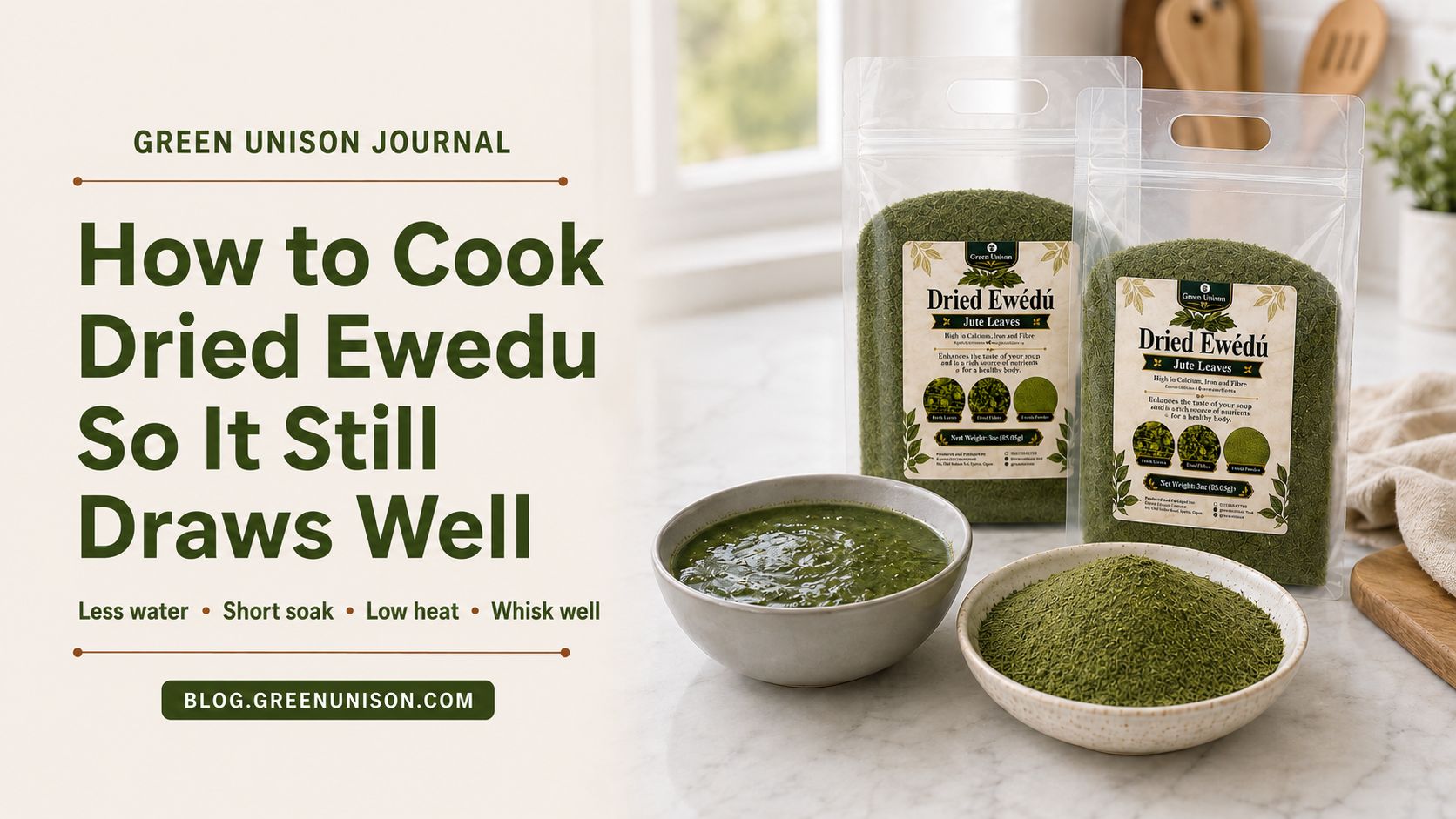
Dried ewedu can still give you that familiar Nigerian ewedu draw soup texture. The secret is not plenty water. The secret is controlled water, proper rehydration, and enough movement to help the leaves release their natural draw.
If your dry ewedu turns watery, flat, or refuses to draw, the problem is often one of three things: too much water, not enough whisking or blending, or boiling it too hard for too long. Good dried ewedu should be clean, properly dried, and still able to soften into a smooth, clingy soup when cooked the right way.
Before cooking, the quality of the dried leaves matters too. If you are buying dried ewedu for home, food business, or quick soup days, use this guide on how to choose clean, quality dried ewedu that still draws well before you stock your pantry.
In This Guide
- Should you rehydrate dried ewedu with warm water or cool water?
- Ingredients for dried ewedu soup
- Step-by-step method
- Quick recipe card
- How to scale the recipe
- Do you need kaun or baking soda?
- How to fix dried ewedu that is watery or not drawing
- How to store leftovers safely
- FAQs
Why Dried Ewedu Can Still Draw
Ewedu, also called jute leaves or Corchorus olitorius, has a naturally slippery texture. That is what gives ewedu soup its draw. Drying removes moisture from the leaves, but it does not automatically remove the natural texture.
What changes after drying is how the leaves behave in the pot:
- Fresh ewedu softens quickly because the leaves already contain moisture.
- Dried ewedu needs a short rehydration step so the leaves can absorb water again.
- Whisking, ijabe, or brief blending helps release the draw after the leaves soften.
- Spoon-stirring alone may not be enough, especially if the dried leaves are coarse.
Think of dried ewedu like a sleeping leaf. Water wakes it up, but movement brings out the draw.
Should You Rehydrate Dried Ewedu With Warm Water or Cool Water?
Use warm water when you want to cook the ewedu immediately. Warm water softens dried leaves faster and makes it easier to release the draw when you whisk or blend. This is the most practical method for quick home cooking, student meals, busy homes, and restaurants that need faster prep.
Use cool water when you want a slower, gentler soak. Cool water is useful when the dried ewedu is very fine, when you are testing a new batch, or when you do not want the leaves sitting lukewarm before cooking. Cool water can still work, but it usually needs more time and stronger whisking.
The best everyday rule is simple: warm water for quick cooking, cool water for slower soaking or careful texture control.
Important safety note: do not soak dried ewedu in warm water and then leave it sitting for a long time. If you use warm water, soak briefly and cook immediately. If you need to delay cooking, use cool water, keep the soak short, or refrigerate and cook as soon as possible.
Ingredients for Dried Ewedu Soup
This quantity makes about 2 to 3 servings, depending on how thick you like your ewedu soup.
- 1/2 cup dried ewedu
- 1/4 to 1/3 cup warm water for rehydrating, or cool water if soaking more slowly
- 3/4 to 1 cup hot water or light stock for cooking
- 1 tablespoon iru, rinsed if needed
- 1 to 2 teaspoons ground crayfish, optional
- Salt or seasoning cube, to taste
- A whisk, ijabe, hand blender, or regular blender
- Optional: a tiny pin-head pinch of kaun if the batch is stubborn
Water reminder: these measurements are starting points. Dried ewedu varies by cut size, drying method, and how much it has been crushed. Start with less water, then loosen the soup later if needed.
How to Cook Dried Ewedu So It Still Draws Well
Step 1: Check the dried ewedu first
Open the pack and check the colour, smell, and texture. It should smell clean and leafy, not damp, sour, mouldy, or stale. If the leaves look dusty, smell bad, or show any sign of mould, do not cook them.
For a deeper buying check, read the dried ewedu buying guide before your next purchase.
Step 2: Check whether the pieces need crushing
If you are using another dried ewedu brand, home-dried ewedu, or a batch with large coarse pieces, you can lightly crush only the bigger pieces with clean fingers, a dry spoon, or a mortar. Smaller pieces rehydrate faster and release draw more easily when whisked.
If you are using Green Unison dried ewédú, you can skip this step because it is already well crushed into cooking-friendly pieces, ready for rehydration, and easier for stress-less quick soup days. For the easiest no-crush option, choose Green Unison.
Step 3: Rehydrate with a little water
Place the dried ewedu in a small bowl. Add just enough warm water to dampen and soften it, usually about 1/4 to 1/3 cup for 1/2 cup dried ewedu. Let it sit for about 5 minutes if the leaves are fine, or closer to 10 minutes if they are coarse.
If you are using cool water, let it sit a little longer, usually 10 to 15 minutes, then cook immediately.
Step 4: Heat a small amount of water or light stock
Add 3/4 cup hot water or light stock to a small pot. Add the iru and let it warm through. Keep the heat at low to medium-low. You want movement and heat, not a violent boil.
Step 5: Add the softened ewedu
Add the rehydrated ewedu to the pot. Stir gently at first so it spreads evenly through the water.
Step 6: Whisk, use ijabe, or blend briefly
This is where the soup wakes up. Whisk firmly for 1 to 3 minutes, use ijabe if you have it, or pulse briefly with a hand blender. If using a regular blender, blend only for a few seconds at a time. The goal is smooth, drawy ewedu, not green foam.
Step 7: Season near the end
Add crayfish, salt, or seasoning cube to taste. Keep it simple. Ewedu is often served with stew, gbegiri, fish, meat, or swallow, so it does not need to carry the whole meal by itself.
Step 8: Adjust the texture
If the ewedu is too thick, add hot water one tablespoon at a time. If it is too thin, whisk a little longer before adding anything else. If it is still too watery, add a small amount of extra rehydrated ewedu rather than boiling the pot aggressively.
Step 9: Serve immediately
Serve your dried ewedu soup with amala, gbegiri and stew, lafun, fufu, eba, semo, or your preferred swallow. For more food-culture context, you can also read Green Unison’s guide on ewedu as a Nigerian food and cultural staple.
Quick Recipe Card: Dried Ewedu Soup
Prep time: 5 to 10 minutes
Cook time: 3 to 5 minutes
Total time: about 10 to 15 minutes
Serves: 2 to 3
- Add 1/2 cup dried ewedu to a bowl.
- Lightly crush only if the dried leaves are large or coarse.
- Soften with 1/4 to 1/3 cup warm water for about 5 minutes, or cool water for 10 to 15 minutes.
- Heat 3/4 to 1 cup water or light stock with iru.
- Add softened ewedu and keep heat low to medium-low.
- Whisk, use ijabe, or pulse briefly until the soup draws.
- Season lightly with crayfish, salt, or seasoning cube.
- Adjust with hot water one tablespoon at a time if too thick.
- Serve immediately with your preferred swallow.
Recipe note: Green Unison dried ewédú is already well crushed into cooking-friendly pieces, so you can usually measure it directly into the bowl and start rehydrating.
How to Scale the Recipe for Family Cooking or Food Business Prep
When increasing dried ewedu soup for a larger family, restaurant order, or food business prep, do not multiply the water too aggressively. Scale the dried ewedu first, then add water gradually.
- For about 4 to 6 servings, use 1 cup dried ewedu and begin with 1/2 to 2/3 cup water for rehydration.
- For cooking, start with about 1 1/2 to 2 cups hot water or light stock, then adjust gradually.
- For larger batches, whisk or blend in stages so the soup draws evenly.
- Season lightly first, then taste and adjust near the end.
The safest scaling rule is: increase the dried ewedu, but add water in stages. A thick pot can be loosened. A watery pot is harder to rescue.
Do You Need Kaun or Baking Soda for Dried Ewedu?
No, you do not always need kaun, potash, or baking soda to make dried ewedu draw. Quality dried ewedu, correct water control, and proper whisking can give you a good draw without relying on additives.
Some cooks use a tiny amount of kaun because alkaline ingredients can help certain leafy soups soften and feel more slippery. But too much kaun can affect taste, colour, and the natural feel of the soup. It can make the ewedu look dull or brownish instead of fresh and green.
If you choose to use kaun, use only a pin-head pinch. Do not add it like salt. Do not keep adding more because the soup has not drawn in the first few seconds. Whisk first, wait, and check the texture again.
Some cooks use a tiny pinch of baking soda when kaun is unavailable, but this should also be used carefully. Many dried ewedu batches do not need either one.
Best Green Unison position: start without kaun. Use good dried ewedu, low water, warm rehydration when cooking immediately, and strong whisking. Keep kaun as a last resort for a stubborn batch.
Why Is My Dried Ewedu Not Drawing?
If your dried ewedu is not drawing, do not panic. Tiny changes in water and whisking can change everything.
Common mistake: adding water like you are cooking fresh leaves
Dried ewedu does not need to swim before it can draw. Start with a small amount of water, then loosen the soup gradually. Once the pot becomes too watery, it is harder to rescue the texture.
Common mistake: boiling hard to force the draw
Hard boiling is not the magic key. It can dull the colour and make the soup less appealing. The better move is gentle heat plus whisking, ijabe, or brief blending.
Common mistake: using a spoon only
A spoon can stir ewedu, but it may not break the leaves down enough. For a better draw, use ijabe, a whisk, hand blender, or quick blender pulse.
Will Dried Ewedu Taste Exactly Like Fresh Ewedu?
Dried ewedu can still make a satisfying soup, but it may not behave exactly like fresh ewedu. Fresh leaves usually soften faster and may taste brighter. Dried ewedu, dehydrated jute leaves, or dry ewedu are more of a pantry helper: convenient, shelf-ready, and useful when fresh ewedu is not available.
The goal is not to pretend dried and fresh are identical. The goal is to cook dried ewedu in a way that gives you a familiar draw, clean taste, and smooth texture without wasting time or ingredients.
How to Store Cooked Ewedu Leftovers Safely
Ewedu is best enjoyed fresh from the pot, but leftovers can be stored safely if handled well.
- Do not leave cooked ewedu sitting out for many hours.
- Cool leftovers promptly and refrigerate within 2 hours.
- Store in a clean, covered container.
- When reheating, heat until the soup is piping hot throughout. For soups and sauces, bring it back to a proper boil before serving.
- Expect reheated ewedu to look or feel slightly different from freshly cooked ewedu.
For the dry product itself, protect it from moisture, damp smell, pests, and mould after opening. See this guide on how to store dried ewedu without mould, pests, or damp smell.
For Quick Soup Days, Start With Good Dried Ewedu
Good dried ewedu should make cooking easier, not turn your pot into a guessing game. If you want dried ewedu for fast meals, family cooking, student meals, or food business prep, look for clean leaves, a proper dry feel, a good leafy aroma, and packaging that protects the product from moisture.
Try Green Unison dried ewédú for quick soup days, and save this cooking method for the next time you want smooth, drawy ewedu without the long market stress.
FAQs About Cooking Dried Ewedu
Should I soak dried ewedu before cooking?
Yes. A short soak helps dried ewedu soften before cooking and makes it easier to whisk or blend into a drawy soup.
Is warm water better than cold water for dried ewedu?
Warm water is usually better for quick cooking. Cool water also works when you want slower soaking or more control.
Can I use boiling water to rehydrate dried ewedu?
It is better to use warm water, not boiling water, for the first softening step. Boiling water can make the process harder to control, especially if the dried ewedu is finely crushed.
How long should I soak dried ewedu?
Start with about 5 minutes in warm water for finely cut dried ewedu. For coarse pieces, try 10 minutes. If using cool water, 10 to 15 minutes is a better starting point.
Can dried ewedu draw without potash?
Yes. Good dried ewedu can draw without potash when you control the water and whisk or blend properly.
Why is my dried ewedu watery?
Too much water was probably added too early. Start with less water, whisk well, and loosen the soup gradually with hot water only when needed.
Can I blend dried ewedu soup?
Yes, but blend briefly. A few short pulses can help smooth the soup and release draw. Too much blending can make it foamy.
What can I eat with dried ewedu soup?
Dried ewedu soup pairs well with amala, gbegiri and stew, lafun, fufu, eba, semo, and other Nigerian swallows.
Can I cook dried ewedu for a food business?
Yes, but test your water ratio and timing with the exact batch you plan to use. Dried ewedu can vary by cut size and dryness, so small kitchen tests help you maintain consistent texture.
Final tip: dried ewedu can still draw well, but it rewards patience in the first few minutes. Soften it lightly, control the water, whisk with confidence, and do not bully the pot with too much boiling.
Keep reading
Related guides
Join the conversation
Share your thoughts, questions, or notes for the Green Unison team.
Be the first to share a thought on this Green Unison guide.