If you’ve ever made corn flour swallow and it suddenly starts “drawing” like chewing gum (or turns rubbery), you’re not alone. The good news? Most times, it’s not that anything is “wrong” with you — it’s usually water + heat + turning technique
Yorùbá (kíákíá): Bí swallow ìyẹ̀pẹ̀ agbàdo rẹ bá ń fa tàbí di gígùn bí gọ́ọ̀mù, ó sábà máa jẹ́ omi tí kéré, ina tó ga, tàbí bí o ṣe ń yí i. Ẹ jọ̀ọ́, ẹ má bínú — a máa fix rẹ.
When corn flour meets hot water, the starch granules swell and thicken (that’s normal). But when the mix becomes too tight, overheated, or worked wrongly, it can turn stretchy-rubbery instead of smooth and soft.
Yorùbá: “Draw” túmọ̀ sí pé swallow náà ń fa, kì í sì jẹ́ kí o yà a dáadáa — ó ń dà bí ẹni pé o ń jẹ gọ́ọ̀mù.
Quick Fix Checklist (try this in 5 minutes)
If your tuwo is already drawing:
Reduce heat to low.
Add hot water (small splashes) around the edges — not cold water.
Cover for 60–90 seconds to steam.
Fold/turn gently until it relaxes.
If it’s still too tight, repeat with another small splash of hot water.
Yorùbá: 1) Dín iná kù. 2) Fikun omi gbóná díẹ̀ díẹ̀ (kì í ṣe omi tútù). 3) Bo fún ìṣẹ́jú kan. 4) Yí i sẹ́lẹ̀ sẹ́lẹ̀ títí yóò fi rọ.
7 reasons corn flour swallow draws (and how to fix each one)
1) Your water-to-flour ratio is too low (it’s simply too thick)
Symptom: It becomes tight early and starts pulling. Fix: Use the reliable base ratio:
1 cup corn flour : 2 to 2½ cups water
If you like it softer, stay closer to 2½ cups.
Yorùbá: Bí omi bá kéré ju, swallow máa di gígùn. Fikun omi díẹ̀ díẹ̀ (omi gbóná).
2) You poured too much flour at once
Symptom: It thickens too fast; you fight lumps, then it becomes rubbery. Fix: Add flour gradually while stirring/whisking at the start.
Pro tip: Start with a small portion first, let it thicken, then add the rest in batches.
Yorùbá: Má ṣe tú ìyẹ̀pẹ̀ pọ̀ sílẹ̀ lẹ́ẹ̀kan. Tú un díẹ̀ díẹ̀.
3) Heat is too high after adding the flour
Symptom: It “sets” too quickly and turns chewy. Fix: Once water boils, reduce to medium/medium-low before adding flour. Keep it controlled.
Yorùbá: Iná tó ga máa mú kí ó “di” kíákíá. Dín iná kù sí àárín.
4) You used the wrong mixing method (or over-whisked)
Symptom: It becomes gluey/stretchy instead of smooth and soft. Fix:
Whisk only at the beginning to prevent lumps.
Switch to a wooden spatula/turning stick to finish.
Turn firmly, but don’t “beat” it like cake batter.
Yorùbá: Whisk jẹ́ fún ìbẹ̀rẹ̀. Lẹ́yìn náà, lo ọ̀pá/yíyí (turning stick) kí o sì yí i dáadáa.
5) You kept “dry-patching” (adding extra flour to “correct” softness)
Symptom: It starts okay, then gets tight and draws later. Fix: If you need to adjust texture, do it with hot water, not more flour.
Yorùbá: Tí ó bá rọ ju, má ṣe fọwọ́sí i pẹ̀lú ìyẹ̀pẹ̀ míì. Omi gbóná ló yẹ.
6) You left it covered too long without turning
Symptom: The top looks fine, but underneath sets like rubber. Fix: Cover briefly (1–3 minutes max), then turn again.
Yorùbá: Bo díẹ̀ ni. Lẹ́yìn náà, yí i padà.
7) It cooled down (and firmed up)
Symptom: Smooth when hot; rubbery/firm after sitting. Fix:
Serve tuwo hot.
If it sits, reheat gently with steam + a tiny splash of hot water and fold.
Yorùbá: Swallow fẹ́ràn gbígbóná. Tí ó bá tutù, jẹ́ kó gba ẹ̀fúùfù-omi (steam) kí o sì yí i.
Foolproof method for smooth, non-rubbery corn flour tuwo
Bring 2–2½ cups water to a boil (for 1 cup flour).
Reduce heat to medium.
Add corn flour gradually while whisking.
Once it thickens, switch to a spatula/turning stick and turn until smooth.
Cover 1–2 minutes, then turn once more.
Serve hot.
Yorùbá (ìlànà kúkúrú): Gbé omi dé bíbo → dín iná kù → tú ìyẹ̀pẹ̀ díẹ̀ díẹ̀ → whisk → yí i pẹ̀lú ọ̀pá → bo díẹ̀ → yí i lẹ́ẹ̀kansi → jẹun.
“Corn flour” vs “cornflour” (important note)
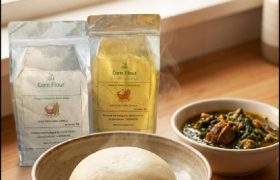
In some places, “cornflour” can mean pure cornstarch (used mostly for thickening sauces). In this post, corn flour means finely milled maize flour used for tuwo/swallow — like the one we sell.
💬 Chat to order (prefilled message): https://wa.me/2348103043789?text=Hi%20Green%20Unison%20%F0%9F%91%8B%20Please%20help%20me%20order%20your%20Silky%2FWhite%2FYellow%20Corn%20Flour%20for%20tuwo.%20I%20need%20the%20best%20water%20ratio%20%2B%20tips%20to%20stop%20my%20corn%20flour%20swallow%20from%20drawing%2Frubbery.
Final word (small, but powerful)
If your corn flour swallow draws, don’t panic. In most kitchens, the fix is simply: more hot water (small splashes), lower heat, and gentler turning.
Yorùbá: Ẹ má yá. Ọ̀pọ̀ ìgbà, ìtúnṣe rẹ̀ ni: omi gbóná díẹ̀ díẹ̀ + iná kékèké + yíyí pẹ̀lẹ́pẹ̀lẹ́.
Happy cooking — and may your tuwo be soft, smooth, and proudly non-dramatic.

Leave a Reply