
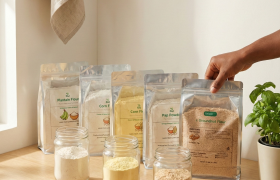
Keep your plantain, corn, pap and groundnut flours fresh, bug-free and smelling clean with simple flour storage habits that work in warm, humid kitchens.
Have you ever opened your bag of flour to make a quick meal — maybe a bowl of creamy ogi or soft amala ogede — and instead met tiny insects or a strange smell? 😖 It is a common pantry problem in warm, humid climates where unsealed flour easily becomes a weevil playground or starts to clump and smell off.
The good news: with a few simple habits, you can beat weevils, moisture and bad smells and get the best out of your Smooth Plantain Flour (Elubo Ogede) , Silky White/Yellow Corn Flour , Instant Pap Powder (Ogi/Akamu) and Finely-ground Groundnut Flour .
This guide breaks everything down in plain language, so every scoop from your pantry still feels fresh and safe.
What Makes Flour Go Bad?
Flour looks dry and harmless, but three quiet enemies can spoil it if we are not careful: insects, moisture and air.
- Pantry weevils (flour bugs) — Tiny brown beetles that love grains and flours. They often arrive as invisible eggs inside the grain or flour. Once they hatch, they turn your bag into a home and food source.
- Moisture and mould — Flour absorbs moisture from the air. In a humid kitchen, that moisture can turn into soft clumps and eventually mould. Mouldy flour may show fuzzy spots or develop a musty odour.
- Air and rancidity — When flour, especially one with natural oils such as groundnut flour, sits open for too long, oxygen slowly breaks the oils down. This process (oxidation) leads to a sharp, stale or paint-like smell and an unpleasant taste.
The key to good flour care is simple: keep bugs out, keep moisture out, and limit air contact. The next sections show exactly how to do that at home.
Beat the Bugs: How to Keep Weevils Out of Your Flour
Nobody enjoys discovering “extra protein” in their pap or swallow. Here is how to keep weevils far away from your flour shelf.
1. Move flour into airtight containers
After opening any pack of flour, do not just roll the top and hope for the best. Pour it into a clean, airtight container or keep it in the original resealable pouch, squeezing the air out before sealing.
Good options include:
- Glass jars with tight lids
- Food-grade plastic containers with snap lids
- The original Green Unison resealable pouch zipped properly after each use
Airtight containers make it harder for insects to crawl in and also stop any eggs that might already be present from spreading around your pantry.
2. Use the freezer trick for new flour
One science-backed tip used in many kitchens worldwide is simple: freeze your new flour for a few days after you buy it.
When you bring home a fresh bag of:
place the sealed bag in your freezer for around 3–5 days. Deep cold helps to stop any hidden insect eggs from surviving long enough to hatch. After freezing, let the bag come back to room temperature before you open it, so condensation does not form inside.
3. Keep shelves clean and crumbs away
Weevils and other pantry pests love leftover grains or crumbs. If there is spilt flour in your cupboard, it acts like a free buffet.
Make it a habit to:
- Wipe and sweep shelves regularly
- Clean up any flour spills immediately
- Check corners and cracks — vacuum or wipe them, especially if you have had bugs before
A clean pantry makes it harder for pests to settle in or move from one food item to another.
4. First in, first out
Try not to forget half-used bags at the back of the cupboard. The longer flour sits, the more time insects have to appear.
Use a simple rule: first in, first out. Finish older flours before newer ones and label containers with the date you opened them so you can keep track.
Keep It Dry: Protect Your Flour from Moisture and Mould
Moisture is one of the quickest ways to ruin flour. Once water gets in, clumps, mould and sour odours are not far behind.
1. Choose a cool, dry cupboard
Keep flour on a shelf that is:
- Away from the cooker, kettle and steamy pots
- Away from the sink or any leaks
- Not directly against a damp wall
A cool, dry, dark cupboard is best. Warm, humid air speeds up spoilage and encourages mould growth.
2. Seal properly after every use
Each time you scoop flour, close it back immediately. If the flour stays open while you cook, steam and moisture can easily get inside the bag or container.
Simple habits:
- Use only clean, dry spoons (no wet cups or damp hands)
- Close the zip on the pouch all the way to the end
- Check that container lids are really tight
3. Be careful with the fridge or freezer
The fridge or freezer can help with freshness, especially for groundnut flour, but only if the flour is stored in an airtight container.
If a container is not tightly sealed, cold air can cause condensation when you bring it back to room temperature, and that moisture can sit directly on your flour.
So if you refrigerate any flour:
- Use a proper airtight jar or bag
- Let the container come back to room temperature before opening it
Fresh, Not Funky: Prevent Bad Odours and Rancidity
A quick sniff is one of the easiest ways to check flour quality. Fresh flour has a mild, neutral or lightly nutty smell. Spoiling flour usually tells on itself.
1. Understand shelf life
The exact shelf life depends on how much natural oil is in the flour:
- Smooth Plantain Flour & Silky White/Yellow Corn Flour are relatively low in oil. Properly stored, they usually keep their best quality for several months after opening.
- Instant Pap Powder is completely dry but should be kept bone dry so the fermented grains do not pick up extra moisture.
- Groundnut Flour contains plenty of natural peanut oil. That oil is great for flavour, but it also means the flour can turn rancid faster if left in heat or light.
Always check the best before date on the pack and aim to finish an opened pack within a few months for the best aroma and taste.
2. Chill high-oil flours for longer freshness
For flour with more natural oil, such as Groundnut Flour , the fridge or freezer can slow down rancidity.
Simple approach:
- Store groundnut flour in an airtight container in the fridge after opening if you want it to stay fresh beyond 2–3 months.
- For very long storage, keep it in the freezer, also airtight, and bring out only what you need.
Remember to let the container reach room temperature before opening to avoid moisture forming inside.
3. Keep flours away from strong smells
Flours quietly absorb odours from their environment. If you keep them next to very strong spices, cleaning products or kerosene, they can pick up strange flavours.
Give your flours their own corner, away from:
- Very strong spices (like curry mixes, stock cubes and dried fish)
- Chemicals or detergents
- Anything with a strong smell
A dedicated flour section helps every bag stay neutral and versatile.
4. Always do a quick check before using
Before you cook, take a moment to:
- Look: Does the flour look normal? No unusual colours, no visible mould, no insects?
- Smell: Does it smell fresh and mild? Any sour, bitter, musty or paint-like odour means it is time to throw it away.
- Feel: Is it loose and powdery? Hard lumps or dampness suggest moisture problems.
When in doubt, it is safer to discard and start with a fresh pack. No recipe is worth using spoiled flour.
How to Care for Each Green Unison Flour
Here is a quick, practical guide for the four flours most people keep in their pantry.
Smooth Plantain Flour (Elubo Ogede)
Smooth Plantain Flour is made from gently dried, finely milled unripe plantain slices. It is naturally gluten-free and grain-free, perfect for instant amala ogede, thickening soups, baby foods and even some baking.
- Store unopened packs in a cool, dry cupboard.
- After opening, keep in the resealable pouch or an airtight container.
- Use a clean, dry scoop every time — no wet utensils.
- Try finishing an opened pack within about 6 months for best quality, following the pack storage advice.
For cooking inspiration, you can pair this storage guide with your earlier reading on recipes, then come back and store your flour like a pro.
Silky White/Yellow Corn Flour
Silky White/Yellow Corn Flour is finely milled for smooth, lump-free tuwo masara and other dishes. Because it comes from whole maize, it contains natural oils and should be treated with care.
- Store in a cool, dry cupboard away from direct heat.
- Keep tightly sealed after every use to keep out bugs and moisture.
- If you buy in bulk and know it will sit for a while, consider refrigerating a portion in an airtight container.
- Use older stock first so nothing stays forgotten for too long.
Want to perfect your swallow technique as well as your storage? Read the full step-by-step cooking guide: How to Prepare Corn Flour for Swallow (Tuwo Masara): Smooth, Simple & Wholesome .
Instant Pap Powder (White/Yellow Ogi/Akamu)
Instant White/Yellow Pap Powder is traditionally fermented and then fully dried, so you can make ogi or eko in minutes. To keep that tangy, comforting taste, it must stay completely dry.
- Store sealed in a cool, dry cupboard.
- Use only dry spoons when scooping.
- Reseal immediately after each use.
- If you ever notice an unusually sharp sour odour, visible mould or heavy clumping, it is time to replace it.
Finely-ground Groundnut Flour
Finely-ground Groundnut Flour is made from lightly roasted groundnuts, milled to a smooth, aromatic flour. It is rich in natural oils, which makes it flavourful but also more sensitive to heat and air.
- Store unopened packs in a cool, dry place away from direct sunlight.
- After opening, keep in an airtight container and refrigerate for best freshness.
- For very long storage, freeze in small portions and bring out only what you need.
- Always do a smell test before use. Any sharp, bitter or paint-like odour means the flour has turned and should be thrown away.
For ideas on how to use groundnut flour once you have stored it properly, you can check: Power Up Your Pap & Smoothies with Natural Groundnut Goodness . If you enjoy working with whole nuts too, there is also a helpful guide: No Sand, No Stress: Roasting Groundnuts with Garri .
When to Say Goodbye: Clear Signs Your Flour Is Spoiled
Even with the best storage habits, an old pack might sometimes slip through. Here are clear warning signs that it is time to let that flour go:
- Visible insects or webs — Any weevils, larvae or web-like threads in the flour mean it should be discarded immediately.
- Mould or strange colours — Green, blue, grey or fuzzy patches are mould. Do not try to rescue or sieve and use. Simply dispose of it.
- Strong off odour — Sour, bitter, musty or paint-like smells show spoilage or rancidity.
- Heavy, damp clumps — A few small clumps that break easily may be from settling, but big hard lumps or a damp feel are a red flag.
- Bad taste — If a tiny pinch tastes bitter, stale or strange, do not cook with it.
Throwing out flour can feel painful, but it is much better than ruining your food or serving something that is clearly past its best.
Practical Bonus Tips for Everyday Flour Care
- Buy the right quantity — It is tempting to buy a lot at once, but only stock what you can finish in a reasonable time. You can always reorder.
- Divide big bags — If you buy 5 kg of flour, pour it into smaller containers. Keep one container for daily use and leave the rest sealed.
- Use a dedicated scoop — Keep a small dry scoop inside or next to your flour containers so you are less likely to dip in a wet cup.
- Do a monthly pantry check — Once a month, quickly inspect your flours. It takes just a few minutes and saves surprises later.
With these habits, your flour stops being a source of stress and becomes something you can trust every time you cook.
Ready to Give Your Flours Better Care?
With airtight storage, cool shelves, a little freezer trick and regular checks, you can keep your plantain flour, corn flour, pap powder and groundnut flour fresh, smooth and ready for everyday use.
Once you have sorted your pantry, you can confidently enjoy:
- Soft, stretchy amala ogede that cooks without lumps
- Smooth tuwo masara with no surprise visitors
- Comforting pap that smells clean and tastes right
- Rich, nutty soups and smoothies powered by fresh groundnut flour
At Green Unison, we already handle careful drying, milling and packing for you. All you have to do is finish the journey at home with good flour care.
Shop Fresh Flours and Get Personal Help
Ready to restock with flours that arrive already carefully dried and packed in resealable pouches? Explore our flours collection here: Green Unison Flours eShop .
You can also browse all flours directly in our WhatsApp catalogue.
Prefer to chat with a real human before buying? Send us a message on WhatsApp and we will help you pick the right combination of flours for your home: chat with us on WhatsApp .
Share this guide with someone who is tired of “moving flour” and mystery smells. Their pantry will thank you. 😊
Leave a Reply