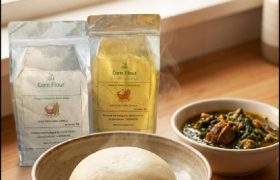
If you’ve ever made corn flour swallow and it suddenly starts “drawing” like chewing gum (or turns rubbery), you’re not alone. The good news? Most times, it’s not that anything is “wrong” with you — it’s usually water + heat + turning technique
Yorùbá (kíákíá): Bí swallow ìyẹ̀pẹ̀ agbàdo rẹ bá ń fa tàbí di gígùn bí gọ́ọ̀mù, ó sábà máa jẹ́ omi tí kéré, ina tó ga, tàbí bí o ṣe ń yí i. Ẹ jọ̀ọ́, ẹ má bínú — a máa fix rẹ.
When corn flour meets hot water, the starch granules swell and thicken (that’s normal). But when the mix becomes too tight, overheated, or worked wrongly, it can turn stretchy-rubbery instead of smooth and soft.
Yorùbá: “Draw” túmọ̀ sí pé swallow náà ń fa, kì í sì jẹ́ kí o yà a dáadáa — ó ń dà bí ẹni pé o ń jẹ gọ́ọ̀mù.
Quick Fix Checklist (try this in 5 minutes)
If your tuwo is already drawing:
Reduce heat to low.
Add hot water (small splashes) around the edges — not cold water.
Cover for 60–90 seconds to steam.
Fold/turn gently until it relaxes.
If it’s still too tight, repeat with another small splash of hot water.
Yorùbá: 1) Dín iná kù. 2) Fikun omi gbóná díẹ̀ díẹ̀ (kì í ṣe omi tútù). 3) Bo fún ìṣẹ́jú kan. 4) Yí i sẹ́lẹ̀ sẹ́lẹ̀ títí yóò fi rọ.
7 reasons corn flour swallow draws (and how to fix each one)
1) Your water-to-flour ratio is too low (it’s simply too thick)
Symptom: It becomes tight early and starts pulling. Fix: Use the reliable base ratio:
1 cup corn flour : 2 to 2½ cups water
If you like it softer, stay closer to 2½ cups.
Yorùbá: Bí omi bá kéré ju, swallow máa di gígùn. Fikun omi díẹ̀ díẹ̀ (omi gbóná).
2) You poured too much flour at once
Symptom: It thickens too fast; you fight lumps, then it becomes rubbery. Fix: Add flour gradually while stirring/whisking at the start.
Pro tip: Start with a small portion first, let it thicken, then add the rest in batches.
Yorùbá: Má ṣe tú ìyẹ̀pẹ̀ pọ̀ sílẹ̀ lẹ́ẹ̀kan. Tú un díẹ̀ díẹ̀.
3) Heat is too high after adding the flour
Symptom: It “sets” too quickly and turns chewy. Fix: Once water boils, reduce to medium/medium-low before adding flour. Keep it controlled.
Yorùbá: Iná tó ga máa mú kí ó “di” kíákíá. Dín iná kù sí àárín.
4) You used the wrong mixing method (or over-whisked)
Symptom: It becomes gluey/stretchy instead of smooth and soft. Fix:
Whisk only at the beginning to prevent lumps.
Switch to a wooden spatula/turning stick to finish.
Turn firmly, but don’t “beat” it like cake batter.
Yorùbá: Whisk jẹ́ fún ìbẹ̀rẹ̀. Lẹ́yìn náà, lo ọ̀pá/yíyí (turning stick) kí o sì yí i dáadáa.
5) You kept “dry-patching” (adding extra flour to “correct” softness)
Symptom: It starts okay, then gets tight and draws later. Fix: If you need to adjust texture, do it with hot water, not more flour.
Yorùbá: Tí ó bá rọ ju, má ṣe fọwọ́sí i pẹ̀lú ìyẹ̀pẹ̀ míì. Omi gbóná ló yẹ.
6) You left it covered too long without turning
Symptom: The top looks fine, but underneath sets like rubber. Fix: Cover briefly (1–3 minutes max), then turn again.
Yorùbá: Bo díẹ̀ ni. Lẹ́yìn náà, yí i padà.
7) It cooled down (and firmed up)
Symptom: Smooth when hot; rubbery/firm after sitting. Fix:
Serve tuwo hot.
If it sits, reheat gently with steam + a tiny splash of hot water and fold.
Yorùbá: Swallow fẹ́ràn gbígbóná. Tí ó bá tutù, jẹ́ kó gba ẹ̀fúùfù-omi (steam) kí o sì yí i.
Foolproof method for smooth, non-rubbery corn flour tuwo
Bring 2–2½ cups water to a boil (for 1 cup flour).
Reduce heat to medium.
Add corn flour gradually while whisking.
Once it thickens, switch to a spatula/turning stick and turn until smooth.
Cover 1–2 minutes, then turn once more.
Serve hot.
Yorùbá (ìlànà kúkúrú): Gbé omi dé bíbo → dín iná kù → tú ìyẹ̀pẹ̀ díẹ̀ díẹ̀ → whisk → yí i pẹ̀lú ọ̀pá → bo díẹ̀ → yí i lẹ́ẹ̀kansi → jẹun.
“Corn flour” vs “cornflour” (important note)
In some places, “cornflour” can mean pure cornstarch (used mostly for thickening sauces). In this post, corn flour means finely milled maize flour used for tuwo/swallow — like the one we sell.
💬 Chat to order (prefilled message): https://wa.me/2348103043789?text=Hi%20Green%20Unison%20%F0%9F%91%8B%20Please%20help%20me%20order%20your%20Silky%2FWhite%2FYellow%20Corn%20Flour%20for%20tuwo.%20I%20need%20the%20best%20water%20ratio%20%2B%20tips%20to%20stop%20my%20corn%20flour%20swallow%20from%20drawing%2Frubbery.
Final word (small, but powerful)
If your corn flour swallow draws, don’t panic. In most kitchens, the fix is simply: more hot water (small splashes), lower heat, and gentler turning.
Yorùbá: Ẹ má yá. Ọ̀pọ̀ ìgbà, ìtúnṣe rẹ̀ ni: omi gbóná díẹ̀ díẹ̀ + iná kékèké + yíyí pẹ̀lẹ́pẹ̀lẹ́.
Happy cooking — and may your tuwo be soft, smooth, and proudly non-dramatic.
Tuwo Masara — a comforting corn-flour swallow — should be soft, smooth and hold together without crumbling. If you’ve had trouble with lumpy tuwo or a swallow that breaks apart, this beginner-friendly guide is for you. It focuses only on using finely milled corn flour (the kind sold for swallow preparation) and gives clear, repeatable steps that remove the guesswork.
Why this method works: start with a thin slurry so the flour disperses evenly, cook a stable base, then add the remaining flour slowly while stirring. A final short steam ensures the centre cooks through and the tuwo binds together for a stretchy, lump-free finish.
Ingredients & tools
Ingredients (approximate — scale to suit):
1 cup finely milled corn flour (white or yellow) — see product link below
2–2½ cups water (for ~1 cup corn flour) — plus a little extra if needed
A pinch of salt (optional)
Tools:
Heavy-bottomed pot or saucepan
Sturdy wooden spoon or heatproof spatula (a turning stick is ideal)
Small mixing bowl for the slurry
Measuring cup and spoon
Order fine corn flour:Green Unison Finely Milled Corn Flour — suitable for tuwo masara and made for smooth mixing. You can also browse all our flours here: https://greenunison.com/shop/
Quick explanation: why lumps and breakage happen
Dry flour dumped into hot water causes clumps that are hard to break down.
Coarse flour or unsieved flour doesn’t dissolve evenly, leaving a grainy texture.
Too little water makes a dry, crumbly dough that falls apart.
Insufficient cooking/steaming leaves the centre undercooked and prone to breaking.
The instructions below address each of these issues.
The Smooth Tuwo Method — step-by-step
This two-stage method (slurry → gradual dry add) is the simplest and most reliable for beginners.
Heat the water Add 2–2½ cups of water to your pot and bring to a rolling boil. Reduce heat to medium so the water is hot but not vigorously boiling (this gives you better control when adding flour).
Make a thin corn-flour slurry In a small bowl, combine half of the corn flour (about ½ cup) with cold water to make a smooth, runny batter (think thin porridge). Mix until there are no dry pockets. This slurry prevents instant lumping when it hits the hot water.
Cook the slurry into a base Pour the slurry into the hot water slowly while stirring continuously. The mixture will thicken quickly into a pap-like base. Stir for 2–3 minutes to cook out the raw corn taste and to form a stable foundation.
Add the remaining flour gradually Sprinkle the remaining dry corn flour into the pot in small handfuls while stirring vigorously. After each sprinkle, work the flour in until incorporated. This gradual addition is the step that prevents lumps — patience here is key.
Adjust to the right consistency As the mixture becomes thick, it should be moist and elastic rather than dry and crumbly. If it firms up too fast, splash in a tablespoon or two of hot water and continue stirring. Aim for a dough that pulls cleanly from the pot sides and holds shape when scooped.
Steam for a few minutes When the mixture is smooth and homogeneous, reduce the heat to low, cover the pot and let it steam for 2–3 minutes. This finishing steam cooks the centre and helps the tuwo bind so it won’t fall apart.
Final stir and shape Uncover, give a final vigorous stir, then scoop and mould into round portions using a wet spoon or a bowl lined with plastic. Serve hot with your preferred soup or stew.
Ratio cheat-sheet (no scale)
Starter (thin slurry): ½ cup corn flour + enough cold water to make a thin batter (approx. ¾ cup cold water)
Boiling water: 2–2½ cups of hot water for 1 cup total corn flour
Adjust: Add hot water a tablespoon at a time if mixture feels too stiff while cooking
Tip: If cooking for more people, increase flour and water proportionally — keep the slurry stage and gradual flour addition the same.
Extra tips for success
Use finely milled corn flour — coarser flours can give a grainy finish. Our recommended product is designed for swallow preparation.
Stir with purpose: a sturdy wooden spoon helps you reach every part of the pot and prevents scorching.
Don’t rush adding the dry flour. Small additions and full incorporation are the secret to zero lumps.
If lumps appear: take the pot off the heat and vigorously stir or smash them against the pot side with the spoon, then return to the heat and continue. For small stubborn lumps, a short blender blitz (if removed and cooled slightly) can rescue a batch, but prevention is preferable.
Steaming matters: a brief covered cook at the end makes the tuwo cohesive and elastic. Skipping it is a common reason for crumbling.
Serving ideas
Tuwo Masara pairs well with rich, flavourful soups. Some popular combinations:
Groundnut (peanut) soup — nutty and rich
Egusi (melon seed) stew — hearty and spicy
Vegetable or tomato-based soups — for lighter pairings
Scoop a small ball of tuwo, dip into hot soup and enjoy. For a prettier plate, use yellow corn flour for a warm golden colour.
Storage & reheating
Best eaten fresh. Tuwo is softest and most pleasant hot.
To keep: wrap warm tuwo in cling film and refrigerate for up to 24–48 hours.
Reheat: sprinkle a little hot water over the portion and reheat gently on the stove with stirring until soft, or microwave briefly with a sprinkle of water — stirring halfway through.
Frequently asked questions
Q — Can I use cornmeal or corn starch instead? A — Cornmeal (coarser) will give a grainier texture; if you must use it, sieve first and accept a different mouthfeel. Corn starch is a pure starch and not suitable as the main ingredient for tuwo masara. Use a finely milled corn flour made for swallows.
Q — How do I know the tuwo is done? A — The tuwo should be smooth, pull away from the pot sides, and feel elastic when you scoop it. A short steam finishes the cooking and sets the texture.
Q — Is tuwo masara gluten-free? A — Yes — when made from pure corn flour, tuwo is naturally gluten-free.
For more behind-the-scenes reading, see our collection: Farm to Cup — Behind the Scenes of Our Dried Herbs (find related posts and guides in the blog sitemap): https://blog.greenunison.com/post-sitemap.xml
Want a storage guide for flours? Check our blog for flour storage tips (link to related post in your CMS when you publish).
Ready to try it?
Give the smooth tuwo method a go today — it’s quick, forgiving and perfect for beginners. If you’d like to order the corn flour we recommend, you can:
Chat or order via WhatsApp: https://wa.me/2348103043789?text=Hi%20Green%20Unison!%20I%20want%20to%20buy%20your%20corn%20flour%20for%20tuwo.
If you found this guide helpful, please leave a comment on the blog, share your finished tuwo picture, or send us a message on WhatsApp. Happy cooking!
If you love a swallow that is smooth, gentle, and satisfying, tuwo masara (corn flour swallow) is one of the simplest and most comforting meals you can prepare. In this guide, we walk you through how corn flour is made, what makes it special, and how to cook it perfectly — all in sync with the video included in this post.
At Green Unison Limited, we bring you the refined goodness of premium corn flour, carefully selected, finely milled, and crafted for the perfect Tuwo Masara experience.
“Green Unison Limited brings you the refined goodness of premium corn flour — carefully selected, finely milled, and crafted for the perfect Tuwo Masara experience.”
Each scoop delivers:
A smooth, lump-free texture
A wholesome, natural taste
A clean, fresh aroma
A colour that reflects purity and authenticity
Beautifully packaged, easy to store, and perfect for families that value quality in their kitchen.
“With Green Unison, every plate reflects freshness, purity, and the beauty of well-made food.”
🥣 Why Corn Flour Tuwo Is Loved by Many
Corn flour swallow is popular because it is:
Lighter on the stomach than many heavy swallow foods
Great for people who want a lighter meal that still fills them up
Naturally gluten-free, making it a good option for those who avoid gluten
Affordable and easy to prepare
Suitable for everyday meals — at home, in restaurants, and for food vendors
Corn is naturally rich in carbohydrates, providing steady energy — useful for busy days, work, farming, studying, or running a household.
Corn flour also contains dietary fiber, which supports comfort, regularity, and helps you stay full after eating.
🌱 Natural Nutrients Present in Corn Flour
Corn flour provides naturally occurring nutrients such as:
Vitamin B-complex
Minerals like iron, magnesium, and phosphorus
Antioxidants like lutein and zeaxanthin, which support overall wellness
These nutrients occur naturally in maize and make corn flour a wholesome local staple.
🍽️ Soups That Pair Well With Corn Flour Tuwo
Corn flour tuwo goes perfectly with:
Miyan kuka
Miyan taushe
Okro soup
Groundnut soup
Vegetable soup
These combinations create warm, filling, and balanced meals.
🧑🍳 How to Prepare Corn Flour for Swallow (Tuwo Masara)
This method guarantees soft, smooth, lump-free tuwo every time.
Ingredients
1 cup corn flour
2 to 2½ cups water
Instructions
Boil the water Add water to a pot and bring it to a boil.
Reduce the heat Lower the heat to medium — this makes mixing easier.
Add corn flour gradually Pour the corn flour in slowly while stirring continuously.
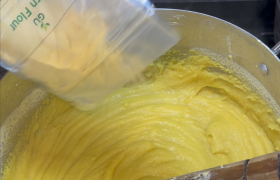
Stir until smooth Keep turning with a wooden spatula until it comes together into a smooth, stretchy swallow.
Adjust the texture
For firmer tuwo: add a bit more flour
For softer tuwo: add a splash of hot water
Steam briefly (optional) Cover the pot for 2–3 minutes so the tuwo sets nicely.
Serve hot Plate and enjoy with any favourite soup.
Quick tip from the video: “Quick, smooth, and doesn’t form lumps easily — good for both beginners and busy people.”
🌾 More Ways to Use Corn Flour
You can also use corn flour to make:
Pap / akamu
Pancakes
Swallow alternatives
Baking (as a thickener for soups and sauces)
This makes corn flour one of the most versatile staples to keep in your kitchen.
💛 Why Our Corn Flour Is Different
“Soft tuwo starts with quality corn flour. Made fresh. Pure. Delicious.”
Our flour is:
Clean
Pure
Finely milled
Naturally wholesome
“Our corn flour delivers the perfect tuwo texture every time. Pure, natural, and nutritious. Our corn flour makes mealtime better.”
Whether you are preparing a family meal or stocking up for daily use, corn flour is a simple, nourishing, and versatile staple. With the right flour, tuwo masara becomes soft, smooth, and consistently delicious.