
Tag: SwallowTips

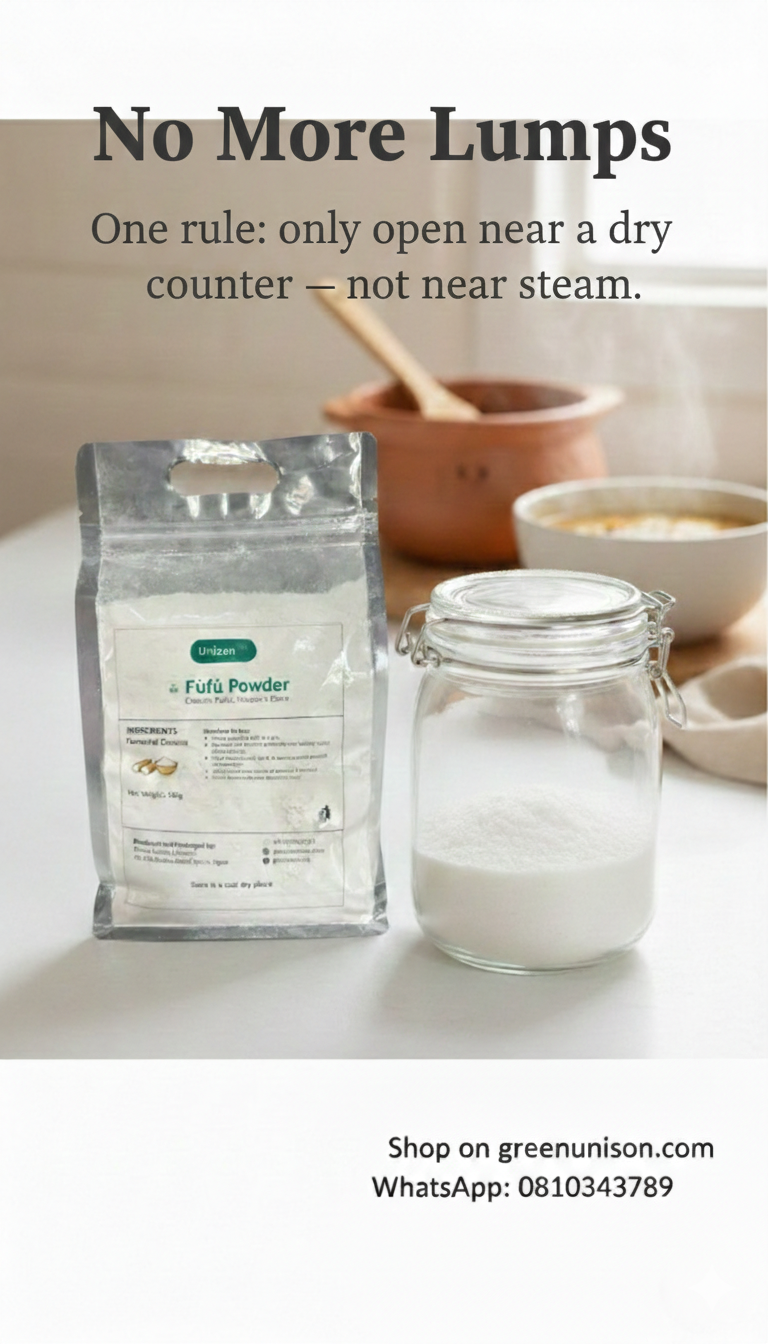
  • Best Way to Store Fufu Powder (Stay Fresh, Pest-Free & Clump-Free)

    Best Way to Store Fufu Powder (Stay Fresh, Pest-Free & Clump-Free)

    If you’ve ever opened your fufu powder and found lumps, a strange smell, or tiny pests, you’re not alone. In warm, humid kitchens, fine flours can absorb moisture quickly — and once that happens, they clump, lose freshness, and may attract pantry pests.

    This guide shows the best way to store fufu powder so it stays fresh, pest-free and clump-free — from the day you buy it to the last scoop.

    Quick answer (save this)

    To keep fufu powder fresh and clump-free:

    • Decant into an airtight, food-safe container (jar or sealed tub).
    • Keep it cool and dry — away from the cooker, window, and sink.
    • Use only a dry spoon (no wet hands, no steam nearby).
    • Store smaller “daily-use” portions to reduce repeated exposure to humidity.
    • In very humid weather, use the fridge/freezer only if it’s double-sealed (to prevent condensation).

    Want a ready-to-cook option?


    Why fufu powder clumps (and how to stop it)

    Fufu powder is finely milled and starchy, which makes it great for smooth swallow — but it also means it absorbs moisture easily. Moisture can come from:

    • steam rising from pots,
    • humidity in the air,
    • a damp spoon,
    • storing the pack near heat.

    The fix is simple: block moisture and reduce “open-air time”.


    Best containers for storing fufu powder

    Choose one of these:

    ✅ Airtight glass jar (best for freshness)

    • Doesn’t absorb odours
    • Easy to clean and fully dry
    • Lets you see what’s inside (helps you spot pests early)

    ✅ Airtight food-grade plastic tub (best for family-size packs)

    • Lightweight and practical
    • Pick one with a silicone seal or strong lid lock

    ✅ Resealable pouch (okay, but not the best)

    If you keep it in the pouch:

    • press out excess air,
    • seal tightly,
    • then place the pouch inside another airtight container.

    Avoid: thin nylon bags, paper packs, or any container with a loose lid — they invite moisture and pests.


    Step-by-step: the best storage routine (after opening)

    Step 1: Clean and dry your container properly

    Wash your container and lid, then let it dry completely. Even a little water can start clumping.

    Step 2: Decant — don’t leave it “half-open”

    Pour the fufu powder in, close immediately, and wipe the rim so the lid seals well.

    Step 3: Label it

    Write:

    • date opened
    • best-before date (from the pack)

    This helps you track freshness without guessing.

    Step 4: Create a small “daily-use” jar

    If you cook fufu often, keep a smaller jar for daily use and leave the main jar sealed. Less opening = less humidity entering.


    Where should you store it: cupboard, fridge, or freezer?

    Cupboard (recommended for most homes)

    Store in a cool, dry cupboard away from heat:

    • not above the cooker
    • not beside the kettle
    • not under the sink

    Fridge (only if you seal it properly)

    The fridge can help in very humid weather, but only if:

    • the powder is in a fully airtight container,
    • and (ideally) placed inside an extra zip bag.

    Why? Fridges can cause condensation if the container isn’t sealed well — and moisture is the enemy.

    Freezer (best for long-term storage + pest prevention)

    Freezer storage works well for flours if double-sealed to prevent moisture when you bring it out.

    Pro tip: If you’re worried about pantry pests, you can freeze the sealed flour briefly before storing in the cupboard (then return to room temperature before opening to prevent condensation).


    How to keep it pest-free (weevils, tiny moths, “moving sand”)

    Pantry pests often enter through:

    • existing eggs in flour,
    • open storage,
    • nearby grains in the cupboard.

    Do this to reduce the risk:

    • Store all flours/grains in airtight containers.
    • Keep your storage shelf clean and crumb-free.
    • Don’t mix old and new flour in one jar.
    • If you notice pests in any cupboard item, check nearby foods too.

    If you already see pests

    • If infestation is heavy (many insects, webbing, or strong off smell): discard the flour and clean the cupboard.
    • If you caught it early: you may be able to save it by isolating and freezing while sealed, then sifting — but only if it still smells and looks normal.

    Food safety note: If it smells musty, sour, or looks damp, don’t try to “dry it out” and keep it — it’s safer to replace.


    How to fix clumpy fufu powder (without ruining it)

    First, check the smell:

    • Neutral smell + dry lumps = usually safe to fix.
    • Musty smell / damp feel = discard.

    If it’s just dry lumps:

    1. Break gently with a dry spoon.
    2. Sieve into a clean bowl to restore smooth texture.
    3. Return to an airtight container.

    Avoid leaving it open to “air out” — that often adds more humidity.


    How long does fufu powder stay fresh?

    This depends on:

    • storage conditions (humidity matters),
    • how often you open it,
    • and the pack’s best-before date.

    As a simple rule:

    • Keep it sealed and dry for maximum freshness.
    • If you notice a persistent off smell or damp clumps, it’s time to replace.

    Shopping tip: if you prefer smaller packs (less time sitting open), choose a size you’ll finish comfortably.


    FAQs

    Can I store fufu powder beside spices (onions, stock cubes, etc.)?

    Only if it’s in a truly airtight container. Fine flours can pick up odours.

    Should I store it in the sun to “keep it dry”?

    No — sunlight and open-air storage can introduce moisture, dust, and pests.

    My fufu sometimes turns out lumpy — is it my storage or cooking?

    Storage affects clumps in the powder, but cooking method matters too. If you also cook other swallows, these guides can help:


    Ready for stress-free cooking?

    If you want fufu powder that’s easy to store and quick to cook:

    • Shop now: greenunison.com
    • WhatsApp catalogue: https://wa.me/c/2348103043789

    Need help choosing a pack size or storage container?
    Chat on WhatsApp (prefilled):
    Send a message


  • Why your corn flour swallow “draws” (or turns rubbery) — causes + fixes (Tuwo)

    Why your corn flour swallow “draws” (or turns rubbery) — causes + fixes (Tuwo)

    If you’ve ever made corn flour swallow and it suddenly starts “drawing” like chewing gum (or turns rubbery), you’re not alone. The good news? Most times, it’s not that anything is “wrong” with you — it’s usually water + heat + turning technique

    Yorùbá (kíákíá): Bí swallow ìyẹ̀pẹ̀ agbàdo rẹ bá ń fa tàbí di gígùn bí gọ́ọ̀mù, ó sábà máa jẹ́ omi tí kéré, ina tó ga, tàbí bí o ṣe ń yí i. Ẹ jọ̀ọ́, ẹ má bínú — a máa fix rẹ.

    Shop the flour used in this guide:
    Silky White/Yellow Corn Flour – Effortless Use


    First: what does “draw” actually mean?

    When corn flour meets hot water, the starch granules swell and thicken (that’s normal). But when the mix becomes too tight, overheated, or worked wrongly, it can turn stretchy-rubbery instead of smooth and soft.

    Yorùbá: “Draw” túmọ̀ sí pé swallow náà ń fa, kì í sì jẹ́ kí o yà a dáadáa — ó ń dà bí ẹni pé o ń jẹ gọ́ọ̀mù.


    Quick Fix Checklist (try this in 5 minutes)

    If your tuwo is already drawing:

    1. Reduce heat to low.
    2. Add hot water (small splashes) around the edges — not cold water.
    3. Cover for 60–90 seconds to steam.
    4. Fold/turn gently until it relaxes.
    5. If it’s still too tight, repeat with another small splash of hot water.

    Yorùbá:
    1) Dín iná kù.
    2) Fikun omi gbóná díẹ̀ díẹ̀ (kì í ṣe omi tútù).
    3) Bo fún ìṣẹ́jú kan.
    4) Yí i sẹ́lẹ̀ sẹ́lẹ̀ títí yóò fi rọ.


    7 reasons corn flour swallow draws (and how to fix each one)

    1) Your water-to-flour ratio is too low (it’s simply too thick)

    Symptom: It becomes tight early and starts pulling.
    Fix: Use the reliable base ratio:

    • 1 cup corn flour : 2 to 2½ cups water

    If you like it softer, stay closer to 2½ cups.

    Yorùbá: Bí omi bá kéré ju, swallow máa di gígùn. Fikun omi díẹ̀ díẹ̀ (omi gbóná).


    2) You poured too much flour at once

    Symptom: It thickens too fast; you fight lumps, then it becomes rubbery.
    Fix: Add flour gradually while stirring/whisking at the start.

    Pro tip: Start with a small portion first, let it thicken, then add the rest in batches.

    Yorùbá: Má ṣe tú ìyẹ̀pẹ̀ pọ̀ sílẹ̀ lẹ́ẹ̀kan. Tú un díẹ̀ díẹ̀.


    3) Heat is too high after adding the flour

    Symptom: It “sets” too quickly and turns chewy.
    Fix: Once water boils, reduce to medium/medium-low before adding flour. Keep it controlled.

    Yorùbá: Iná tó ga máa mú kí ó “di” kíákíá. Dín iná kù sí àárín.


    4) You used the wrong mixing method (or over-whisked)

    Symptom: It becomes gluey/stretchy instead of smooth and soft.
    Fix:

    • Whisk only at the beginning to prevent lumps.
    • Switch to a wooden spatula/turning stick to finish.
    • Turn firmly, but don’t “beat” it like cake batter.

    Yorùbá: Whisk jẹ́ fún ìbẹ̀rẹ̀. Lẹ́yìn náà, lo ọ̀pá/yíyí (turning stick) kí o sì yí i dáadáa.


    5) You kept “dry-patching” (adding extra flour to “correct” softness)

    Symptom: It starts okay, then gets tight and draws later.
    Fix: If you need to adjust texture, do it with hot water, not more flour.

    Yorùbá: Tí ó bá rọ ju, má ṣe fọwọ́sí i pẹ̀lú ìyẹ̀pẹ̀ míì. Omi gbóná ló yẹ.


    6) You left it covered too long without turning

    Symptom: The top looks fine, but underneath sets like rubber.
    Fix: Cover briefly (1–3 minutes max), then turn again.

    Yorùbá: Bo díẹ̀ ni. Lẹ́yìn náà, yí i padà.


    7) It cooled down (and firmed up)

    Symptom: Smooth when hot; rubbery/firm after sitting.
    Fix:

    • Serve tuwo hot.
    • If it sits, reheat gently with steam + a tiny splash of hot water and fold.

    Yorùbá: Swallow fẹ́ràn gbígbóná. Tí ó bá tutù, jẹ́ kó gba ẹ̀fúùfù-omi (steam) kí o sì yí i.


    Foolproof method for smooth, non-rubbery corn flour tuwo

    You’ll need:

    Steps:

    1. Bring 2–2½ cups water to a boil (for 1 cup flour).
    2. Reduce heat to medium.
    3. Add corn flour gradually while whisking.
    4. Once it thickens, switch to a spatula/turning stick and turn until smooth.
    5. Cover 1–2 minutes, then turn once more.
    6. Serve hot.

    Yorùbá (ìlànà kúkúrú):
    Gbé omi dé bíbo → dín iná kù → tú ìyẹ̀pẹ̀ díẹ̀ díẹ̀ → whisk → yí i pẹ̀lú ọ̀pá → bo díẹ̀ → yí i lẹ́ẹ̀kansi → jẹun.


    “Corn flour” vs “cornflour” (important note)

    In some places, “cornflour” can mean pure cornstarch (used mostly for thickening sauces).
    In this post, corn flour means finely milled maize flour used for tuwo/swallow — like the one we sell.


    Helpful next reads (if you want more guidance)


    Where to buy the corn flour in this post

    🛒 Shop directly:
    Silky White/Yellow Corn Flour – Effortless Use

    📦 Browse all flours:
    https://greenunison.com/shop/flours/

    📲 Browse our WhatsApp catalogue:
    https://wa.me/c/2348103043789

    💬 Chat to order (prefilled message):
    https://wa.me/2348103043789?text=Hi%20Green%20Unison%20%F0%9F%91%8B%20Please%20help%20me%20order%20your%20Silky%2FWhite%2FYellow%20Corn%20Flour%20for%20tuwo.%20I%20need%20the%20best%20water%20ratio%20%2B%20tips%20to%20stop%20my%20corn%20flour%20swallow%20from%20drawing%2Frubbery.


    Final word (small, but powerful)

    If your corn flour swallow draws, don’t panic.
    In most kitchens, the fix is simply: more hot water (small splashes), lower heat, and gentler turning.

    Yorùbá: Ẹ má yá. Ọ̀pọ̀ ìgbà, ìtúnṣe rẹ̀ ni: omi gbóná díẹ̀ díẹ̀ + iná kékèké + yíyí pẹ̀lẹ́pẹ̀lẹ́.

    Happy cooking — and may your tuwo be soft, smooth, and proudly non-dramatic.