
Picture a lively family gathering. Two steaming bowls of amala sit on the table – one dark brown, the other almost white. The elder aunties playfully argue over which one tastes better. If you grew up in a Yoruba household, you know this friendly debate well. The truth is, amala isn’t just one thing; it comes in different colours with their own stories. Today, we’re diving into “white” amala, locally called lafún, and why its colour matters for both tradition and taste. Along the way, you’ll learn how to make this cherished swallow step-by-step, so you can recreate that smooth, stretchy goodness in your own kitchen.
A Tale of Two Amalas: White vs. Black
In Nigerian cuisine, amala actually comes in two main types, fondly distinguished by colour:
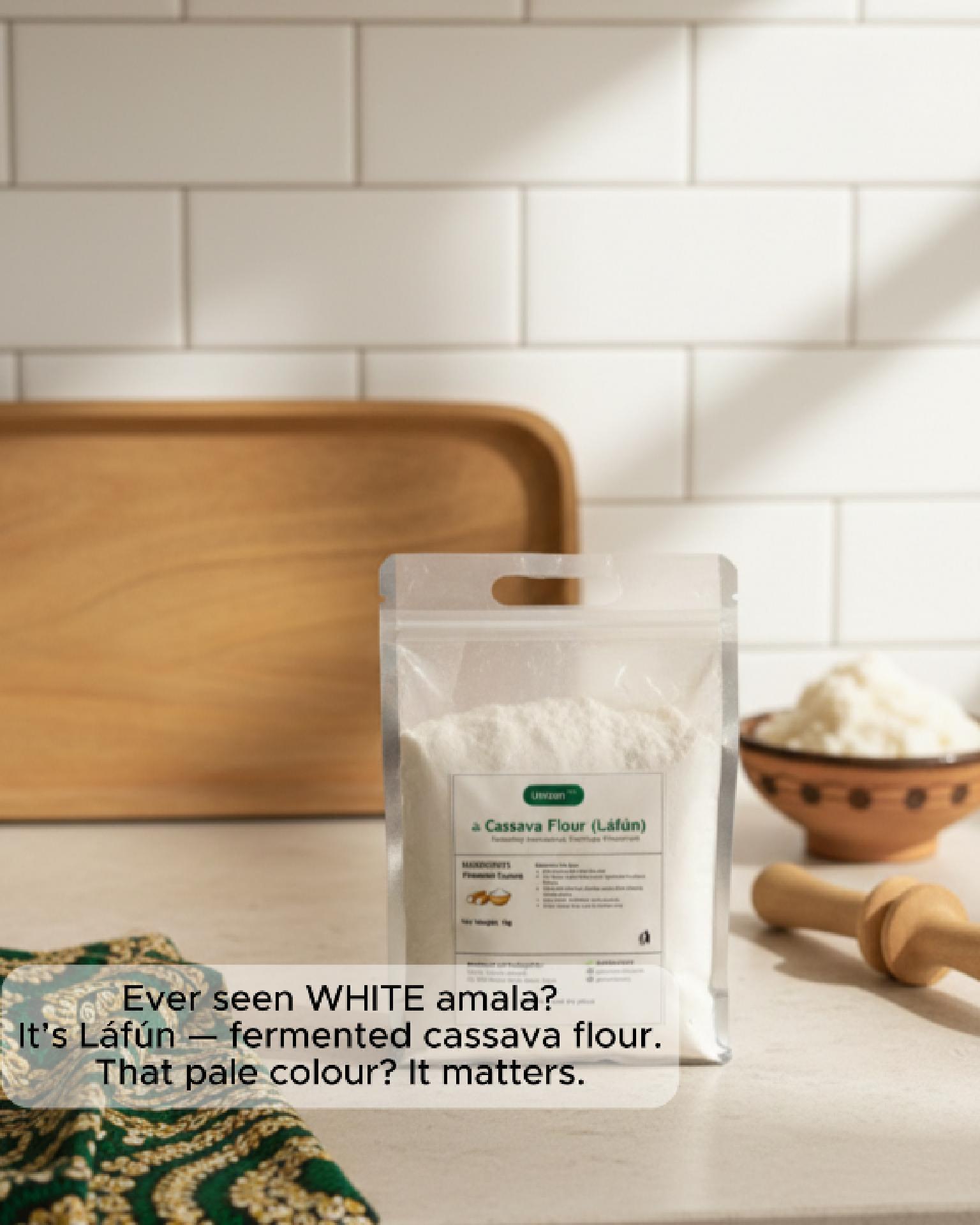
- White amala (lafún): Creamy off-white in colour when cooked, made from fermented cassava flour. Its light hue comes from using peeled and sun-dried cassava. Lafún has a slightly tangy aroma from fermentation, which many have grown to love with rich soups.
- Black/brown amala: Deep brown or nearly black when prepared, usually made from yam flour (elubo isu) or sometimes unripe plantain flour (elubo ogede). This is the classic amala most people know, loved for its earthy flavour.
Why does colour matter? Culturally, the colour tells the story of its ingredient:
Láfún’s pale colour signals cassava’s presence – a clue for those at the table that this isn’t the usual yam amala. In many Yoruba homes, seeing that light-coloured mound means a special treat or a change of pace from the norm. Also, properly processed lafún flour (like the kind that’s peeled and finely milled) yields a beautiful creamy swallow. In fact, if your lafún comes out grayish or speckled, it might mean the cassava wasn’t fully peeled or clean – a sign of lower quality flour. So yes, colour is a quick quality check!
And here’s a fun bit of food lore: lafún is often mistaken for its “cousin,” pupuru, which is another traditional cassava swallow. Pupuru is also light in colour, but it’s smoke-dried, giving it a distinct smoky taste and less stretch. Lafún, on the other hand, is sun-dried, preserving a neutral taste and that signature stretchiness amala is known for. So, when you hear “white amala,” remember it’s our good friend lafún – and its colour is part of what makes it unique.
Ingredients You’ll Need
Making white amala is delightfully simple. Ensure you have:
- Láfún (fermented cassava) flour – about 1 cup for a family-serving (4 wraps). Use quality, fine-milled lafún like our Fermented Cassava Flour (Láfún) for the smoothest result.
- Water – around 2 to 2.5 cups of water per cup of flour (you may adjust for consistency).
- A whisk or wooden turner (omo olo) – for stirring. A whisk helps prevent lumps.
Pro Tip: Good lafún flour is key. A finely milled, clean cassava flour will give you a silky amala with that lovely white-cream colour. Low-quality flour might clump or taste off. If you’re looking for trusted quality, check out our farm-processed lafún in the shop – hygienically fermented and peeled for purity.
Step-by-Step: How to Prepare White Amala (Lafún)
Making amala lafún is more of an art than an exact science, but follow these steps and you’ll get a perfect, lump-free swallow every time:
- Boil the water: Pour your measured water into a pot and bring it to a rolling boil. Once boiling, reduce the heat to medium. (Reducing the heat prevents the flour from cooking too abruptly on contact, which can cause lumps.)
- Start whisking in flour: Gradually whisk in the lafún flour into the hot water. Sprinkle it in little by little with one hand while stirring swiftly with a whisk or wooden spoon in your other hand. This continuous motion is the secret to a smooth consistency.
- Stir vigorously: As the mixture thickens, put some arm into it! Switch to a wooden turner (or keep whisking) and stir firmly and quickly. You’ll see the lafún dissolve into the water and form a thick dough. Keep mixing to break up any tiny lumps and to evenly cook the flour.
- Adjust consistency: Once it starts coming together, gauge the texture. If it feels too stiff (hard to turn), sprinkle a bit more hot water and stir it in. If it’s too soft or runny, add a little more lafún flour gradually. The goal is a stretchy, doughy consistency that can form a mound without running off the spoon.
- Steam on low heat: Now that it’s mostly formed, you can cover the pot and turn the heat to low for about a minute. This steams the amala so every bit of flour cooks through. (No one likes an “uncooked” flour taste!)
- Give a final turn: Uncover and give it a final strong stir/turn from bottom to top. You should have a smooth, thick amala that pulls away from the pot easily. The colour should be a pleasant off-white and uniform.
- Serve and wrap: Quickly scoop the hot white amala onto a plate or into a plastic wrap. Wetting the spoon or scoop slightly can help prevent sticking. Form it into your preferred shape (traditionally a rounded mound). Serve immediately while hot.
And that’s it – you’ve made perfect white amala!
Extra Tips for Lump-Free Lafún
- Steady does it: Don’t dump the flour in all at once. Gradual addition is key to avoid those annoying lumps. Think rain shower, not snowball.
- Use a whisk for the first mix: Especially if you’re a beginner, a whisk helps distribute the flour quickly in the hot water. You can switch to the traditional wooden paddle once it thickens.
- Pre-mix trick: Some cooks mix a few tablespoons of lafún flour with cold water in a separate bowl to form a runny paste before adding any flour to the pot. Then pour this slurry into the boiling water, stir, and proceed with adding the rest of the flour. This can help eliminate lumps right from the start.
- Quality flour matters: As mentioned, work with finely milled, clean cassava flour. Our
Nature-Powered Lafunis peeled and low-heat dried, which gives a lighter colour and smoother texture than many market versions. No need for sieving – it’s ready to go. - If lumps happen, don’t panic: Simply keep the heat on low, add a tiny splash of hot water, and press the clumps against the pot’s side to dissolve them. Vigorous turning will usually smooth things out.
Serving Your White Amala
The beauty of amala lafún is how well it goes with a variety of soups. In fact, white amala is a classic companion to Yoruba soups like ewedu (molokhia soup) often teamed with gbègìrì (bean soup). That trio – white amala, ewedu, and gbegiri – creates a flavour harmony that’s hard to beat. Of course, you can enjoy lafún with efo riro (spicy spinach stew), ogbono soup, egusi melon soup, or even okra (ilà) soup. Its mild taste and springy texture make it a perfect canvas for rich, flavorful soups.
As you dish out your perfectly made white amala, don’t be surprised if someone asks, “Why is it so white?” – you now have the answer ready. It’s the lovingly fermented cassava and careful processing that keeps it light. You might even impress them with the pupuru vs. lafun trivia!
Ready to give it a try? If you haven’t already, grab some premium-quality lafún from our store. We take pride in offering farm-fresh, hygienically prepared cassava flour that yields a smooth, delicious amala every time. You can get it delivered fast to your doorstep – check out the Fermented Cassava Flour (Láfún) on our shop and start cooking.
Curious about other swallows? You might enjoy our guide on making amala ogede (plantain amala) for a nutritious twist – see Plantain Flour Amala: The 3-Minute Whisk Method for more kitchen inspiration. And if you have any questions or need help, we’re here for you – chat us on WhatsApp and let’s talk food!
Enjoy your delicious white amala, served with love and a story. As we say, the joy of Nigerian cooking is in both the process and the sharing. So, share this recipe with family & friends, and let the taste (and colour) spark a fun conversation at the dining table. Happy cooking!