
Have you ever made fufu from instant powder, only to end up with a sticky, glue-like blob or stubborn lumps? Don’t worry – you’re not alone, and we’ve got you covered. Fufu (cassava swallow) is a beloved staple, but getting that perfectly smooth, stretchy texture from fufu powder can be tricky if you don’t know the right technique. In this guide, we’ll walk you through how to mix fufu powder so you get soft, lump-free swallow every time – no gluey mess, no stress. Grab your pot and let’s fix those fufu woes!
Why Does Fufu Sometimes Turn Out Like Glue?
If your fufu feels more like super glue than a smooth swallow, a few usual suspects are likely at play:
- Too Much Water: Using excess water can make fufu overly soft and sticky. Cassava is full of starch, so too high a water-to-powder ratio turns it into a gloopy paste.
- Too Little Water (or Heat): Ironically, the opposite can also cause issues. Not enough water or letting the mixture dry on high heat can lead to lumps and uneven cooking, making parts of the fufu gluey while other parts stay raw or clumpy.
- Poor Mixing Technique: Dumping powder in all at once or not stirring properly will create lumps. Those lumps have dry powder inside, which never fully cooks – leading to a lumpy, sticky texture.
- Wrong Powder or Quality: Coarse or low-quality fufu flour might not incorporate smoothly. A finely milled, well-processed powder (like our own Green Unison Instant Fufu Powder) is less prone to lumps and cooks into a better texture.
The good news? By adjusting your method, you can avoid all these issues. It’s mostly about the right water ratio, heat control, and constant stirring. Let’s dive into the step-by-step solution for a perfect, non-gluey fufu.
How to Make Smooth, Stretchy Fufu from Powder (Step by Step)
Making fufu powder into a smooth swallow is easy once you get the hang of it. Here’s how to do it:
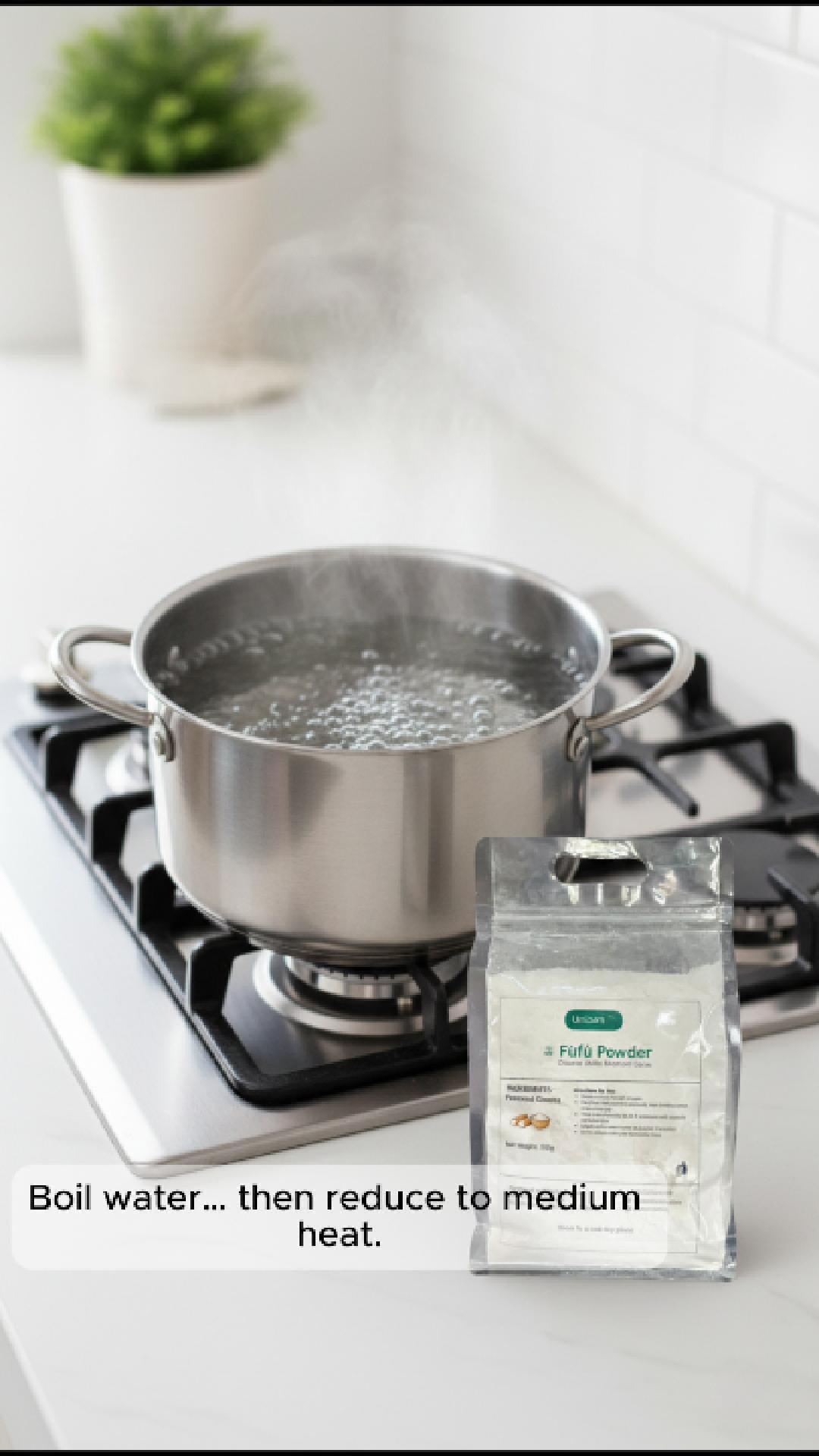
1. Boil the Water First (But Don’t Overdo It)
Start with fresh, clean water in your pot – about 2 to 2.5 cups of water for each cup of fufu powder. This ratio gives a good consistency (you can adjust as you learn your preferred thickness). Bring the water to a rolling boil first. Boiling water is key to cooking the cassava starch quickly and evenly. However, don’t keep it at a furious boil once it’s bubbling – extremely high heat can scald the fufu and create lumps.
Pro Tip: As soon as the water boils, reduce the heat to medium (or even low). You want the water hot but not erupting when you start adding the powder. This controlled heat will cook the fufu without burning it.
2. Add Fufu Powder Gradually While Stirring
Now, grab a sturdy wooden spoon or a whisk. (We love using a whisk at the start for lump-free results – it’s a game-changer!) Slowly pour the fufu powder into the hot water in a steady stream, little by little, while stirring vigorously. This gradual addition helps to “scatter” the powder into the water so no clumps form.
If you dump all the powder at once, you’ll get big lumps that are hard to dissolve. So be patient – add a bit of powder, stir until it’s incorporated, then add more. Keep the pot on medium heat as you do this; too high and the mixture might cook too fast on the bottom, too low and it won’t cook at all.
Keep stirring constantly with your spoon/whisk. You’ll notice the mixture thickening gradually into a dough-like consistency as the powder absorbs water.
3. Stir Continuously (Switch to a Wooden Spoon When Thick)
Once all the powder is in and it starts to form a thick consistency, it’s muscle time! Stir, fold, and turn the fufu in the pot continuously. At this stage, a wooden spoon (or the traditional “turning stick”) works better than a whisk because the fufu is now heavy and stretchy.
Press the fufu against the sides of the pot as you stir to squash any small lumps. Keep the heat on low-to-medium to ensure the fufu cooks through without burning. You’ll notice it becoming smoother with each turn. This step usually takes just a few minutes – you’re basically “kneading” the fufu in the pot with your spoon.
Pro Tip: If you see any tiny lumps, don’t panic. Keep the spoon moving and apply a bit of pressure against the pot – those lumps will melt away into the hot fufu. Consistent stirring is what transforms the mix into that coveted smooth, stretchy ball.
4. Adjust the Consistency (Water or Powder Fixes)
After a few minutes, evaluate the texture. This is where you tweak to get your perfect swallow:
- If the fufu is too thick or hard (difficult to turn, feels stiff or dry): Sprinkle a little hot water around the edges of the pot. Fold it in and stir. The hot water will incorporate and soften the dough. Add water in small increments (a few tablespoons at a time) so you don’t overshoot and turn it to mush.
- If the fufu is too soft or sticky (gluey): This means there’s excess moisture. You can rescue it by adding a tiny bit more fufu powder and quickly working it in. Just a tablespoon or two can firm up a overly soft fufu. Keep the heat on low while you do this so the new powder cooks in.
- If lumps are appearing (small dry clumps): You likely added powder too fast or didn’t stir enough initially. No worries – add a splash of water and cover the pot for about 30 seconds to a minute. This can help steam and soften the lumps. Then uncover and vigorously beat the fufu with the spoon to break the lumps apart. (Wear oven mitts or use a cloth to hold the pot – it might jiggle.) In future, remember to whisk and stir from the get-go to prevent lumps.
By adjusting with a bit more water or powder, you can fine-tune the fufu’s feel. Eventually, you’ll get a sense of your ideal texture – some like it very soft and almost stretchy-sticky (but not uncooked or gluey), others prefer it a tad firmer.
5. Know When It’s Ready
You’ll know your fufu is ready when it’s smooth in appearance, free of lumps, and has a bit of stretch to it. It should pull away slightly from the sides of the pot as you stir, forming a nice cohesive mass. Another sign: the color usually changes to an off-white and loses the raw cloudy look, indicating it’s well cooked.
Traditionally, people will mould it into a ball at this point. You can do this by scooping it out onto a plate and using a plastic wrap or latex gloves to shape it – careful, it’s hot! Once balled, you might see a slight sheen on the surface; that’s a good sign of smoothness and stretch.
If you’re not sure, taste a tiny bit (careful, let it cool) – it should taste cooked (no raw starchy taste) and have a nice smooth mouthfeel with no floury lumps.
Congratulations, you’ve just made a perfect swallow from fufu powder! Time to get that soup ready.
Extra Tips for Lump-Free, Non-Sticky Fufu
- Use a Whisk for the First 1-2 Minutes: We can’t say this enough – a whisk is excellent for combining the powder and water initially. It breaks up clumps quickly. Once the fufu thickens, switch to a wooden spoon to finish it off. This two-tool approach is our secret weapon for super smooth fufu. (In fact, we even used this trick for lump-free plantain amala – check out our 3-minute whisk method for plantain flour amala for a similar hack!).
- Steady, Moderate Heat: Resist the urge to cook on high heat the whole time. High heat can cause uneven cooking – you’ll get a burnt bottom and raw top (gluey!). Medium heat while stirring, and low heat when adjusting consistency, works best to cook the fufu evenly without scorching.
- Quality of Powder Matters: A well-processed, finely milled cassava flour will give a smoother result. Our Instant Fufu Powder is designed for easy, lump-free mixing – it’s finely milled and properly fermented/dried, so it cooks fast and smooth. Cheaper or raw cassava flours might need more elbow grease to get similar results. If you’ve struggled with those, it might be time to upgrade to a smoother experience.
- Work Those Arms (But Not Forever): Fufu doesn’t actually take long to cook – usually 3-5 minutes of stirring once the powder is in. If you’re stirring for 10+ minutes and it’s still not coming together, something’s off (either ratio or heat). Stop and troubleshoot (add water or powder as above). When done right, your fufu should be ready in minutes – a quick workout and you’re done!
- Keep the Lid Nearby: If at any point you need to step away (or your arm needs a quick break), turn the heat to very low and cover the pot. The steam under the lid will keep it moist and prevent a “crust” from forming. Just don’t leave it unattended too long. When you come back, you may find some water on top – simply stir it in. Covering for a short moment can also help cook out any remaining tiny lumps as mentioned earlier.
By following these tips, you’ll be dishing out swallows that make you do a little happy dance at dinnertime. No more hiding a sticky fufu disaster under a mountain of soup – you’ll have that smooth, elastic texture that’s perfect for scooping up your favorite soups (Egusi, Efo Riro, Ogbono – bring them on! 😋).
Common Mistakes to Avoid (Your Fufu No-Glu Squad)
To recap, keep an eye out for these common mistakes when preparing fufu from powder, and you’ll save yourself from a lot of “swallow sorrow”:
- Adding Powder Too Fast: This is the #1 culprit for lumps. Always pour gradually and whisk/stir while adding.
- **Using *Way* Too Much Water:** Eyeballing water and accidentally using far more than a 2:1 ratio can make a pot of paste. Measure your water, and remember you can always add a little more if needed, but you can’t easily take it out.
- High Heat All Through: Blasting the stove on high will cook the bottom layer to death while the top is still raw. It often leads to a lumpy, gooey mix. Start high to boil, then always reduce heat when mixing and finishing the cook.
- Neglecting the Stirring: We get it, your arm might ache, but constant stirring (for those few critical minutes) is what works the magic. Stopping too early or stirring lazily will result in lumps and uneven texture. Tag team with someone if you need a break – it’s worth it!
- Using a Wet Spoon from the Start: This is a subtle one – make sure your stirring spoon is dry when you begin. Introducing water drips while adding powder can create instant tiny clumps. Keep things dry until everything is well mixed. Then you can sprinkle water later if adjusting.
Avoid these pitfalls and you’ll dramatically increase your chances of first-time success with smooth fufu.
From Powder to Perfection: You’ve Got This!
Making perfect fufu from instant powder is a skill worth mastering – and now you have all the tips to do it. It might take a try or two to get your preferred consistency spot on, but even your first attempt using these steps will be miles better (and easier) than struggling in the dark. Remember, even seasoned home cooks had to learn these tricks at some point. Now you’re in on the secrets!
So the next time it’s swallow o’clock and you’re craving that comforting mound of fufu with steaming soup, you can approach the stove with confidence. No more fearing you’ll end up with a pot of goo or a lumpy, bumpy ball. Instead, you’ll scoop out a beautiful, smooth and elastic fufu that holds together yet gently yields as you tear off a bite. That’s the texture we’re going for!
And if you need a little help (or just want to make life easier), remember that the quality of your powder makes a difference. Green Unison’s Instant Fufu Powder is made to give you that smooth, stretchy result without the hassle. We’ve done the tedious part – peeling, fermenting, drying and finely milling the cassava – so that when it reaches your kitchen, it practically mixes itself (with a bit of whisking love from you, of course!).
Ready to turn your fufu powder into the perfect swallow? Grab a pack of Instant Fufu Powder from our shop and give it a go! We’re excited for you to enjoy easier, quicker fufu that doesn’t turn into a glue monster.
Have any questions or want to order directly? We’re just a message away! Feel free to reach out on our WhatsApp catalogue to see our products, or chat with us on WhatsApp to get personal assistance with your order. Simply click here: Chat on WhatsApp – we’ve even pre-filled the hello message for you. 📲💬 We deliver nationwide, so your fufu fix is just an order away.
Enjoy your lump-free, non-sticky fufu and happy eating!