If you’ve ever opened your fufu powder and found lumps, a strange smell, or tiny pests, you’re not alone. In warm, humid kitchens, fine flours can absorb moisture quickly — and once that happens, they clump, lose freshness, and may attract pantry pests.
This guide shows the best way to store fufu powder so it stays fresh, pest-free and clump-free — from the day you buy it to the last scoop.
Quick answer (save this)
To keep fufu powder fresh and clump-free:
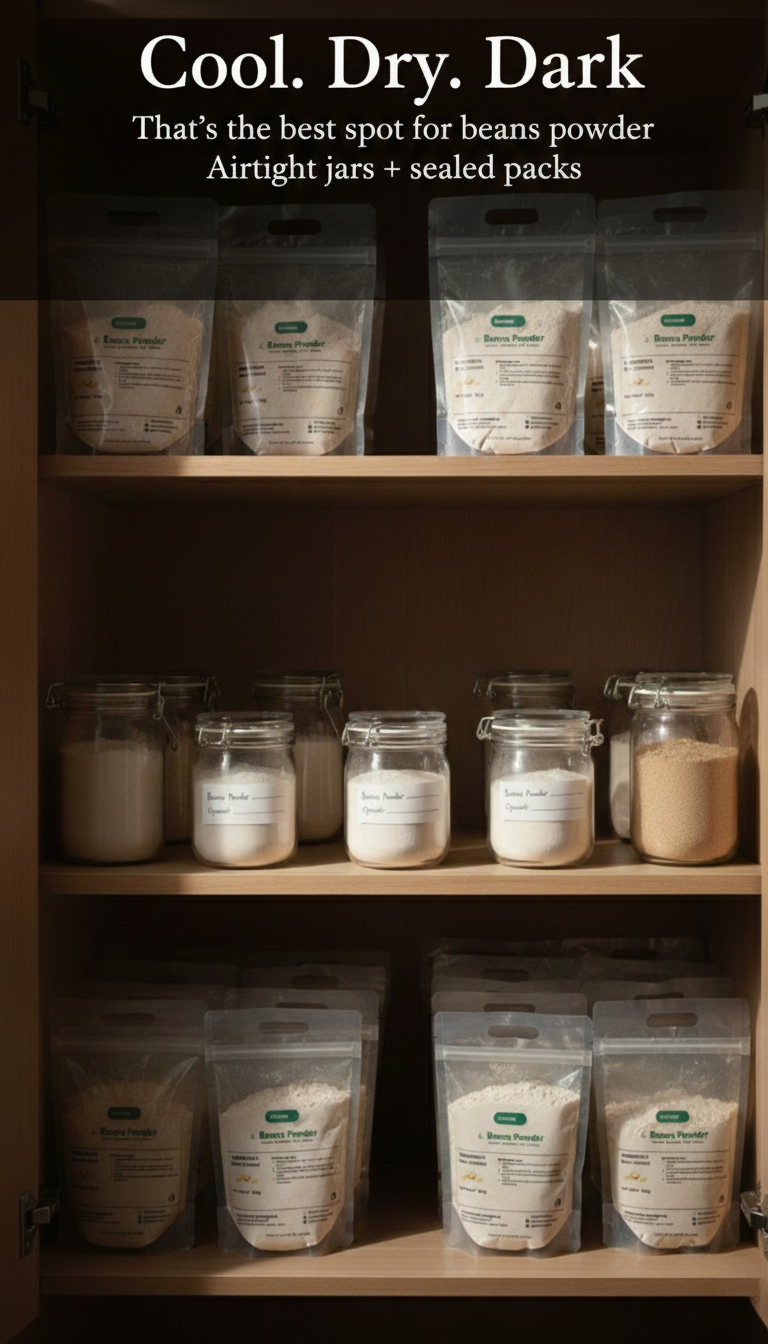
- Decant into an airtight, food-safe container (jar or sealed tub).
- Keep it cool and dry — away from the cooker, window, and sink.
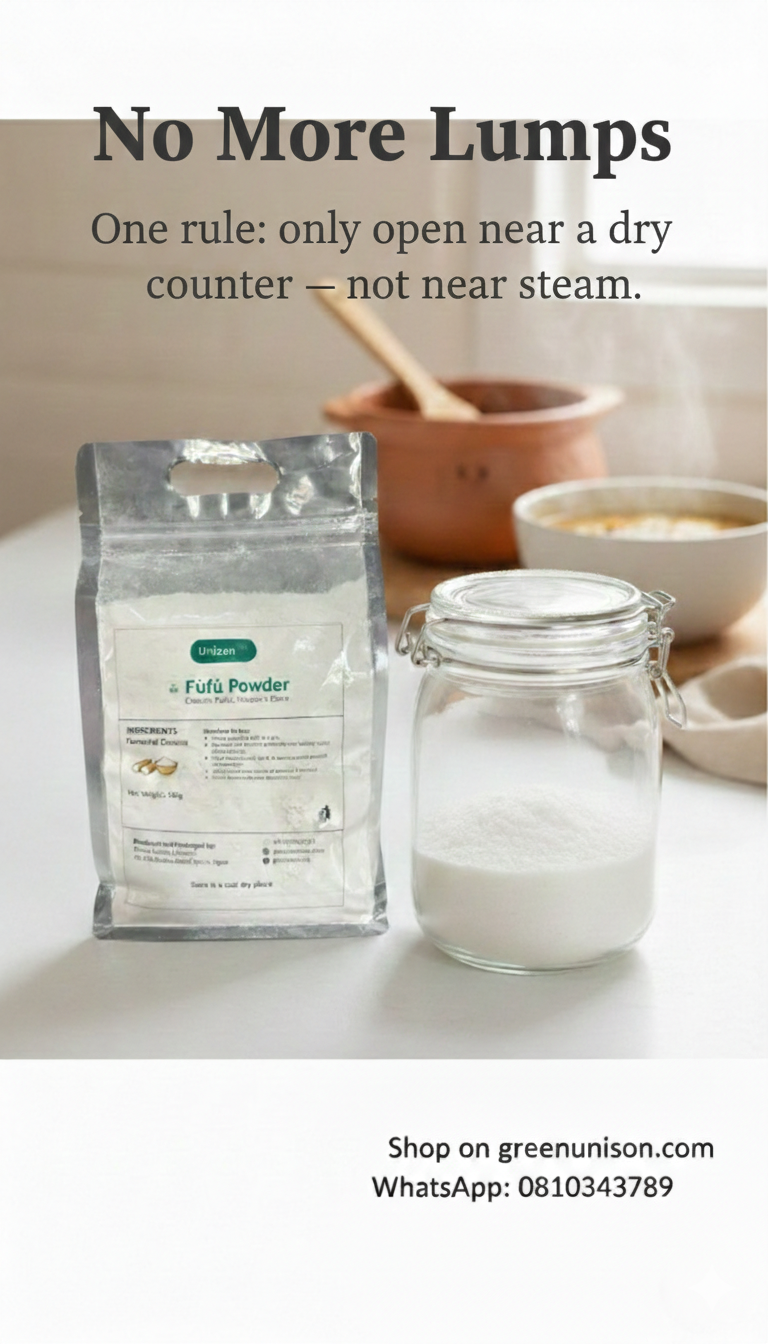
- Use only a dry spoon (no wet hands, no steam nearby).
- Store smaller “daily-use” portions to reduce repeated exposure to humidity.
- In very humid weather, use the fridge/freezer only if it’s double-sealed (to prevent condensation).
Want a ready-to-cook option?
- Shop: Instant Fufu Powder (Cassava)
- Also available: Fermented Cassava Flour (Lafun)
- Browse all: Buy Flours
Why fufu powder clumps (and how to stop it)
Fufu powder is finely milled and starchy, which makes it great for smooth swallow — but it also means it absorbs moisture easily. Moisture can come from:
- steam rising from pots,
- humidity in the air,
- a damp spoon,
- storing the pack near heat.
The fix is simple: block moisture and reduce “open-air time”.
Best containers for storing fufu powder
Choose one of these:
✅ Airtight glass jar (best for freshness)
- Doesn’t absorb odours
- Easy to clean and fully dry
- Lets you see what’s inside (helps you spot pests early)
✅ Airtight food-grade plastic tub (best for family-size packs)
- Lightweight and practical
- Pick one with a silicone seal or strong lid lock
✅ Resealable pouch (okay, but not the best)
If you keep it in the pouch:
- press out excess air,
- seal tightly,
- then place the pouch inside another airtight container.
Avoid: thin nylon bags, paper packs, or any container with a loose lid — they invite moisture and pests.
Step-by-step: the best storage routine (after opening)
Step 1: Clean and dry your container properly
Wash your container and lid, then let it dry completely. Even a little water can start clumping.
Step 2: Decant — don’t leave it “half-open”
Pour the fufu powder in, close immediately, and wipe the rim so the lid seals well.
Step 3: Label it
Write:
- date opened
- best-before date (from the pack)
This helps you track freshness without guessing.
Step 4: Create a small “daily-use” jar
If you cook fufu often, keep a smaller jar for daily use and leave the main jar sealed. Less opening = less humidity entering.
Where should you store it: cupboard, fridge, or freezer?
Cupboard (recommended for most homes)
Store in a cool, dry cupboard away from heat:
- not above the cooker
- not beside the kettle
- not under the sink
Fridge (only if you seal it properly)
The fridge can help in very humid weather, but only if:
- the powder is in a fully airtight container,
- and (ideally) placed inside an extra zip bag.
Why? Fridges can cause condensation if the container isn’t sealed well — and moisture is the enemy.
Freezer (best for long-term storage + pest prevention)
Freezer storage works well for flours if double-sealed to prevent moisture when you bring it out.
Pro tip: If you’re worried about pantry pests, you can freeze the sealed flour briefly before storing in the cupboard (then return to room temperature before opening to prevent condensation).
How to keep it pest-free (weevils, tiny moths, “moving sand”)
Pantry pests often enter through:
- existing eggs in flour,
- open storage,
- nearby grains in the cupboard.
Do this to reduce the risk:
- Store all flours/grains in airtight containers.
- Keep your storage shelf clean and crumb-free.
- Don’t mix old and new flour in one jar.
- If you notice pests in any cupboard item, check nearby foods too.
If you already see pests
- If infestation is heavy (many insects, webbing, or strong off smell): discard the flour and clean the cupboard.
- If you caught it early: you may be able to save it by isolating and freezing while sealed, then sifting — but only if it still smells and looks normal.
Food safety note: If it smells musty, sour, or looks damp, don’t try to “dry it out” and keep it — it’s safer to replace.
How to fix clumpy fufu powder (without ruining it)
First, check the smell:
- Neutral smell + dry lumps = usually safe to fix.
- Musty smell / damp feel = discard.
If it’s just dry lumps:
- Break gently with a dry spoon.
- Sieve into a clean bowl to restore smooth texture.
- Return to an airtight container.
Avoid leaving it open to “air out” — that often adds more humidity.
How long does fufu powder stay fresh?
This depends on:
- storage conditions (humidity matters),
- how often you open it,
- and the pack’s best-before date.
As a simple rule:
- Keep it sealed and dry for maximum freshness.
- If you notice a persistent off smell or damp clumps, it’s time to replace.
Shopping tip: if you prefer smaller packs (less time sitting open), choose a size you’ll finish comfortably.
FAQs
Can I store fufu powder beside spices (onions, stock cubes, etc.)?
Only if it’s in a truly airtight container. Fine flours can pick up odours.
Should I store it in the sun to “keep it dry”?
No — sunlight and open-air storage can introduce moisture, dust, and pests.
My fufu sometimes turns out lumpy — is it my storage or cooking?
Storage affects clumps in the powder, but cooking method matters too. If you also cook other swallows, these guides can help:
- Plantain Flour Amala: The 3-Minute Whisk Method (No Lumps)
- Tuwo Masara: Smooth Corn Flour Swallow (No Grains)
- Eko vs Ogi: One Pap Powder, Two Textures
Ready for stress-free cooking?
If you want fufu powder that’s easy to store and quick to cook:
- Shop now: greenunison.com
- WhatsApp catalogue: https://wa.me/c/2348103043789
Need help choosing a pack size or storage container?
Chat on WhatsApp (prefilled):
Send a message