Flour is a kitchen staple – but have you ever wondered how its flavor and texture change over time? We did, and we put it to the test with our micro-batch flours. In this post, we share results from tasting our freshly milled Smooth Plantain Flour, White/Yellow Corn Flour, Instant Pap Powder (ogi), and Groundnut (Peanut) Flour at 30, 60, and 90 days after production. How long does each stay fresh, when do they start to decline, and what can you do to preserve that just-milled goodness? Let’s dive into the science of aging flour – and why micro-batches may be your new best friend for peak flavor and nutrition.
Why Freshness Matters (The Micro-Batch Difference)
There’s a reason your nose perks up at the smell of freshly milled flour – it’s packed with vibrant flavors and nutrients that can dull over time. It’s like comparing freshly ground coffee beans to month-old grounds: fresh is always better. The micro-batch approach means we mill in small quantities and ship quickly, so you get flour at its freshest. This is vital for health-conscious shoppers (to maximise nutrients and avoid stale oils) and budget-wise families (to ensure that every scoop you bought gets used, not binned). Even home cooks will notice the difference: freshly milled flours yield richer aromas and better texture in your swallows, bakes, and breakfasts.
What actually happens as flour sits? Over time, flours – especially whole-grain or nut-based ones – gradually oxidise. The natural oils in the flour (for example, the germ oil in whole corn or the healthy fats in groundnut) slowly break down, which can lead to off-odors and flavors. An older batch of flour might develop a slight mustiness; as one expert puts it, old whole-grain flour can taste bitter or even metallic if the oils have gone rancid. Additionally, prolonged storage in less-than-ideal conditions can invite moisture or unwelcome pests, which nobody wants in their pantry. All of these factors underscore why freshness isn’t just a buzzword – it directly affects the quality of your food.
Micro-batches, however, help sidestep many of these issues. By producing flours in small lots, we avoid long warehouse storage. Every package of Green Unison flour is packed at peak freshness and in airtight, food-grade pouches. This means when you open a new bag, you’re likely smelling the same wholesome aroma as on milling day. We also seal each pouch with an extra inner layer – you break the first seal to confirm safety and freshness on arrival, then reseal it to keep the flour fresh after opening. It’s our way of ensuring you enjoy that “just milled” experience, even if you don’t finish the pack immediately.
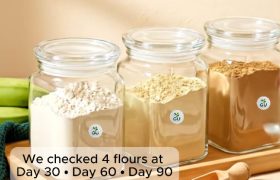
Now, onto the fun part: taste-testing our flours as they age. We stored each flour under normal pantry conditions (cool, dry, and sealed between uses) and noted the changes (if any) at 30-day intervals. Here’s what we found:
30 Days Post-Milling: Still Farm-Fresh
At the one-month mark, all our flours were virtually as good as new. Thirty days is well within the typical shelf window for any flour, so this wasn’t a surprise – but it was reassuring to confirm.
- Plantain Flour (Elubo Ogede) – After 30 days, the plantain flour’s color and aroma remained rich. The flour had the same fine, lump-free texture it had on day 1. When made into amala ogede (plantain swallow), it was smooth and had that subtle plantain sweetness we love. No “off” smells; just the usual earthy aroma. This flour is naturally low in fat, so it’s quite stable. A bowl of plantain porridge made with 1-month-old flour tasted identical to one made with a fresh batch. In short, if stored properly, 1-month-old plantain flour cooks and tastes fresh.
- Corn Flour (White/Yellow) – Our whole-grain corn flour also showed no significant change at 30 days. The fine powder was dry and free-flowing. We made
tuwo masara (corn swallow) to test it, and it set perfectly with a smooth, non-lumpy consistency (our finely milled texture helps with that any day). Flavor-wise, both white and yellow corn flour gave the same hearty, slightly nutty corn taste as they did initially. We noticed no stale or bitter notes at this stage. This aligns with expectations – maize flour is relatively low in oil content, so one month is nothing. (If you’re curious about making the perfect corn swallow, we have a detailed guide on how to prepare corn flour for swallow (tuwo masara) – technique matters, but using fresh flour gives you a head start on flavor!).
- Pap Powder (Ogi) – Our instant pap (fermented corn) powder at 30 days was in great shape. Pap is often made from corn, fermented and dried, so it has some tanginess by nature. After a month, the tangy aroma was the same, with no sour or foul smell beyond the normal ogi scent. The powder had remained dry (thanks to the low-heat dehydration and airtight pouch). We made a warm pap porridge and found no difference in taste or thickness compared to a freshly opened pack. It still gave that comforting, creamy ogi flavor and set into a nice smooth pap in minutes. No signs of clumping or moisture – a good indicator that the packaging was doing its job.
- Groundnut Flour (Peanut) – At 30 days, the groundnut flour smelled wonderfully nutty, as it did on day 1. This flour has more natural oil than the others, being essentially finely milled peanuts. Sometimes, peanut-based products can start to smell slightly “peanut butter-ish” or rancid if the oils oxidise, but we detected none of that so early on. The flour tasted rich and peanutty when we stirred it into a smoothie and when used to thicken a soup. Its proteins and fats were still in prime condition. We did start storing the opened groundnut flour in the fridge right after this test, as an extra precaution – our product instructions actually recommend refrigerating after opening to maintain best freshness. While a month at room temperature was fine, cooler storage can extend that fresh taste even further for this type.
Bottom Line at 30 Days: All four flours were fresh in appearance, smell, and taste. Proper packaging and storage were key – we kept them sealed, in a dry cupboard away from sunlight. No mold, no bugs, no odd odors. This shows that buying flours in micro-batches and using them within a few weeks ensures you’re always cooking with vibrant, flavorful flour. In fact, many of our customers finish a 1 kg bag in well under 30 days, especially with how versatile these flours are in everyday cooking. If you’re using them for multiple meals (for example, our social media recently showed 3 quick ways to use corn, plantain, and groundnut flour in one day – morning bowl, afternoon swallow, evening pap), your flour might not even see day 30! But if it does, rest assured it’s still top-notch at this point.
60 Days Post-Milling: Holding Strong, Minor Changes
Two months in, we examined (and tasted) the flours again. At 60 days, all flours were still in good shape, with just the subtlest shifts noticed in the more sensitive ones:
- Plantain Flour (Elubo) – By the 60-day mark, the plantain flour remained dry and fine. There were no visible changes (no discoloration or clumping). The aroma when opening the pouch was still mild and neutral (plantain flour isn’t very aromatic to begin with, unlike something like whole wheat). We made another batch of amala and some plantain flour pancakes. The amala texture was as smooth as ever, and if anything, we might say the flavor was slightly milder than a truly fresh batch – but in a blind taste test, an average person probably wouldn’t tell the difference. Importantly, there was no hint of staleness. We did notice the color of the flour remained a nice beige; if it were going bad, you might see it turning dull or grey. At 60 days, it was still appetising. So plantain flour at two months old, stored properly, gets a thumbs up from our home cooks.
- Corn Flour – At this point, the corn flour (both white and yellow) was also doing well. The powder was free of lumps and weevils (thankfully!). When we mixed it into
tuwo, it bound nicely. The flavor was still hearty, though we thought the corn aroma when you first add water was a touch less pronounced than a fresh batch. This could be us being very finely attuned; the difference was minimal. Corn flour does contain the whole grain (ours isn’t degermed), so by 2 months a bit of the corn’s natural oil in the germ could start to lose potency. But there was no “off” smell – no sourness or playdough odor (which rancid flour can have. We also used the corn flour in a baking test – making a rustic cornbread by replacing some wheat flour with our yellow corn flour. The result was excellent; the bread had a lovely aroma and crumb. If the flour had gone stale, the bread would taste dull or slightly bitter. We experienced none of that. So, 60-day corn flour still passes the baking test for flavor and performance.
- Pap Powder (Ogi) – After 60 days, our pap powder remained reliably good. No clumps (sign of moisture) and no mold. We took a closer sniff and got the same gentle fermented fragrance as always. When prepared, the pap thickened normally and tasted authentic. One thing we kept an eye on was any increase in sourness – over-fermented or spoiling pap might turn too sour or smell alcoholic. At 2 months, that did not happen; the taste was consistent with a fresh batch of pap. We did store this powder very tightly sealed because pap (ogi) can easily absorb moisture from air (and moisture is its enemy if you want it shelf-stable). The resealable pouch did its job well. For context, traditionally wet ogi is often used within a week or two or kept frozen – but our dry pap powder is made to last much longer since it’s fully dried. Two months was no challenge for it. It’s still fast, easy pap on demand, with freshness intact.
- Groundnut Flour – Here we began to see the first subtle signs of aging. By 60 days, when we opened the pouch (which we had been keeping in the refrigerator after the first month), the groundnut flour’s aroma was still nutty and pleasant. If it hadn’t been, we’d know – peanut flour that’s starting to go rancid would smell a bit like old peanuts or oil paint. Our noses picked up nothing bad. We did a taste test by licking a pinch of the raw flour (just a tiny bit) – it tasted fine: rich and peanutty, no bitter or waxy aftertaste. We then used it in two ways: as a soup thickener and in a banana-groundnut pancake batter. In both cases, the flavor came through as it should. However, compared to a freshly opened pack, the intensity of the peanut aroma might have been slightly reduced. Fresh peanut flour has a strong nutty punch; at 2 months, it was a tad mellower. This is natural, as some of the aromatic compounds dissipate over time. Importantly, no bitterness was detected (which would indicate oncoming rancidity). We’ll note that we kept this flour cool; at room temperature, high-fat flours like groundnut or almond can start declining faster. If you’re buying groundnut flour and plan to store it for several months, we advise transferring it to an airtight container and possibly refrigerating or freezing it to preserve those oils. At 60 days though, ours was still going strong in terms of safety and taste.
Bottom Line at 60 Days: Two months in, quality remained high across all flours, with only very minor flavor softening in the case of corn and groundnut flours. Everything we cooked tasted great – a sign that the flours were still fresh enough not to negatively impact recipes. If you served dishes made with these 60-day-old flours to your family, they’d likely never know the difference. This is good news for those who buy in bulk or stock up – as long as you store things correctly, you have a comfortable window to use your flours. We do recommend, especially for health-conscious folks, to use whole-grain or nut flours sooner than later for maximum nutritional benefit (some delicate nutrients can degrade over time). But from a purely culinary perspective, 60-day-old micro-batch flour is practically as delightful as day 1.
One thing to emphasize: storage, storage, storage! By the 2-month mark, if flour is not stored well, you could start seeing problems. For example, a poorly sealed bag can let in humid air (leading to moldy clumps) or pantry pests like weevils. We kept our test flours in their original Green Unison pouches, squeezing out excess air and sealing tightly after each use, and placed them in a cool cupboard. If you were to leave a bag open or in a damp area, your results will vary. At this point, a quick visual check (no bugs, no discoloration) and a sniff test (no sour or musty odor) before use is wise. Ours passed both tests with flying colours at 60 days.
90 Days Post-Milling: When to Be More Watchful
Three months after milling, we reached a critical checkpoint. Flour can have a long shelf life, but 90 days is around the quarter-way point of the typical storage lifespan for many flours. According to food safety research, flour generally starts to deteriorate around 3–8 months in storage(so 90 days is right at the lower end of that range). Here’s what we observed at the 90-day mark:
- Plantain Flour – Our plantain flour at 90 days was still usable and safe, but we noted a slight staleness beginning to creep in. Visually, it looked the same – dry, light brown powder with no pests or mold. The difference was subtle and mostly in aroma. Upon opening the pack, the smell was neutral (which is okay) but had lost that faint sweet hint of unripe plantain that a freshly opened pack has. In a warm bowl of amala, we honestly couldn’t tell much difference in taste; it still made a perfectly satisfying swallow with good texture. Perhaps the flavour was a touch flat compared to a new batch, but nothing off-putting. We did a best-by check: our plantain flour is labeled for ~12 months unopened, 6 months after opening. We were at 3 months open, so within limits. It hadn’t “expired” in any official sense, but we could tell it was no longer at peak. If you have plantain flour nearing 3+ months since opening, we’d suggest using it up in recipes like pancakes, muffins or smoothies where any minor flavor loss is easily masked. Also, always check for little clumps or specks. Our batch had none, but clumps could mean moisture, and specks that move (yikes) mean bugs – in either case, time to toss it. Happily, we saw neither and could continue enjoying it, but we knew we were on the back end of its prime window.
- Corn Flour – At 90 days, the corn flour also remained largely fine but with some notes to consider. The flour was still dry and free-flowing. One thing we did was a quick sieve test: we sifted a bit through a mesh to see if any weevil carcasses or eggs might be hidden (sometimes you don’t notice pests until you sift). Thankfully, nothing but flour passed through – a relief, meaning our airtight storage kept the flour beetles and moths out. In terms of smell, the flour had a mild cereal scent, perhaps lighter than before. Whole-grain corn flour has some fat from the germ; by 3 months, that fat can start to oxidize. We didn’t smell anything like the “crayon” or “play-dough” odor that truly rancid whole grain flour can emit, so we were clear on that front. Using 3-month-old corn flour in cooking yielded decent results: tuwo came out slightly less flavorful than with a fresh batch (corn’s natural sweetness can dull with time). We also fried some as a coating for fish – it still gave a nice crunch but we noted we had to season a bit more generously to get the same corn flavour pop. This hints that while the flour hadn’t gone bad, its flavour strength was fading. Nutritionally, it’s likely still providing the carbs and fibre, though possibly a tiny loss in certain vitamins by this age. We decided that if not used up by this point, it’s best to finish it soon. The flour’s official shelf life is around 6–8 months in the pantry, but quality-wise, 3 months is a good cut-off to ensure you’re still enjoying it. We’d also move any remainder to the fridge or freezer at this stage to prolong its life (just bring it back to room temp before using, to avoid lumps.
- Pap Powder (Ogi) – Three months in, our pap powder was the one we were most vigilant about, because any moisture sneaking in could spoil it. We examined the powder closely: still a fine off-white powder, no discoloration (mold on pap would show as dark patches or an orange tint sometimes). The smell test: it had a slightly less sharp sour aroma than a fresh batch, interestingly. Possibly some of the natural sour notes mellowed as the powder aged. There was no foul odor – which is key, because a bad smell would mean throw it out. We made a small bowl of pap to double-check performance: it took a tad longer to thicken than initially (maybe because the powder had absorbed just a bit of ambient humidity over time, needing extra heat to gel). But it did thicken and set into a nice pap/akamu. Taste-wise, it was still enjoyable – a warm, comforting custard. We did notice we wanted to add a bit more milk and sweetener than usual; perhaps the pap’s flavor wasn’t as vibrant, or maybe we were just overanalyzing. The takeaway: 90-day pap powder was okay to consume and tasted fine for most practical purposes. However, at this age, we strongly advise checking it visually each time before use. Any moldy clumps or “off” smells (or the presence of pantry bugs) are a no-go. In our case, the pap powder remained clean. Nonetheless, since pap is something often given to babies or consumed for its probiotic benefits, one might prefer it fresher. We’d say using our pap powder within 3 months of opening is ideal to enjoy its full authentic taste. Technically, it can last longer (unopened pap powder is good for about a year, and 6 months opened, but quality is highest in those first few months.
- Groundnut Flour – Finally, our groundnut flour at 90 days: this was the critical one due to those natural oils. We had stored it chilled after month 1, which definitely helped. Upon retrieving it for the 3-month test, we let it come to room temperature (to avoid condensation). The look was unchanged – a light brown, powdery flour. No visible oil separation (sometimes you can see tiny oil beads in high-fat flours if they start going bad). We gave it a good sniff: there it was – the first hint of that “old peanut” smell. It was faint, not a full-blown rancid odor, but we could tell the flour was not as fresh. If at 30 days it smelled like freshly roasted peanuts, at 90 days it smelled more like peanut butter that’s been open a while – still nutty, but a bit subdued with a whisper of waxiness. We tasted a pinch and noted a slight bitterness on the back of the tongue that wasn’t there before. This is the tell-tale sign that the oils are on the verge of rancidity. Now, it’s worth noting: rancid flour isn’t immediately harmful in small amounts, but it definitely isn’t pleasant or healthy to consume regularly. We wouldn’t bake a cake with 3-month-old groundnut flour that has started to turn – the whole cake could taste off. In our test, the flour was just at the cusp; we decided it was still usable for non-delicate uses. For example, we stirred some into our morning oats with honey – and it was okay, the honey masked any slight bitterness. But using it in a plain pancake, we noticed the flavor wasn’t as delightful as it should be. Given this result, we concluded that around 3 months is when groundnut flour typically goes downhill in the Nigerian climate if not frozen. It’s in line with general advice that higher-fat flours spoil closer to the 3–4 month mark at room temp. Because we extended its life via refrigeration, we squeezed a bit more time out, but even so, 90 days was pushing it for peak quality. If you ever open your peanut/groundnut flour and it smells sour, musty, or like old crayons, or tastes bitter, it’s time to chuck it (or compost it) – don’t try to save a bad flour. In our case, we pre-emptively decided to transform the remainder into a cooked paste (like a quick groundnut soup) and then froze that, rather than keep the raw flour longer.
Bottom Line at 90 Days: Three months after production, our flours were largely still safe and mostly palatable, but some were past their prime in flavor. Plantain and pap flours held up the best, continuing to perform well with minimal quality loss. Corn flour was alright but starting to lose its flavourful edge. Groundnut flour was on the verge of decline – edible, yet not as pleasant as we’d like. Essentially, 90 days is a good checkpoint to either use up or renew your stock. If you have flour that’s been sitting for 3+ months, do a thorough check: look, smell, and if those are okay, even taste a tiny bit raw. Fresh flour has very little taste; bad flour tastes bitter or “off”. As one food expert notes, “Old flour can taste bitter or metallic… better to trash that flour than ruin your recipe”. We agree – when in doubt, it’s not worth a ruined pot of soup or batch of swallow (or an upset tummy).
By this time, you might also encounter pests if your storage wasn’t airtight. Those “tiny visitors” like flour beetles (weevils) or pantry moths can infiltrate even dry-looking flour. They often come in as microscopic eggs from processing or packaging and hatch later. If you ever find small bugs in your flour at any age, it’s best to discard it. The good news: using sealed, thick packaging (like our pouches or your own airtight jars) can prevent infestations by keeping bugs out (and any that were in, trapped). We strongly recommend, especially in our climate, to store flour in airtight containers – not just folded in a paper sack. In our tests, the integrity of our packaging clearly prevented any pest issues even at 90 days. For extra caution, you can freeze new flour for a few days after purchase to kill any possible insect eggs, then store it in a jar. We didn’t need to in our case, but it’s a handy tip for long-term storage.
Flour Shelf Life by Type (and Maximising Freshness)
From our micro-batch experiment and general food science, here’s a quick rundown of how long these flours typically stay fresh and what affects that:
- Plantain Flour: Shelf life is about 12 months unopened, 6 months once opened if stored well. It’s low in fat, so it doesn’t go rancid easily. The main risks are moisture (which can cause mold) and pests. Keep it sealed and dry. In practice, as we saw, quality is top-notch for at least the first 2–3 months, and still usable up to 6 months. Beyond that, you might notice it’s harder to rehydrate smoothly or a stale odour might develop. Always reseal after each use – the pouch is resealable for this reason.
- Corn Flour (Wholegrain): Also roughly 12 months sealed, ~6 months. Because ours is wholegrain, it contains the germ oils; those oils can shorten the optimal period compared to refined cornmeal. Store corn flour in a cool, dry place, and consider refrigeration after opening if you won’t use it within 3-4 months. It will stay safe for longer, but the flavor may degrade. If it smells musty or no longer has that corn sweetness, it’s past its best. Use clean, dry scoops to avoid introducing moisture or contaminants. Pro tip: Split large packs into smaller airtight jars – each time you open, you expose only a portion of the flour to air. (And if you love corn flour, check out our recipe for fluffy corn-flavoured pancakes – using fresh corn flour makes them extra fragrant!
- Pap Powder (Ogi/Akamu): Unopened, up to 12 months; after opening, we suggest 3–6 months for best quality (though it may last longer). The key is zero moisture – even a wet spoon can ruin a whole pack of pap. Always use a dry spoon and seal it immediately after scooping. Because pap is fermented, it has some natural preservation (the acidity deters some microbes), but if water gets in, mold can grow. You’ll know if it’s off: moldy pap smells truly foul. Otherwise, it can actually smell sour by nature, so go by any change in smell or appearance. Some folks refrigerate pap powder; it’s not required, but it can’t hurt, especially in humid seasons. If you notice the pap takes much longer to set or doesn’t taste right, it might have aged – time for a fresh pack.
- Groundnut Flour: Unopened ~12 months, but once opened, use within ~3 months for peak quality, or 6 months max if kept refrigerated. This flour is the most sensitive of the lot. The natural oils in peanuts can oxidize and go rancid relatively quickly at room temperature. You’ll first notice a slight bitter or “crayon-like” smell when it’s starting to spoil. To maximise its life: keep it airtight (absolutely no air exchange if possible), and store it cold. We recommend transferring groundnut flour to a jar and popping it in the fridge or freezer right after opening if you won’t finish it in a month. In the freezer, it can easily last 6+ months without quality loss (just let it thaw to room temp before opening the container, so no condensation forms). As we saw, even refrigerated, by 3 months we were hitting the limit on taste. So smaller quantities bought more frequently (micro-batches!) will give you the best experience. And hey, if you find you have a lot nearing its date, you can turn it into a quick groundnut soup or sauce – cooked groundnut won’t spoil as quickly as the raw flour.
Factors influencing freshness: Beyond time itself, remember these key factors that determine how long your flour stays fresh and tasty:
- Packaging – The initial packaging matters a lot. All Green Unison flours come in sealed, multilayer pouches that keep light, air, and moisture out. This gives you a head start on shelf life. Once opened, continue to keep them in a similar protective environment. If the original pouch gets damaged, move the flour to an airtight container immediately. Avoid thin plastic bags – believe it or not, insects can chew through flimsy bags, and bags don’t fully prevent humidity exchange. A screw-top jar or quality plastic container is better if not using the original pouch.
- Storage Conditions – Heat and humidity are the enemies. Store flours in a cool, dry place (for example, a cupboard away from the stove or sunlight). In Nigeria’s climate, that often means finding the least humid spot in your kitchen. You can even put a food-safe moisture absorber (like a silica gel packet meant for pantry use) near your stored flours if humidity is a big issue. Also, strong light can cause some nutrient breakdown – another reason our pouches are opaque. If your kitchen is very hot, consider refrigeration for all flours, not just groundnut, to extend their life. Just ensure they’re sealed to avoid absorbing fridge odors.
- Flour Type – As discussed, different flours have different compositions. White/refined flours (not in our case, but e.g. white wheat flour) last longer because the oily germ and bran are removed, leaving mostly starch. Wholegrain flours (like our corn flour and pap) have more nutrients but shorter peak life due to oils. Nut flours (groundnut) have the highest oil content and thus the shortest life before quality dips. Root/tuber flours (like plantain) are mostly starch and fibre, with low fat – they tend to be quite shelf-stable if dry. Knowing this, you can prioritise which to use first. For example, if you buy both plantain and groundnut flour today, plan to finish the groundnut flour sooner or store it extra carefully.
- Cleanliness – Always use clean utensils to scoop your flour. Introducing crumbs, dampness, or other food particles can invite bacterial or mold growth. It might sound trivial, but a breadcrumb in a jar of flour over weeks can grow mold that then spoils the flour. We often tell customers: treat your flour like a food, not just an ingredient – it can spoil. Good handling practices will keep it fresh longer.
- Best By vs. Actual Freshness – Our products have best-by dates (usually 6-12 months out) and those are conservative estimates for unopened packs. Flour can technically remain safe beyond those dates if stored perfectly, but the quality and nutritional value diminish. One rule of thumb: flour doesn’t suddenly “die” the day after its best-by date. If it’s been stored properly, you can inspect and use your judgment. We’ve heard from some resourceful cooks who revive slightly older flour in non-critical uses (like frying batter or gravy) as long as it passes the sniff/taste test. However, for something like baking or where flour is a main flavor, fresh is always best. Given that most flours are affordable, it usually isn’t worth holding on to old stock – better to buy in quantities you’ll use in a few months, i.e., micro-batches, which brings us back full circle!
Keeping Your Flour Fresher for Longer: Tips & Tricks
To wrap up, here are practical tips to ensure your flours stay as fresh as the day they were milled – helping health-conscious shoppers get the most nutrients, budget-conscious families avoid waste, and home cooks achieve consistently delicious results:
- Buy in Micro-Batches: Rather than buying a year’s supply of flour that sits around losing potency, buy smaller packs more frequently. Our shop offers sizes like 500g or 1kg – which for most households will be used up in a month or two. This way, you’re always working with fresher flour. It might feel convenient to bulk-buy staples, but with flour, less can be more in terms of quality.
- Use Original Airtight Packaging or Equivalents: Upon purchase, our flours come vacuum-sealed or tightly packed. After opening, squeeze out excess air and zip the pouch securely. If the pouch has no zip or you prefer jars, transfer the flour to an airtight container that no air or pests can enter. Glass jars with rubber gaskets or good plastic canisters work well. Label them with the opening date so you can keep track of age. Remember that pantry pests can’t penetrate solid sealed containers – and you also prevent your flour from absorbing odours or moisture this way.
- Cool, Dark, Dry Storage: We’ve said it before, but it bears repeating. Humidity is high in many parts of Nigeria, especially during the rainy season – that’s when you’ll want to be extra vigilant. Store flours off the ground (pantry shelves are great) and away from sources of heat like your cooker or direct sun through a window. If you have AC or a dehumidifier in a store room, that’s an ideal spot. Even a lidded plastic bin or cooler box can create a more controlled environment for your dry goods. For those in very hot regions, consider keeping a small stock of flour in the fridge or freezer and the rest in the pantry, refilling your pantry jar from the frozen stock as needed.
- Freeze for Long Storage: Freezing flour is a well-kept secret. It can significantly extend shelf life and also kill any potential insect eggs. If you buy multiple packs or grind your own flour, store the excess in the freezer. Flour won’t freeze solid (too dry), but the cold keeps it fresh. When using frozen flour, let the container sit out until it reaches room temp before opening, to avoid condensation wetting the flour. This technique is especially useful for groundnut flour or rare flours you use occasionally.
- First In, First Out (FIFO): Use older flour before newer ones. If you purchase a fresh batch, don’t mix it on top of an older batch in a jar – finish or remove the old one first. This rotation prevents the scenario of discovering a 1-year-old packet that got buried in the back. It also ensures you’re always cooking with reasonably fresh product. Many families keep two jars: one in use, and one backup sealed for when the first is done – rather than opening both.
- Trust Your Senses: Ultimately, your nose and eyes are great at judging flour. Give stored flour a sniff each time you use it. It should smell neutral or slightly nutty/sweet depending on the type. Any sour, chemical, or strange strong smell is a red flag. Feel the texture: it should be loose and powdery. If it’s caked or has cobwebby clumps, there’s likely mold or insects. Don’t try to salvage it – bin it. It’s better to lose a bit of flour than risk ruining a whole meal or your health. When in doubt, do a test: cook a small pancake or mix a teaspoon of flour in warm water and taste. If it tastes fine, you’re good to go. If it yields any bitter or “off” flavor, time to replace it.
- **Keep Flour **Bug-Free: As an extra measure, some people like to add a bay leaf or dried chili to flour containers as a traditional repellent for bugs (there’s mixed evidence on effectiveness, but it might help). More scientifically, as mentioned, freezing newly bought flour for 72 hours can eliminate any insect eggs from the factory or market. We ensure our production is clean and we haven’t seen any infestations on our end, but once it’s in your kitchen, other food items can cross-contaminate. Keeping a tidy pantry and using airtight storage is the best prevention. Should you ever find an infestation in one item, check all other nearby items – those pests spread.
By following these tips, you can extend the life and quality of your flours, saving money (no more tossing out half-used bags) and ensuring every recipe comes out as delicious as possible. Fresh flour not only tastes better but also can have more nutritional value – for instance, freshly milled whole grains retain more vitamins and antioxidants, which degrade over time. So, your commitment to freshness is also a commitment to better nutrition for your family.
Conclusion: Savor the Freshness of Small-Batch Flours
Our 30-60-90 day flour experiment highlights one key message: fresh flour makes a difference you can taste. While properly stored flour can stay usable for many months, the peak flavors and textures shine in those first few weeks after milling. That’s exactly why Green Unison champions micro-batches – by milling in small quantities, we deliver flour that reaches you faster and fresher, so you can enjoy it at its best.
Whether you’re a health-conscious shopper mindful of nutrient loss, a budget-focused parent who hates wasting food, or a home cook whose pride is serving tasty meals, using fresher flour is a win-win. You get full flavor, maximum nutrition, and minimum spoilage. Our micro-batch ethos isn’t just a gimmick; it’s rooted in science and sustainability. We’d rather mill more often and sell just enough, than mill a ton that sits around. It ensures quality control at every step – from the farm in Ogun State where our grains and plantains grow, to the low-heat drying and fine milling we perform, to the careful packaging that locks in freshness.
So the next time you open a bag of Green Unison flour, breathe in that subtle fresh aroma and feel confident that you’re starting your recipe with a solid foundation. Whether it’s a nourishing breakfast pap, a family dinner of swallow with soup, or a batch of pancakes for a weekend treat, you’ll notice the vibrant taste that fresh flour brings. No more “funny aftertaste” or dense, odd-smelling bakes that old flour can cause – just wholesome, natural goodness. As we often say, “Nature’s best, enjoyed fresh.”
Ready to put this into practice? We invite you to try any of our all-natural flours and feel the difference yourself. You can shop these products on our website or even via WhatsApp for convenience. For instance, check out our Flours section online to order Smooth Plantain Flour for a gluten-free amala, or Silky Corn Flour to elevate your baking and swallows. We also have the Instant Pap Powder ready for your next hearty breakfast, and the Groundnut Flour for those protein-rich additions to meals (when it’s fresh, it’s incredibly flavorful!).
Feel free to reach out to us if you have any questions about storing your flours or want to share your own tips. We love hearing from our Green Unison community – after all, our mission is to make natural, healthy living easy and joyful for you.
📞 Quick Order or Inquiry
Interested in trying a micro-batch flour or need a refill? We’ve made it super easy for you:
- WhatsApp Catalog: Browse and order through our WhatsApp catalog with a simple tap: View Products on WhatsApp. You’ll find all our flours there with current prices. 🛍️
- Chat with Us: Have a question or ready to place an order directly? Chat with a Green Unison representative on WhatsApp: Chat Now. Just say hi and let us know what you need – we’re here to help (fast response guaranteed!). 💬
We deliver nationwide, with same-day pickup in Iperu Remo and fast delivery to Lagos & Ibadan, so fresh flour is never far from your kitchen.
Join the micro-batch revolution and cook with confidence, knowing your ingredients are fresh, natural, and handled with care from farm to packaging. Your taste buds (and your family’s smiles at dinnertime) will thank you!
Live green, eat fresh, and enjoy every meal. 🌱🥘 Thank you for reading, and happy cooking!
References: The insights above are backed by food science and our hands-on tests. For further reading on flour shelf life and storage, you may check resources like Healthline’s guide on flour expiration, expert tips from Food Republic on signs of flour spoilage, and our own product pages which detail storage recommendations. Stay informed, stay healthy!