Category: Cooking Tips

  • Amala Lafun Troubleshooting: Why Your Láfún Turns Lumpy, Too Sour, or Watery (and How to Fix It)

    Amala Lafun Troubleshooting: Why Your Láfún Turns Lumpy, Too Sour, or Watery (and How to Fix It)

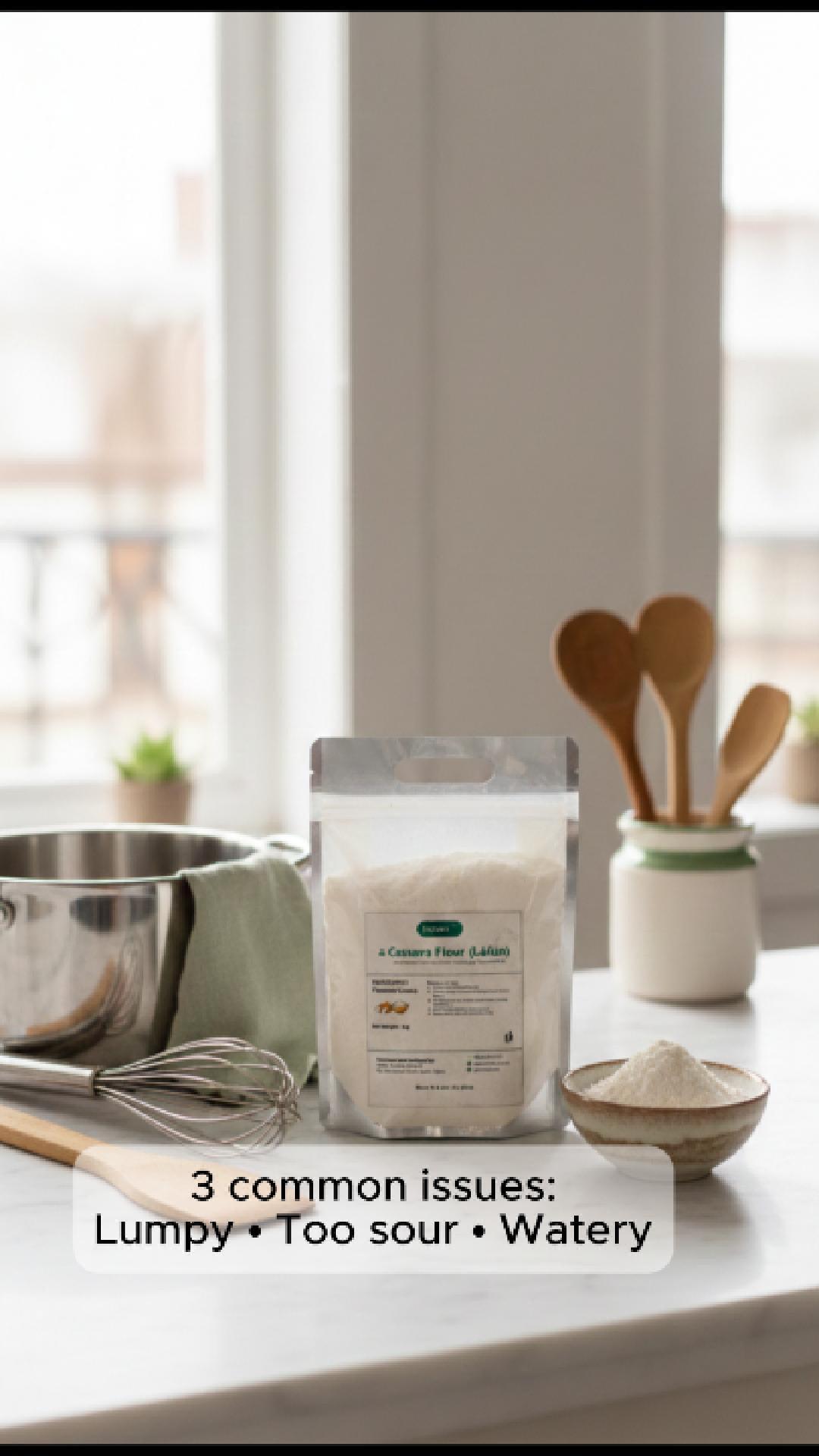
    If your amala lafun has ever come out lumpy, too sour, or watery, you’re not alone. Láfún (lafun) is fermented cassava flour—so it behaves a little differently from other swallows. The good news? You don’t need magic. You need the right heat, the right “pour style”, and one or two rescue tricks.

    This post is a save-and-use guide: quick fixes first, then simple prevention so your next pot is smooth from the start.


    What you’ll need (simple)

    • Láfún (fermented cassava flour) – finely milled works best
      Buy here: https://greenunison.com/product/nature-powered-lafun/
    • Water
    • A balloon whisk (or sturdy fork)
    • Pot + wooden spatula/turning stick
    • Optional: a pinch of salt

    Want to browse all flour options?
    Shop flours: https://greenunison.com/shop/flours/
    Full shop: https://greenunison.com/shop/


    The quick method for smooth amala lafun (lump-free)

    This is the fast, repeatable method when you want smooth amala without drama.

    Step 1: Get the water properly hot

    Bring water to a rolling boil, then reduce to medium heat (still steaming/hot, not raging).
    Why it matters: lafún needs enough heat to hydrate and “set” smoothly.

    Step 2: Whisk first, then sprinkle like rain

    Keep your whisk moving and sprinkle the lafún gradually—don’t dump it in one go.
    You’ll see it thicken quickly.

    Step 3: Switch to spatula and “turn” to finish

    Once it gets thick enough that whisking feels heavy:

    • switch to your wooden spatula
    • press + fold + turn until smooth
    • cover for 30–60 seconds (optional), then give one final smooth turn

    Serve immediately with your favourite soup.


    Quick ratio guide (start here, then adjust)

    Flour fineness and your preferred firmness can change the exact feel, so use this as a reliable starting point:

    • 1 cup lafún : 2–2½ cups water → classic swallow texture
    • Prefer it softer? add hot water 1–2 tablespoons at a time while turning.
    • Too soft? sprinkle a little more lafún and turn until it firms up.

    Tip: Always adjust with hot water, not cold—cold water shocks the texture and can bring back lumps.


    Troubleshooting (save this section)

    1) “My amala is lumpy” — why it happens + the fast fixes

    Why it happens

    • You poured flour too quickly (the outside gels before the inside hydrates)
    • The water wasn’t hot enough
    • Whisking stopped too early

    Fix now (pick one)

    Option A: Hot-water rescue (fastest)

    1. Take the pot off heat.
    2. Add 2–4 tbsp hot water.
    3. Whisk aggressively for 20–30 seconds.
    4. Return to medium heat and turn smooth.

    Option B: Press & turn
    Use your spatula to press lumps against the pot side while turning.
    This breaks the clumps and smoothens the texture.

    Option C: Beginner-safe slurry method (next time)
    If lumps keep happening, do this:

    • Mix a small portion of lafún with a little cool water to make a thin slurry (no lumps).
    • Pour the slurry into hot water while whisking, then add remaining lafún gradually.

    Prevent next time (the “3 rules”)

    • Keep water hot (medium heat, steaming)
    • Whisk continuously before it thickens
    • Sprinkle lafún gradually—never dump

    2) “It smells/tastes too sour” — what’s normal vs what’s a red flag

    First: a quick reality check

    Láfún is fermented, so a mild tangy aroma is normal. But sharp sour, musty, or “something is wrong” smells usually point to storage/moisture issues.

    If it’s just “too tangy” (but still clean)

    Try this:

    • Cook for an extra 60–90 seconds while turning (it helps reduce raw/strong aroma).
    • Pair with a rich soup—strong soups balance tang better.
    • Next time, start with slightly more water (a too-thick base can concentrate aroma).

    If it smells musty, mouldy, or “off”

    Don’t try to rescue it. Discard it.
    Signs to watch for:

    • Damp clumps that don’t break easily
    • Musty odour
    • Any visible mould or unusual colour

    Prevent sour/off smells (simple habits that work)

    • Keep lafún sealed tightly after every use
    • Store in a cool, dry cupboard, away from steam (kettle/cooker area)
    • Use dry spoons only (no wet cups, no damp hands)

    For a detailed storage guide that covers moisture, odours and pantry pests, read:
    https://blog.greenunison.com/flour-pap-storage-guide-to-beat-weevils-moisture-odours/


    3) “My amala is watery / too soft” — why it happens + how to firm it up

    Why it happens

    • Too much water at the start
    • Not enough cooking time (it hasn’t properly set)
    • You added water late and didn’t turn long enough afterwards

    Fix now

    1. Put the pot back on medium heat.
    2. Sprinkle lafún little by little, turning each addition in fully.
    3. Cover for 1 minute to steam, then give a final turn.

    Don’t rush. Watery amala needs heat + turning time to become cohesive.

    Prevent next time

    • Start within the ratio range (1 cup : 2–2½ cups water)
    • Keep heat at medium once flour goes in
    • If you must add water, add hot water in small splashes and turn properly

    Common mistakes (and the easy swap)

    • Dumping the flour in one go → sprinkle gradually
    • Stopping whisking too early → whisk until it thickens, then switch to spatula
    • Heat too high → medium heat gives smoother results
    • Using a light pot → a heavier pot reduces scorching and helps texture

    FAQs

    Can I fix amala lafun after it has cooled?

    You can, but it’s never as perfect as fresh. Reheat on low heat with a small splash of hot water, cover briefly, then turn until smooth.

    Is lafún the same as fufu powder?

    They’re both cassava-based, but lafún is typically fermented with a more distinct aroma.
    If you prefer a milder, neutral swallow, try: https://greenunison.com/product/nature-powered-fufu-powder/

    How do I store lafún so it doesn’t clump or smell off?

    • Seal airtight after every use
    • Keep it cool and dry (away from steam)
    • Use dry utensils only
      Full guide: https://blog.greenunison.com/flour-pap-storage-guide-to-beat-weevils-moisture-odours/

    Related reads (if you love smooth, lump-free swallows)

    • Plantain flour swallow troubleshooting: https://blog.greenunison.com/plantain-flour-amala-3-minute-whisk-method/
    • Corn flour swallow (tuwo) for beginners: https://blog.greenunison.com/tuwo-masara-smooth-corn-flour-swallow/
    • Corn flour baking ideas: https://blog.greenunison.com/corn-flour-bread-without-wheat/

    Call to action (order in 30 seconds)

    Want the easiest start (fine, smooth lafún that cooks evenly)?

    • Buy Lafun on the website: https://greenunison.com/product/nature-powered-lafun/
    • Browse all flours: https://greenunison.com/shop/flours/
    • WhatsApp catalogue: https://wa.me/c/2348103043789
    • Chat to order (prefilled):
      https://wa.me/2348103043789?text=Hi%20Green%20Unison%20%F0%9F%91%8B%20I%20want%20to%20order%20Nature%20Powered%20Lafun%20for%20smooth%20amala.%20Please%20share%20your%20best%20ratio%20and%20delivery%20options.%20Thank%20you!

    Save this post—next time amala misbehaves, you’ll fix it in one scroll
  • How to Store Beans Powder: Keep It Fresh, Pest‑Free & Lump‑Free (Simple Daily Habit)

    How to Store Beans Powder: Keep It Fresh, Pest‑Free & Lump‑Free (Simple Daily Habit)

    Quick answer: the 60‑second storage routine

    1. Scoop with a dry spoon only (steam and wet spoons invite clumps).
    2. Reseal immediately (press air out, seal tight).
    3. Double‑protect: keep the pouch inside an airtight container (jar or food‑safe tub with a tight lid).
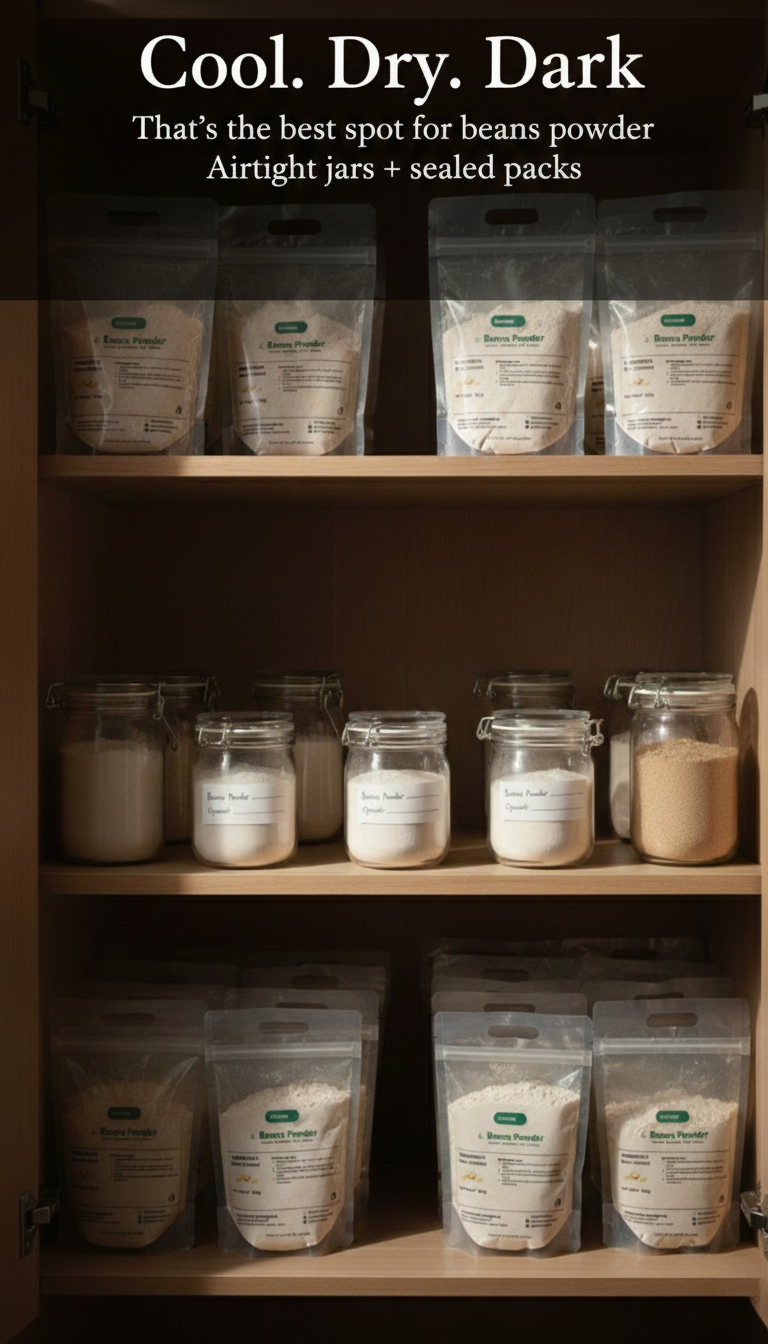
    4. Store cool + dark (not beside the cooker, above the fridge, or in direct sun).
    5. Do a “freezer reset” for new packs: freeze sealed beans powder for 4 days, then store airtight.

    Shopping link: Smooth Beans Powder (Bean Flour) — For Akara & Moi Moi

    Why beans powder spoils (and how to stop it)

    Moisture = clumps, stale flavour, and eventually mould risk

    Beans powder is milled very fine, so it can re‑absorb moisture from the air. That’s why clumps tend to show up when the kitchen is humid, when you scoop over a steaming pot, or when the pouch is left half‑sealed.

    • Fix: store in a clean, dry, insect‑proof container and keep it in a cool, dry, dark spot.
    • Upgrade: portion a small amount into a “daily‑use” jar and keep the bulk sealed — fewer openings = longer freshness.

    Pests often start before your food reaches the kitchen

    Pantry pests can be present as eggs in grains/beans before milling. Airtight storage prevents spread, but the simplest prevention is a short freezer reset.

    • Fix: freeze the sealed pack for 4 days, then move to your airtight container.
    • After that: keep your container sealed and wipe up flour spills (spills attract pests).

    Odour absorption: why your beans powder can start smelling “off”

    Flours absorb strong smells easily. Store beans powder away from spices, detergents, onions, fish, and strong‑smelling cupboards.

    Best container setup for beans powder

    Use any of these options, as long as they’re clean, dry, food‑safe, and truly airtight:

    • Option A (simple): keep beans powder in its resealable pouch, then place that pouch inside a tight‑lid container.
    • Option B (best day‑to‑day): decant into an airtight jar/tub and label it (product + date opened).
    • Option C (bulk): portion into 2–3 smaller airtight jars so you only open one at a time.

    Pro tip: Always let containers dry completely after washing. “A little damp” is enough to start clumping.

    Fridge or freezer: should you chill beans powder?

    If your kitchen is humid, chilling helps — but do it the right way to avoid condensation.

    • Fridge: Keep beans powder sealed airtight. When you need it, take it out and let it sit sealed for 15–20 minutes before opening (this reduces condensation on the flour).
    • Freezer: Great for the 4‑day “pest reset” and for long‑term storage if you buy in bulk. Keep it airtight, and thaw sealed before opening.

    Shelf life: how long does beans powder keep?

    For Green Unison Smooth Beans Powder:

    • Unopened: up to 12 months
    • After opening: best within 6 months
    • Storage: cool, dry place; reseal tightly after each use. If your environment is humid, refrigerate the sealed pouch.

    How to tell if beans powder is still good

    Safe signs (usually OK)

    • A few small clumps that break apart easily when you press them.
    • Normal mild “bean flour” smell (nutty/earthy).

    Discard signs (don’t risk it)

    • Visible mould (even a small patch).
    • Musty, damp, or sour smell that wasn’t there before.
    • Live insects or lots of specks moving in the flour.

    Food safety note: If you see mould on a dry food, the safest choice is to discard the pack and clean the storage area.

    What to cook once your beans powder is stored properly

    Good storage protects flavour — and saves money. When your beans powder stays fresh, these become truly “quick wins”:

    And if you’re organising your whole flour shelf, you’ll also like:

    FAQs

    Can I store beans powder in the fridge? Yes — especially in humid kitchens. Keep it airtight and let it come down to room temperature while still sealed before opening to reduce condensation.

    Can I freeze beans powder? Yes. A short freezer “reset” (4 days) helps prevent pest issues. Keep it airtight and thaw sealed before opening.

    Why does beans powder form lumps even when sealed? Most times it’s moisture exposure during use: opening near steam, using a damp spoon, or leaving the pouch unsealed for “just a minute”.

    Is it safe to scoop off mould and use the rest? No — discard mouldy flour. It’s not worth the risk.

    How do I avoid lumps when mixing for akara or moi moi? Start with cool/warm water (as directed in the prep guide), whisk gradually, then let the batter rest briefly before cooking.

    Allergy note? Beans powder is made from beans (a legume). Avoid if you have legume allergies.

    Shop links (quick access)

  • Instant Pap Powder: What “Instant” Really Means (How It’s Processed + Why It Cooks Faster)

    Instant Pap Powder: What “Instant” Really Means (How It’s Processed + Why It Cooks Faster)

    You know that morning where you’re already late, your kettle is whistling, and someone in the house says, “Abeg, make pap”?
    That’s where instant pap powder shines — but only if we’re clear on what “instant” really means.

    Because no: “instant” doesn’t mean you pour water and walk away like magic.
    Yes: it does mean the hardest parts of pap-making have already been done for you — properly.

    In this post, we’ll break down:

    • what “instant” truly means for pap powder (ogi/akamu),
    • how it’s processed,
    • why it cooks faster than the old method,
    • and how to get smooth pap every single time (no lumps, no stress).

    If you want to go straight to the product: Instant Pap Powder (Ogi/Akamu) is here:
    👉 https://greenunison.com/product/nature-powered-pap-powder/


    What “Instant” Pap Powder is (and what it isn’t)

    ✅ What it is

    “Instant” pap powder means:

    • the grain has already been soaked and fermented (so you still get that classic pap flavour),
    • then wet-milled, dried, and milled again into a fine powder you can store and use anytime,
    • so you skip the 2–4 day process at home and go straight to cooking.

    ❌ What it isn’t

    Instant pap powder does not mean:

    • “no heat needed”
    • “just add cold water and drink”
    • “it’s cooked already”

    You still need to cook it for that proper pap texture — but it’s fast and consistent.


    How instant pap powder is processed (simple, real-life breakdown)

    Traditional pap (the wet one) usually involves soaking maize for days, washing, milling, sieving, settling, and fermenting again — a whole process.

    With a quality instant pap powder, the work is done before it gets to your kitchen.

    Here’s the straightforward chain:

    1. Soak + ferment the maize (this is where pap gets that familiar tang and aroma)
    2. Wet-mill the fermented grain into a smooth slurry
    3. Settle + decant (removes excess water and helps build consistency)
    4. Low-heat drying (turns it into stable, shelf-friendly flakes)
    5. Fine milling (this is the key “instant” advantage)
    6. Small-batch packing in airtight, resealable pouches

    That “fine milling” step is one of the biggest reasons it cooks quicker (we’ll explain next).


    Why instant pap powder cooks faster (the basic science, explained simply)

    Pap thickens when the starch in maize meets heat and water — that’s starch gelatinisation (the thickening moment).

    Instant pap powder tends to cook faster because:

    1) The particles are finer, so water enters faster

    Smaller particles have more surface area. More surface area = quicker hydration = quicker thickening.

    2) It’s already “prepped” (so your stove does less work)

    When maize has already been soaked/fermented and wet-milled, it’s easier for water and heat to do their job.

    3) Fine powders heat more evenly (less stubborn lumps)

    With good milling, you’re not fighting big gritty bits that take longer to soften.

    4) You don’t need to sieve or settle at home

    No waiting time. No messy cloth. No “is it fermented enough?” guessing.

    Bottom line: “instant” = time saved before cooking, plus faster cooking because it’s finer.


    The 7‑minute method: how to cook instant pap powder smoothly (no lumps)

    This is the method that works even on rushed mornings.

    What you need

    • Pap powder
    • Water
    • Pot
    • Whisk or wooden spatula

    Step-by-step (Creamy Ogi)

    Ratio: 3–4 tablespoons pap powder : 2 cups water (serves 1)

    1. Make a slurry first (cold water only).
      In a small bowl, mix pap powder with a little cool water to form a smooth, runny slurry.
    2. Boil your main water.
      Bring the 2 cups water to a rolling boil.
    3. Pour slurry into boiling water while stirring nonstop.
      Stir/whisk as you pour — this is your anti‑lump insurance.
    4. Cook 5–7 minutes, stirring, until creamy.
      Once it turns glossy and smooth, you’re done.

    👉 Shop the pap powder here: https://greenunison.com/product/nature-powered-pap-powder/


    Quick fixes if something goes wrong

    “My pap has lumps.”

    • You likely poured powder directly into hot water.
      ✅ Fix: Always slurry with cool water first.
      ✅ Rescue tip: whisk vigorously and cook a bit longer; stubborn lumps can be strained out.

    “It’s too watery.”

    ✅ Mix 1 tbsp powder with cool water, add slowly while stirring on low heat.

    “It’s too thick.”

    ✅ Add a splash of hot water and whisk.

    “It tastes raw.”

    ✅ It needs 2–3 more minutes of gentle cooking.


    Can I use it for eko too?

    Yes — same powder, different water ratio and thickness.

    If you want the full step-by-step (and the science behind the texture), read:
    Eko vs Ogi: One Pap Powder, Two Textures
    👉 https://blog.greenunison.com/eko-vs-ogi-one-pap-powder-two-textures/


    How to store instant pap powder so it stays fresh

    Pap powder is dry — but it loves to pick up moisture if you’re not careful.

    Quick storage rules:

    • keep it cool and dry
    • reseal immediately after scooping
    • don’t store it near the cooker/steam
    • use a dry spoon every time

    For the full guide (including weevils + odour prevention):
    👉 https://blog.greenunison.com/flour-pap-storage-guide-to-beat-weevils-moisture-odours/


    Which pack size should you buy?

    A simple way to choose:

    • 250g → “I just want to try it” / occasional use
    • 500g → regular breakfast (small household)
    • 1kg+ → families, consistent pap drinkers, or you don’t want to restock often

    (You’ll see available sizes on the product page.)

    Order here: https://greenunison.com/product/nature-powered-pap-powder/


    Ready for stress-free pap tomorrow morning?

    If you want pap that’s:

    • quick to cook,
    • smooth (no gritty feel),
    • and made with proper fermentation — without you doing the heavy work…

    ✅ Order Instant Pap Powder here:
    https://greenunison.com/product/nature-powered-pap-powder/

    📲 Prefer WhatsApp?

    • Browse our catalogue: https://wa.me/c/2348103043789
    • Chat to order: https://wa.me/2348103043789?text=Hi%20Green%20Unison%20%F0%9F%91%8B%F0%9F%8F%BD%20I%E2%80%99d%20like%20to%20order%20your%20Instant%20Pap%20Powder%20%28Ogi%2FAkamu%29.%20Please%20recommend%20the%20best%20pack%20size%20and%20delivery%20option.%20Thank%20you%21

    References (for the food-science curious)

    • https://www.canr.msu.edu/fsp/publications/research-papers/FSP%20Research%20Paper%20116.pdf
    • https://pubmed.ncbi.nlm.nih.gov/39593981/
    • https://www.mdpi.com/2304-8158/13/18/2862

  • Plantain Flour Amala: The 3-Minute Whisk Method (Plus How to Fix Lumps, Stickiness & Bitter Taste)

    Plantain Flour Amala: The 3-Minute Whisk Method (Plus How to Fix Lumps, Stickiness & Bitter Taste)

    If you’ve ever made plantain flour amala and ended up with lumps, a sticky paste, or a slightly bitter taste, you’re not alone. The good news: you don’t need a sieve, special tools, or long stirring sessions.

    This is the 3-minute whisk method we use when we want smooth amala fast—plus exact fixes if anything goes wrong.

    Best for: busy weeknights, first-timers, “I need swallow now” moments.


    What you’ll need (simple)

    • Plantain flour (finely milled works best): Nature Powered Plantain Flour
    • Water
    • A pinch of salt (optional, but helpful for taste)
    • Balloon whisk (or a sturdy fork in a pinch)
    • Pot + wooden spatula (for final smoothing)

    Want to browse all our flours? Start here: Shop Flours


    The 3-Minute Whisk Method (Lump-Free)

    Step 1: Get your water hot (30–60 seconds)

    Bring water to a boil, then reduce to medium heat (still steaming/hot, not raging).

    Step 2: Whisk first, pour flour like rain (60–90 seconds)

    Keep the whisk moving and sprinkle plantain flour gradually—don’t dump it all at once.
    You’ll see it thicken quickly.

    Step 3: Smooth & fold (60 seconds)

    Once it gets thick enough that whisking feels heavy:

    • switch to a wooden spatula
    • fold, press, and turn for about 1 minute
    • cover for 30 seconds (optional), then give it one final smooth turn

    Done. Serve immediately with your favourite soup.


    Quick ratio guide (start here, then adjust)

    Because flour fineness and personal preference vary, use this as a reliable starting point:

    • 1 cup plantain flour : 2 cups water → firm, classic swallow texture
    • Prefer it softer? add hot water 1–2 tablespoons at a time while turning.

    Tip: If you’re cooking for one, start smaller and scale up once you like your texture.


    Troubleshooting (Save this part)

    1) “I have lumps” — How to fix it fast

    Why it happens: the outside of the flour hits hot water and gels before the inside hydrates.

    Fix (choose one):

    • Hot-water rescue: take pot off heat, add 2–4 tbsp hot water, whisk hard for 20–30 seconds, then return to medium heat and turn smooth.
    • Press & turn: press lumps against the pot side with your spatula while turning.
    • Prevention for next time: sprinkle flour gradually and keep whisk moving before it thickens.

    2) “It’s sticky / gluey” — How to correct it

    Common causes:

    • too much water
    • undercooked (needs a bit more heat time)
    • too much aggressive stirring after it has set

    Fix:

    • return to medium heat for 60–90 seconds, turning gently (cooking helps it set properly)
    • if it’s still too soft, sprinkle 1–2 teaspoons of plantain flour and turn until it firms up
    • cover for 30–60 seconds to steam, then smooth once

    3) “It tastes bitter” — What’s going on?

    Plantain flour can have a naturally “earthy” note, but bitter is usually one of these:

    • flour has picked up off-flavours from heat/humidity
    • flour stored unsealed near strong smells
    • pot got too hot and the bottom scorched slightly

    Fix now:

    • add a tiny pinch of salt and serve with a rich soup (bitterness fades in balance)
    • if you suspect scorching, transfer to a clean pot and continue gently for 30 seconds

    Prevent next time:

    • store flour sealed, cool, and dry
    • avoid very high heat once thickening starts

    Common mistakes (and the easy swap)

    • Dumping flour in one go → sprinkle it gradually
    • Whisking stops too early → whisk until it’s thick, then switch to spatula
    • Heat too high → medium heat gives smoother results

    FAQs

    Can I mix with cool water first?

    Yes—if you’re a beginner, you can make a smooth slurry with a little cool water first, then pour into hot water while whisking. It’s slower, but very safe for lump-free results.

    Can I reheat leftover amala?

    Yes. Add a splash of hot water, cover, and warm on low heat. Turn once it softens.

    What to buy for this method?

    If you want the easiest, smoothest start, use a finely milled flour:


    Related reads from our blog


    Call to action (order in 30 seconds)

    Ready to make lump-free plantain flour amala this week?

    • 🛒 Buy on website: greenunison.com
    • 📦 WhatsApp catalogue: https://wa.me/c/2348103043789
    • 💬 Chat to order (prefilled): https://wa.me/2348103043789?text=Hi%20Green%20Unison%2C%20I%20want%20to%20order%20Plantain%20Flour%20for%20amala%20ogede.%20Please%20share%20your%203-minute%20whisk%20method%20ratio%20and%20delivery%20options.%20Thank%20you%21

    Pin this post so the troubleshooting section is always one scroll away.

  • Groundnut Flour as a “One-Spoon Upgrade” for Breakfast (5 easy ways)

    Groundnut Flour as a “One-Spoon Upgrade” for Breakfast (5 easy ways)

    Some mornings, breakfast happens in a rush: a quick bowl, a quick drink, and you’re out the door… then you’re hungry again far too soon.

    Here’s a tiny habit that can change how breakfast feels—without changing your whole life:

    The One-Spoon Upgrade: add 1 tablespoon of groundnut flour to what you already eat.

    It’s simple, it’s tasty, and it works brilliantly with familiar breakfasts like pap, oats, smoothies, cereal, or pancakes.

    Quick note: Groundnuts are peanuts. If you have an allergy, please skip this completely.


    What is groundnut flour?

    Groundnut flour is finely milled groundnuts—that’s it.
    It adds a naturally nutty flavour, and it’s an easy way to add more body to breakfasts that can feel “light”.

    If you’ve never tried it, start small: 1 tablespoon. Your tastebuds will tell you how fast to level up.


    The One-Spoon Rule (so you don’t get lumps)

    If you’ve ever added groundnut flour straight into hot pap or hot oats and it clumped… you’re not alone.

    Use this simple method:

    1. Put 1 tablespoon groundnut flour in a bowl/cup.
    2. Add 2–3 tablespoons of cool water (or milk) and stir to make a smooth paste.
    3. Pour it into your breakfast and stir well.

    That’s it. Smooth, no lumps, better texture.


    5 breakfasts that love groundnut flour

    1) Pap (ogi/akamu)

    Pap is comfort—groundnut flour makes it feel more “complete”.

    How to do it:
    Mix 1 tablespoon groundnut flour with cool water → stir into pap → add your preferred sweetener and toppings.

    Taste tip: A little goes a long way. Start with 1 tablespoon before trying 2.


    2) Oats

    If you like your oats thicker and more filling, this is a game-changer.

    How to do it:
    Stir in the groundnut flour paste during the final 1–2 minutes of cooking.


    3) Smoothies

    This is one of the easiest places to start because blending handles the texture.

    How to do it:
    Add 1 tablespoon directly into the blender with banana, milk, yoghurt, or your usual mix.


    4) Breakfast pancakes

    You can add groundnut flour to pancake batter for extra nutty flavour.

    How to do it:
    Add 1 tablespoon to your batter and whisk well (or blend).


    5) Cereal / granola bowls

    If you enjoy a crunchy cereal bowl, groundnut flour can make the milk feel richer.

    How to do it:
    Mix the groundnut flour paste into your milk first, then pour over your bowl.


    A simple 7-day “one-spoon” routine (no stress)

    • Mon: Pap + 1 spoon groundnut flour
    • Tue: Oats + 1 spoon groundnut flour
    • Wed: Smoothie + 1 spoon groundnut flour
    • Thu: Pap + 1 spoon groundnut flour
    • Fri: Oats + 1 spoon groundnut flour
    • Sat: Pancakes + 1 spoon groundnut flour
    • Sun: Cereal bowl + 1 spoon groundnut flour

    Repeat what you loved. Drop what you didn’t. Keep it easy.


    Common questions

    Is groundnut flour the same as peanut butter?

    Not quite. Peanut butter is a paste (with a different texture and use). Groundnut flour is dry and mixes differently—especially in pap, oats, and baking.

    How much should I use?

    Start with 1 tablespoon per serving. If you enjoy it and your breakfast can carry it, try 2 tablespoons.

    Can I add it to hot food?

    Yes—just mix with cool liquid first to reduce clumping.

    Who should avoid it?

    Anyone with a groundnut/peanut allergy should avoid it completely.


    Storage tips (to keep it fresh)

    • Keep it sealed after use.
    • Store in a cool, dry place away from heat.
    • If your kitchen runs warm, keeping it chilled can help it stay fresher for longer.

    Ready to try the One-Spoon Upgrade?

    Shop Groundnut Flour:
    Nature Powered Groundnut Flour → https://greenunison.com/product/nature-powered-groundnut-flour/

    Prefer to order on WhatsApp?
    Catalogue: https://wa.me/c/2348103043789

    Chat to order: https://wa.me/2348103043789?text=Hi%20Green%20Unison%20%F0%9F%91%8B%F0%9F%8F%BE%20I%E2%80%99d%20like%20to%20order%20Nature%20Powered%20Groundnut%20Flour%20for%20my%20breakfast%20%E2%80%9Cone-spoon%20upgrade%E2%80%9D.%20Please%20share%20available%20sizes%2C%20prices%2C%20and%20delivery%20options.%20Thank%20you%21

    Or visit: greenunison.com