
Author: John

  • From Our Farm to Your Cup: How We Preserve Herbal Goodness in Every Dried Leaf

    From Our Farm to Your Cup: How We Preserve Herbal Goodness in Every Dried Leaf

    There’s something special about sitting down with a warm cup of herbal tea or stirring a spoonful of fragrant herbs into a simmering pot – especially when you know exactly where those leaves came from and how they were treated along the way.

    In this behind-the-scenes look, we’re taking you on the journey our dried herbs make – from our fields to your cup – and how we protect flavour, aroma and quality at every step.

    If you’ve ever wondered:

    • How are these dried herbs actually made?
    • What makes one brand more trustworthy than another?
    • How do I get the best flavour in my tea or cooking?

    …this guide is for you. 🌿


    What “Farm to Cup” Means for Our Dried Herbs

    “Farm to cup” is simple to say, but it’s a long chain of careful decisions.

    For us, it means:

    • We grow or work directly with growers for the herbs we dry.
    • We control the key steps: harvesting, drying, storage and packing.
    • We avoid shortcuts that might save time but damage flavour, colour or aroma.

    So when you brew a cup of tea made with our dried herbs, you’re tasting leaves that have been gently handled from the field all the way to your kitchen shelf.


    Step 1: Growing Herbs with Care

    Good dried herbs always start as healthy, vibrant plants.

    On our farm in Iperu Remo, Ogun State, we focus on:

    • Healthy soil – building soil with compost and organic matter rather than depending on harsh chemicals.
    • Thoughtful planting – giving herbs enough space, sun and airflow so they grow strong, not stressed.
    • Minimal intervention – we prefer gentle, nature-friendly approaches to keep plants thriving.

    This careful start is what later becomes your:

    Each one starts life as a fresh, living plant before the drying ever begins.


    Step 2: Harvesting at the Right Moment

    The timing of harvest is one of the quiet secrets of quality.

    We aim to:

    • Harvest when leaves are full of natural oils (which carry the aroma and flavour).
    • Avoid harvesting when plants are stressed or waterlogged.
    • Handle leaves gently, so they don’t get bruised before drying.

    You can think of it this way: the better the herb smells in the field, the better it will smell in your jar.


    Step 3: Gentle Drying – Locking In Aroma and Flavour

    Drying is where many herbs lose their magic if it’s done too fast or too hot.

    We rely on carefully controlled drying rather than intense, harsh heat. That means:

    • Warm, carefully controlled conditions rather than scorching temperatures.
    • Leaves spread out so air can move around them.
    • Patience – allowing herbs to dry fully without rushing.

    This slow, even drying helps:

    You’ll notice the difference when you open a pouch of dried lemongrass leaves or dried lavender, and the scent greets you immediately.


    Step 4: Thoughtful Storage and Food-Safe Packing

    Once herbs are fully dry, the next big enemy is moisture and light.

    To protect quality, we:

    • Store dried herbs in airtight containers in a cool, dry place before packing.
    • Pack them into resealable, stand-up pouches that keep out moisture and dust.
    • Store them away from direct sunlight and heat until they’re ready to ship.

    On your side at home, a few simple habits help keep them fresh for longer:

    • Seal the pouch tightly after each use.
    • Keep herbs in a cool, dry cupboard (not right above a steamy cooker).
    • If you decant into jars, use clean, airtight glass and label the jars with the date.

    A quick rule of thumb: if the herbs no longer smell fragrant when you crush a small pinch between your fingers, it’s time to refresh your stash.


    Step 5: From Shelf to Cup – Brewing Dried Herbs the Right Way

    How you brew your herbs also affects what ends up in your cup.

    Here’s a simple starting guide you can follow for most of our dried herbs for tea:

    Basic Herbal Tea Method (Per Mug)

    • Herbs: 1–2 teaspoons of dried leaves or petals
    • Water: 250 ml freshly boiled water
    • Time: 5–10 minutes of steeping, covered

    Steps:

    1. Add the herbs to a mug, teapot, or infuser.
    2. Pour in hot water and cover – this helps trap the delicate aroma.
    3. Steep for 5–10 minutes, depending on how strong you like it.
    4. Strain and sip. You can sweeten it with honey or sugar, or enjoy it plain.

    You can use this method for:

    For deeper recipes and step-by-step photos, you can also read:


    Not Just for Tea: Cooking and Everyday Uses

    Because our herbs are food-grade, you can use them beyond tea:

    For more ideas, you might enjoy:

    Note: All tips in this post are for culinary, home and general lifestyle use only and are not medical advice.


    Frequently Asked Questions About Dried Herbs

    1. Are dried herbs as good as fresh?

    Fresh and dried herbs each have their role.

    • Fresh herbs are lovely for garnish and quick, bright flavours.
    • Dried herbs are concentrated, convenient and easier to store.

    When herbs are dried properly at low heat and stored well, you only need a small amount to add plenty of flavour and aroma to drinks and cooking.

    2. How long do dried herbs last?

    Flavour and aroma naturally soften over time.

    • Unopened packs are best enjoyed within about 12 months when stored correctly.
    • Once opened, aim to use them within about 6 months for the best aroma and taste.

    Always trust your senses:

    • If the colour has faded a lot, or
    • The aroma is weak when you crush the leaves between your fingers,

    …it’s a sign to top up with a fresh batch.

    3. Can I blend different herbs in one cup?

    Yes, absolutely. Some simple ideas:

    • Mint + Lemongrass – bright and refreshing.
    • Peppermint + Lavender – cooling and aromatic.
    • Mint + Sweet Basil + Lemongrass – layered herbal flavour for savoury broths.

    Start small, take a sip, and adjust the ratio until you find your favourite mix.

    4. Can I use the same herbs for tea and cooking?

    Yes. Many of our herbs are versatile:

    Just remember that dried herbs are more concentrated than fresh, so you usually need less.

    5. How are your dried herbs different from what I might find elsewhere?

    A few key differences:

    • We focus on low-heat drying, not harsh heat that can burn away aroma.
    • Our herbs are sorted and cleaned carefully, with food-safe handling.
    • We use resealable, food-grade pouches, not thin bags that let in moisture.
    • You know exactly where they come from – straight from our farm and trusted partners.

    Ready to Taste the Difference? 🌿

    If you’ve been curious about trying dried herbs for tea, cooking or home projects, this is a great time to start.

    Explore our full range of dried herbs here:

    You can order directly on the website or use WhatsApp if that’s easier for you:

    Whether you’re brewing a quiet evening cup, stocking your pantry, or exploring gentle, nature-based projects at home, we’re here to make sure every dried leaf from our farm to your cup is worth savouring. 💚

  • Power Up Your Pap & Smoothies with Natural Groundnut Goodness

    Power Up Your Pap & Smoothies with Natural Groundnut Goodness

    Do you often feel hungry just an hour after breakfast? It might be time to power up your pap and smoothies with a simple, natural addition: groundnuts! In this post, you’ll learn why groundnuts are a nutrient-dense upgrade, how to use them in pap and smoothies, and science-backed reasons they keep you fuller and more energized—all while staying delicious and easy.

    What You’ll Learn

    • Why groundnuts instantly boost the nutrition of pap and smoothies
    • Easy ways to add roasted groundnuts, peanut butter, or groundnut flour
    • Science-backed benefits: fullness, energy, healthy fats, antioxidants
    • How groundnuts fit into year-end wellness and harmattan season eating
    • How to shop high-quality groundnuts easily (with links)

    Why Add Groundnuts? (The Nutrient Boost)

    Groundnuts are more than a snack—they’re a compact source of:

    ✔ Plant Protein + Healthy Fats

    Groundnuts contain approximately 25% protein and heart-friendly fats, helping you stay full longer and maintain steady energy.

    Fiber + Essential Vitamins

    With fiber plus vitamins like Vitamin E, magnesium, biotin, and B-vitamins, groundnuts support digestion, immunity, and skin health.

    Antioxidants

    Groundnuts naturally contain compounds like resveratrol and flavonoids—great for cellular protection and overall wellness.

    In short: adding groundnuts transforms pap and smoothies from plain carbs into balanced, nutrient-rich meals.


    How to Upgrade Your Pap with Groundnuts

    Pap (ogi/akamu) is comforting—but on its own, it’s mostly carbohydrates. Adding groundnuts completely changes that.

    1. Stir in Groundnut Flour

    Mix 1–2 tablespoons of finely ground groundnut flour into hot pap.

    • Makes pap richer
    • Adds protein and healthy fats
    • Creates a creamy, nutty taste

    2. Add Peanut Paste or Peanut Butter

    A spoonful boosts flavor and makes pap more filling.

    3. Top with Crushed Groundnuts

    For those who enjoy texture, sprinkle crushed roasted groundnuts for crunch + nutrition.

    Cultural note: Traditional Tom Brown mixes (roasted grains + groundnuts) show how well groundnuts pair with pap for nourishment.


    How to Upgrade Your Smoothies with Groundnuts

    Smoothies taste great—but without protein, they may not keep you full. Groundnuts fix that immediately.

    1. Add Peanut Butter

    One spoon = creamier texture + protein + healthy fats.

    2. Blend Roasted Groundnuts

    Your blender turns them into fresh peanut cream inside the smoothie.

    3. Use Groundnut Flour

    Perfect for people with small blenders. Two spoons disappear smoothly into your drink.

    Why it Works

    The combination of protein + fiber + fat digests slowly, keeping you full much longer. Many people say groundnut smoothies keep them satisfied till lunchtime or beyond.


    Groundnuts for Year-End Wellness (Detox & Harmattan Season)

    As harmattan approaches, groundnuts become even more useful.

    ✔ Skin Support

    Healthy oils in groundnuts help nourish your skin from within during dry weather.

    ✔ Whole-Food Detox Support

    During year-end “clean eating” resets, replacing processed snacks with whole foods like groundnuts supports digestion and metabolism naturally.

    ✔ Warmth + Energy**

    Groundnuts provide slow, steady energy—perfect for chilly harmattan mornings paired with a warm bowl of pap.


    Quick Recap

    • Groundnuts add protein, fiber, healthy fats, antioxidants
    • They keep you fuller longer
    • They make pap and smoothies tastier and more nourishing
    • They support skin health and better eating habits during harmattan
    • They are affordable, accessible, and incredibly versatile

    Shop Groundnuts from Green Unison 🥜

    Upgrade your meals with quality, nature-powered groundnut products:

    👉 Dried Groundnuts

    Perfect for snacking, making peanut paste, grinding into flour, or adding into pap.
    Buy Dried Groundnuts
    Add to Cart on WhatsApp

    👉 Groundnut Flour

    Finely milled, lightly roasted—ideal for pap, smoothies, soups, and baby food.
    Buy Groundnut Flour
    Add to Cart on WhatsApp


    Why Choose Green Unison Groundnuts?

    Not all groundnuts are created equal — and how they’re handled matters. At Green Unison, we go beyond just selling groundnuts. We ensure you’re getting the purest, freshest, nutrient-rich form possible.

    ✔ Carefully Handled for Maximum Nutrition

    Our groundnuts are slow-dried, gently processed, and never overheated, helping preserve their natural healthy fats, antioxidants, vitamins, and rich nutty flavour.

    ✔ Airtight, Reusable Packaging

    Every pack is sealed in food-safe, airtight packaging designed to lock in freshness, protect nutrients, and allow easy resealing.

    ✔ Consistent Quality in Every Spoon

    Each batch undergoes strict quality checks for a clean, uniform, wholesome experience.


    Prefer to Order or Ask Questions via Chat?

    Tap below to chat instantly:
    Chat with Us on WhatsApp

    Or browse the full catalogue:
    WhatsApp Catalogue


  • How to Prepare Corn Flour for Swallow (Tuwo Masara): Smooth, Simple & Wholesome

    How to Prepare Corn Flour for Swallow (Tuwo Masara): Smooth, Simple & Wholesome

    If you love a swallow that is smooth, gentle, and satisfying, tuwo masara (corn flour swallow) is one of the simplest and most comforting meals you can prepare. In this guide, we walk you through how corn flour is made, what makes it special, and how to cook it perfectly — all in sync with the video included in this post.

    At Green Unison Limited, we bring you the refined goodness of premium corn flour, carefully selected, finely milled, and crafted for the perfect Tuwo Masara experience.

    Prefer to watch a video?

    👉 Shop our premium corn flours here:
    Silky White/Yellow Corn Flour


    🌽 What Makes Good Corn Flour?

    “Green Unison Limited brings you the refined goodness of premium corn flour — carefully selected, finely milled, and crafted for the perfect Tuwo Masara experience.”

    Each scoop delivers:

    • A smooth, lump-free texture
    • A wholesome, natural taste
    • A clean, fresh aroma
    • A colour that reflects purity and authenticity

    Beautifully packaged, easy to store, and perfect for families that value quality in their kitchen.

    “With Green Unison, every plate reflects freshness, purity, and the beauty of well-made food.”


    🥣 Why Corn Flour Tuwo Is Loved by Many

    Corn flour swallow is popular because it is:

    • Lighter on the stomach than many heavy swallow foods
    • Great for people who want a lighter meal that still fills them up
    • Naturally gluten-free, making it a good option for those who avoid gluten
    • Affordable and easy to prepare
    • Suitable for everyday meals — at home, in restaurants, and for food vendors

    Corn is naturally rich in carbohydrates, providing steady energy — useful for busy days, work, farming, studying, or running a household.

    Corn flour also contains dietary fiber, which supports comfort, regularity, and helps you stay full after eating.


    🌱 Natural Nutrients Present in Corn Flour

    Corn flour provides naturally occurring nutrients such as:

    • Vitamin B-complex
    • Minerals like iron, magnesium, and phosphorus
    • Antioxidants like lutein and zeaxanthin, which support overall wellness

    These nutrients occur naturally in maize and make corn flour a wholesome local staple.


    🍽️ Soups That Pair Well With Corn Flour Tuwo

    Corn flour tuwo goes perfectly with:

    • Miyan kuka
    • Miyan taushe
    • Okro soup
    • Groundnut soup
    • Vegetable soup

    These combinations create warm, filling, and balanced meals.


    🧑‍🍳 How to Prepare Corn Flour for Swallow (Tuwo Masara)

    This method guarantees soft, smooth, lump-free tuwo every time.

    Ingredients

    • 1 cup corn flour
    • 2 to 2½ cups water

    Instructions

    1. Boil the water
      Add water to a pot and bring it to a boil.
    2. Reduce the heat
      Lower the heat to medium — this makes mixing easier.
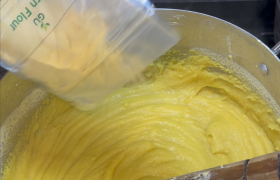
    3. Add corn flour gradually
      Pour the corn flour in slowly while stirring continuously.
    4. Stir until smooth
      Keep turning with a wooden spatula until it comes together into a smooth, stretchy swallow.
    5. Adjust the texture
    • For firmer tuwo: add a bit more flour
    • For softer tuwo: add a splash of hot water
    1. Steam briefly (optional)
      Cover the pot for 2–3 minutes so the tuwo sets nicely.
    2. Serve hot
      Plate and enjoy with any favourite soup.

    Quick tip from the video:
    “Quick, smooth, and doesn’t form lumps easily — good for both beginners and busy people.”


    🌾 More Ways to Use Corn Flour

    You can also use corn flour to make:

    • Pap / akamu
    • Pancakes
    • Swallow alternatives
    • Baking (as a thickener for soups and sauces)

    This makes corn flour one of the most versatile staples to keep in your kitchen.


    💛 Why Our Corn Flour Is Different

    “Soft tuwo starts with quality corn flour. Made fresh. Pure. Delicious.”

    Our flour is:

    • Clean
    • Pure
    • Finely milled
    • Naturally wholesome

    “Our corn flour delivers the perfect tuwo texture every time. Pure, natural, and nutritious. Our corn flour makes mealtime better.”


    🛒 Where to Buy Green Unison Corn Flour

    Shop Online

    🛍️ Order premium quality Corn Flour for Corn Swallow (Tuwo Masara)

    WhatsApp Orders

    🛒 Order on WhatsApp
    📦 Browse our full WhatsApp catalog
    💬 Chat with us directly


    ✔️ Final Thoughts

    Whether you are preparing a family meal or stocking up for daily use, corn flour is a simple, nourishing, and versatile staple. With the right flour, tuwo masara becomes soft, smooth, and consistently delicious.

    Enjoy your next bowl — the Green Unison way.

  • Start a Mini Herb Garden on Your Balcony: Everything You Need

    Start a Mini Herb Garden on Your Balcony: Everything You Need

    Have you ever wished for fresh basil in your pasta or mint in your tea, but felt like you needed a big backyard to grow them? Good news — even if you live in a small apartment, you can start a mini herb garden on your balcony. Herbs grow beautifully in containers and don’t need much space to thrive.

    This beginner-friendly guide walks you through everything you need: the right containers, the best seedlings, sunlight tips, watering techniques, and how to keep your small garden healthy and productive.


    🌱 Why Grow a Herb Garden on Your Balcony?

    Growing herbs on your balcony gives you:

    🍃 Fresh Flavor at Your Fingertips

    Imagine stepping outside to snip fresh basil, mint, or lavender for your meals. Home-grown herbs add richer aroma and taste compared to store-bought ones—without waste.

    Try these healthy seedlings to get started:

    💸 Save Money Long-Term

    A single set of seedlings can supply herbs for months. No more repeatedly buying bunches that spoil after a few days.

    🌿 Beautify Your Space

    A small balcony can become a calm, green retreat. Herbs like lavender and marigold add scent and color, making your space feel alive.

    🔥 Join a Growing Trend

    Urban gardening is more popular than ever. People everywhere are sharing creative ways to grow food and herbs in small spaces — and you can do the same right at home.


    🧰 What You Need to Start Your Balcony Herb Garden

    You don’t need a farm or expensive tools — just a few basics.

    1. Containers or Pots

    Choose containers with drainage holes. You can use:

    • Flower pots
    • Railing planters
    • Recycled buckets
    • Hanging baskets
    • Wall planters

    Vertical arrangements save space and look beautiful.

    2. Good Potting Soil

    Use light, well-draining potting soil. Avoid digging up random soil — it compacts and suffocates roots.

    3. Healthy Herb Seedlings

    Seedlings give you a head start. Recommended beginner-friendly herbs:

    You can also explore herb seeds here:
    Shop Herb Seeds

    4. Sunlight

    Most herbs need around 6 hours of sunlight daily. If your balcony gets less:

    • Put plants where light is strongest
    • Rotate pots weekly
    • Choose herbs that tolerate shade (mint, parsley)

    5. Water Source

    Balcony plants dry out faster. Check daily:

    • If the top 1 inch of soil feels dry → water
    • Water in the morning
    • Ensure pots drain well

    6. Optional Tools

    • Small trowel or spoon
    • Gloves
    • Pruning scissors
    • Spray bottle

    🌿 How to Plant Your Herb Seedlings (Step-by-Step)

    Step 1: Prepare Your Pots

    • Clean the containers
    • Ensure drainage holes
    • Fill with potting soil

    Step 2: Transplant Carefully

    Remove seedlings gently. Make a hole slightly bigger than the root ball. Place the seedling at the same depth as its nursery cup.

    Step 3: Water Thoroughly

    Water until it drains out below. This settles the soil around the roots.

    Step 4: Choose the Right Spot

    Place your pots where:

    • They get the most sunlight
    • Air circulates
    • They won’t be knocked over by the wind

    Step 5: Prune & Harvest Regularly

    Pruning helps herbs grow fuller. Clip basil or mint often to encourage new branches.

    Step 6: Watch for Pests

    Use gentle remedies:

    • Rinse leaves with water
    • Use mild neem spray if needed
    • Plant marigolds beside herbs for natural support

    🌞 Tips to Make Your Herb Garden Thrive

    • Start small; grow as you learn
    • Group herbs with similar needs
    • Use vertical space creatively
    • Protect plants from strong winds or heavy rain
    • Enjoy the process — even mistakes teach you something

    🌱 Ready to Grow Your Balcony Herb Garden?

    Starting your mini herb garden is rewarding and simple. With the right seedlings, good soil, and simple care, you’ll enjoy fresh herbs for cooking, drinks, and home comfort.

    🛒 Shop Herb Seedlings

    Browse our full collection of seedlings

    View everything in our WhatsApp catalog

    💬 Need Help Choosing Seedlings?

    Chat with us on WhatsApp

    We’re happy to help you pick the best herbs for your space.

    Happy gardening — your fresh herbs await! 🌿💚

  • Why Herbal Infused Oils Hit Different: A Nigerian Guide to Glowing Skin, Healthy Hair & Better Food

    No be juju, na science.

    Herbal infused oils are light, plant-powered oils that absorb fast and actually feed your skin and scalp—without the greasy feel. We make them by slowly steeping real herbs from our farm into nourishing oils.

    From our range, you can choose:

    🎥 Watch: what infused oils look like in real life
    https://youtube.com/shorts/E9Ni99bZvXA?si=QOPLkF_n0hdeRUCr


    What Are Herbal Infused Oils?

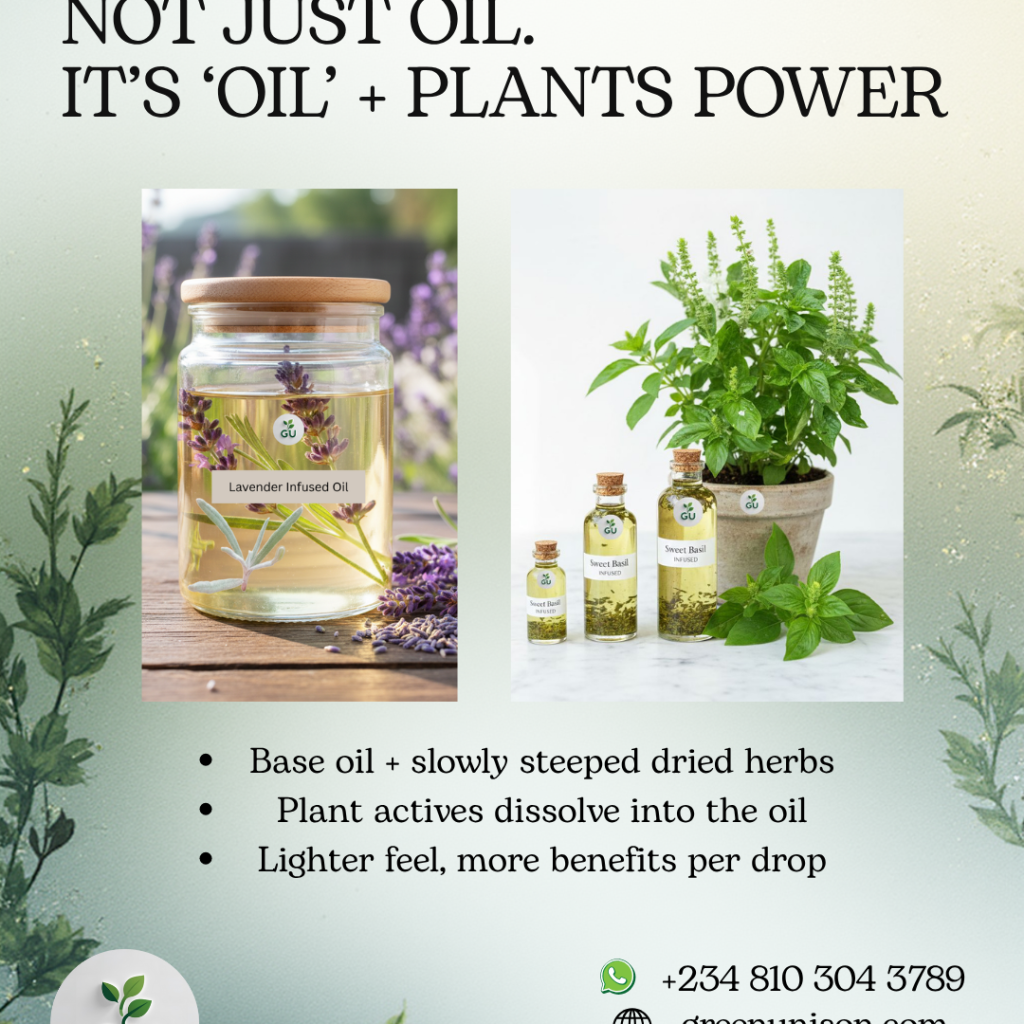
    Herbal infused oils are base oils (like sunflower or similar plant oils) that have been gently steeped with dried herbs over time. The plant’s soothing and protective compounds move into the oil, so every drop carries more than just “slip” and shine.

    They sit in a sweet spot:

    • Gentler than essential oils (no need to dilute again before normal use).
    • More functional than plain oils, because the herb brings its own benefits.

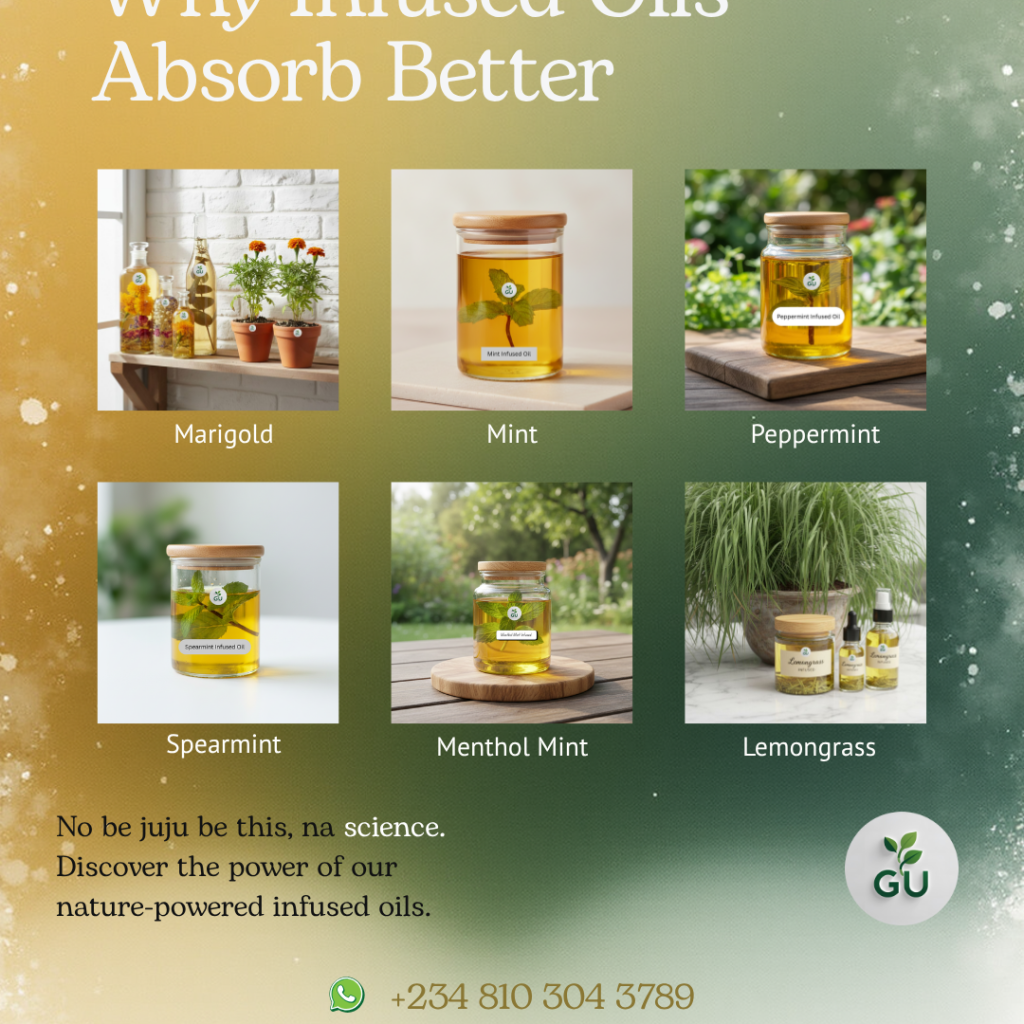
    Why They Absorb Better

    Compared to heavy oils and greasy pomades, a well-made infused oil:

    • Has a lighter texture, so it sinks in instead of sitting on top.
    • Carries plant actives in every drop from the infused herbs.
    • Lets your skin and scalp “drink” it in—benefit without the thick residue.

    That’s why people say it feels different from just “oiling” the skin or scalp.


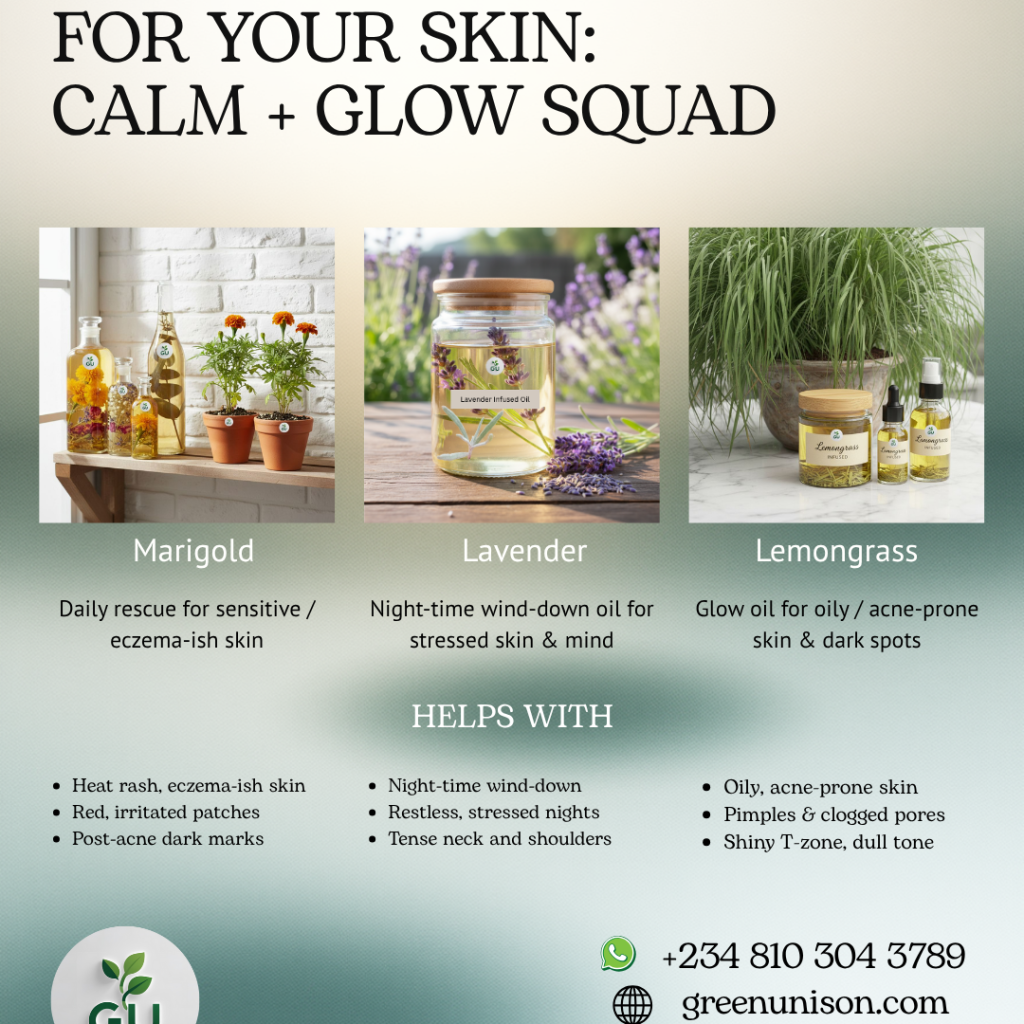
    For Your Skin: Calm + Glow Squad

    Your skin has different moods: sensitive, stressed, oily, dull. Think of our infused oils for skin as a small squad you can rotate instead of one “do it all” bottle.

    Marigold – daily rescue for sensitive / eczema-ish skin

    Marigold Infused Oil is that gentle friend your skin can trust.

    Great when you’re dealing with:

    • Heat rash or “eczema-ish” flare-ups
    • Red, irritated patches
    • Post-acne dark marks that need time and TLC

    Use a few drops on damp skin after your water-based products.


    Lavender moment – night-time wind-down for stressed skin & mind

    Lavender is all about evening wind-down. We pair it with a carrier so it’s skin-friendly.

    You can:

    • Add a tiny drop of Lavender Essential Oil into a spoon of your favourite infused oil (like marigold or lemongrass).
    • Use that mix as a night facial oil or neck/shoulder massage oil.

    It’s especially nice on nights when your skin feels tight and your mind is busy.


    Lemongrass – glow oil for oily / acne-prone skin & dark spots

    Lemongrass Infused Oil is your glow partner when you want light moisture, not heavy cream.

    Helpful when you notice:

    • Oily, acne-prone T-zone
    • Pimples and clogged pores that hate thick products
    • Shiny nose/forehead but dull overall tone
    • Dark spots that need a gentle, consistent routine

    Tap 2–3 drops into damp skin as the last step at night.


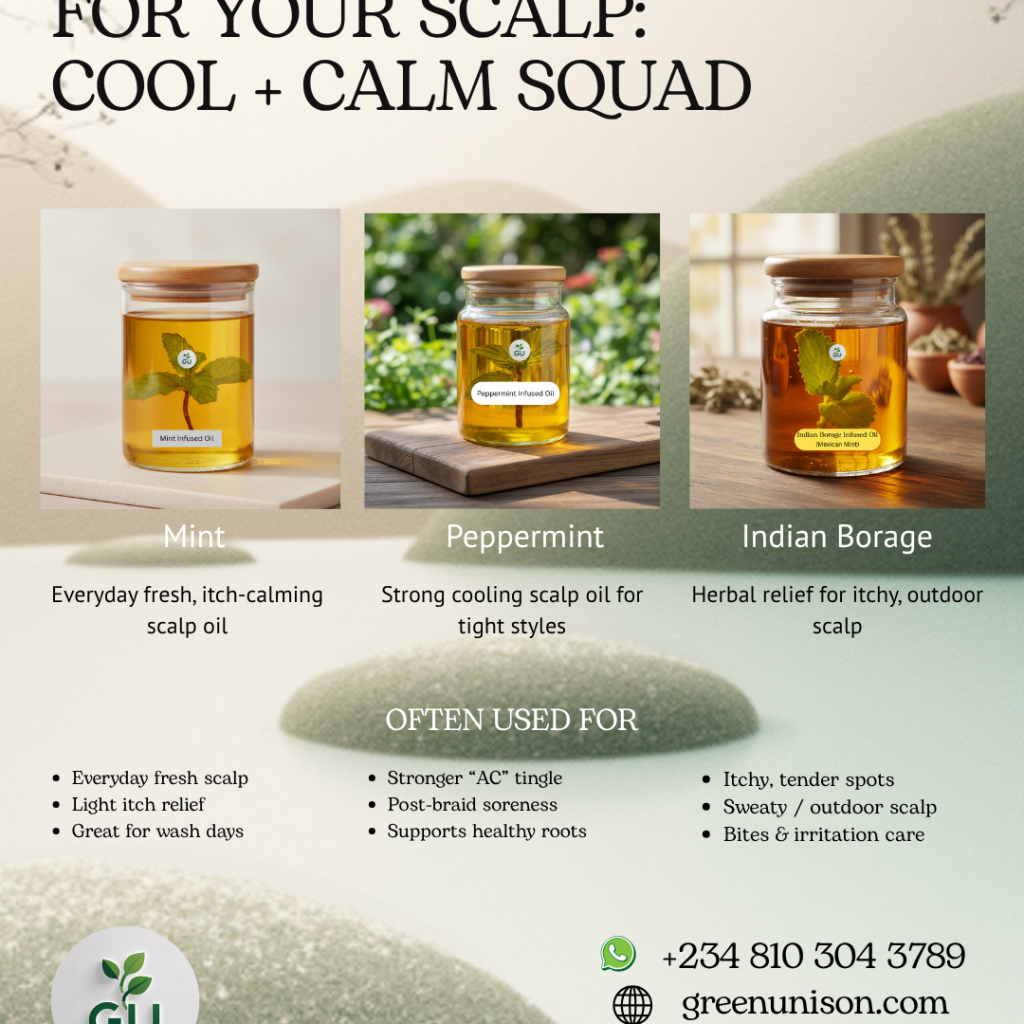
    For Your Scalp: Cool + Calm Squad

    Your scalp also has its own squad—cooling, itch-calming oils that work with braids, wigs, twists and silk presses.

    Herbal infused oils for the scalp can:

    • Help ease dryness and itch
    • Make tight styles feel more comfortable
    • Support your edges when you treat them gently

    Mint & co. – everyday fresh scalp care

    Choose based on how much “AC” you like:

    Simple routine

    1. Section your hair (or gently lift braids/wig).
    2. Put a few drops on your fingertips, not directly on your scalp.
    3. Massage in small circles for 3–5 minutes, 2–3 times a week.

    Pro tip: Oils work best on hair that isn’t bone-dry. Lightly mist with water first, then seal with a little oil.


    For Your Food: Flavour + Fit-Fam Squad

    Infused oils aren’t only for your vanity—they belong in your kitchen too.

    Sweet Basil Infused Oil is made as a culinary finishing oil:

    • Drizzle over roasted yam and plantain
    • Pour over salads and grilled fish
    • Add to pasta, stir-fries and veggies just before serving

    Use it as a finishing touch, not for deep frying. You get flavour with a lighter feel.


    How We Make Them (Farm-to-Bottle)

    1. Grow & harvest herbs at the right time for flavour and potency.
    2. Gently dry them to lock in goodness and prevent moisture problems.
    3. Slow-infuse the herbs into a suitable base oil for several weeks.
    4. Strain, rest and bottle in small batches so everything stays fresh.

    No shortcuts, no magic tricks. Just patience and plants.


    How to Choose & Use (Real-Life Routines)

    A few ideas to get you started:

    • AM/PM face oil: 2–3 drops of marigold or lemongrass on damp skin after your water-based routine.
    • Scalp comfort: a few drops of mint-family oils massaged in 2–3 times a week.
    • Pre-shampoo treatment: oil your scalp and lengths 20–30 minutes before shampoo.
    • Kitchen: a splash of sweet basil oil over cooked food to make simple meals feel special.

    You don’t need all of them at once. Start with the one that matches your biggest need—calm skin, cool scalp or flavourful food—and build from there.


    Real-Life FAQs About Infused Oils

    1. Are infused oils and essential oils the same thing?

    No. Essential oils are highly concentrated plant extracts. You always have to dilute them before putting them on your skin.

    Infused oils are gentler: the herb is steeped in a base oil, so you get a softer, ready-to-use product for everyday skin and scalp care.

    You can layer them: for example, add a tiny drop of Lavender Essential Oil into a spoon of infused oil if you want extra scent at night.


    2. Will infused oils make me greasy?

    They shouldn’t—if you use small amounts.

    • On skin: 2–3 drops on damp skin is usually enough.
    • On scalp: focus on fingertips and massage in; don’t pour directly from the bottle onto your head.
    • On food: use as a finishing drizzle, not a deep-fry oil.

    If you feel greasy, you probably need less product, not a different oil.


    3. Can I use infused oils on my face?

    Yes, many people do.

    Always patch-test on a small area first and keep using your sunscreen in the daytime.


    4. Can I use infused oils under braids, wigs or silk presses?

    Yes—just be gentle.

    • Use drops, not squeezes.
    • Focus on parts and edges.
    • Keep a regular wash routine so there’s no heavy buildup.
    • Choose lighter options like Lemongrass Infused Oil if your hair gets weighed down easily.

    5. How long do infused oils last?

    Kept in a cool, dry place away from direct sunlight, most infused oils are best used within 6–12 months.

    • Close the bottle tightly after use.
    • Don’t dip wet fingers into the oil.
    • If it ever smells “off” or looks cloudy in a strange way, it’s time to let it go.

    Ready to Experience the Difference?

    Herbal infused oils are more than “just” oil. They’re a simple, daily way to:

    • Feed your skin and scalp with real plant goodness
    • Make your self-care feel more intentional
    • Turn everyday meals into something special

    Your glow, your roots, your plate – all nourished, naturally.


    Start Your Herbal Oil Ritual

    ✨ Not sure where to begin? Start with one infused oil and a simple daily routine.

    🛍️ Shop herbal infused oils on our website

    🛒 Order via our WhatsApp catalog

    💬 Prefer to chat first? Send us a WhatsApp message and we’ll help you choose the right blend for your skin, scalp and lifestyle.

  • Harmattan “Scent + Sip”: Peppermint, Lemongrass & Lavender for Calm Rooms and Easy Teas

    Harmattan can be loud: dry air, dust, long days and tired skin.

    One tiny ritual that helps is what we call “Scent + Sip”:
    sit with the warm scent of herbs in your space and slowly sip a cup of caffeine-free tea.

    🎥 Watch the 30-second “Scent + Sip” Short:

    In this post, we’ll walk through a simple trio – peppermint, lemongrass and lavender – and show you how to turn them into easy evening teas using herbs from our farm.


    Why “Scent + Sip” works

    Herbal tea isn’t just about drinking. During harmattan, even the steam from your cup makes a difference:

    • The warm aroma helps signal to your body that the day is slowing down.
    • The heat from the mug feels grounding in cold, dry air.
    • Because these herbs are caffeine-free, you can enjoy them at night without worrying about sleep.

    All three herbs we’ll talk about come from our fields and are gently dried before they reach your kitchen:


    Peppermint tea – for a clearer, fresher feel

    Peppermint is bold, cool and perfect after a long day or a heavy meal.

    How to brew (one mug)

    • 1 teaspoon Dried Peppermint
    • 250 ml freshly boiled water
    • Steep 5–7 minutes with the mug covered
    • Strain and sip (add honey if you like)

    Scent + Sip moment

    Before you take the first sip, pause and let the steam hit your face.
    Breathe in the minty aroma three times, then drink slowly.


    Lemongrass tea – gentle, citrusy wind-down

    Lemongrass is soft and lemony, like a calm cousin of lemon.

    How to brew (evening cup)

    • 1 teaspoon Dried Lemongrass
    • 250 ml freshly boiled water
    • Steep 7–10 minutes
    • Strain and sip warm

    Lemongrass is lovely on its own, but it also pairs well with peppermint when you want a fresh-citrus blend.

    Scent + Sip moment

    Hold the mug close, close your eyes and take a slow breath in through your nose.
    Exhale through your mouth and imagine dropping the day’s stress along with the breath.


    Lavender tea – soft and floral (go easy!)

    Lavender is potent, so a little is enough.

    How to brew (soft floral cup)

    • ½ teaspoon Dried Lavender
    • 250 ml hot water
    • Steep 5–7 minutes, then taste and strain

    If you’ve never had lavender tea before, start with a shorter steep time and adjust next time.

    Scent + Sip moment

    Sip slowly and notice the way the floral scent changes as the tea cools.
    This is a lovely option for your last cup of the night.


    Simple blends you can try

    Once you’re comfortable with each herb alone, you can mix them:

    Fresh & Clear

    Soft Citrus-Floral

    Cozy Mint-Floral

    Always use dried herbs from your jars, and adjust amounts to your taste over time.


    How to build your evening “Scent + Sip” ritual

    You don’t need candles or a full spa setup. Just your herbs, hot water and a few quiet minutes.

    1. Choose your herb (peppermint, lemongrass or lavender).
    2. Boil water and brew using the recipes above.
    3. Carry your mug to a spot where you can sit comfortably.
    4. Spend 30–60 seconds just breathing in the steam before you start drinking.
    5. Sip slowly without scrolling, even if it’s only for 5–10 minutes.

    Tiny, consistent rituals are more powerful than once-in-a-while big gestures.


    FAQs

    1. Are peppermint, lemongrass and lavender teas caffeine-free?

    Yes. All three are herbal tisanes, not true tea, so they naturally contain no caffeine when brewed on their own.

    If you mix them with black or green tea, any caffeine in your cup will come from the tea leaves, not the herbs.


    2. How many cups can I drink in a day?

    For most people, 1–3 cups spread across the day is a comfortable range.

    Listen to your body:

    • If you feel any discomfort, reduce the amount or switch herbs.
    • If you are pregnant, breastfeeding, taking medication or have a medical condition, talk to a qualified professional before drinking herbal teas regularly.

    3. Can I reuse the same herbs twice?

    You can sometimes get a second, lighter cup from the same herbs, especially with peppermint and lemongrass.

    • First brew: full flavour
    • Second brew: shorter steep (about 5 minutes) with fresh hot water

    Don’t keep used herbs sitting in water for hours; brew and drink fresh.


    4. How should I store my dried herbs?

    To keep flavour and scent:

    • Store in airtight jars or pouches
    • Keep away from heat, direct sunlight and moisture
    • Use clean, dry spoons to scoop

    Proper storage helps your herbs last longer and taste better.


    Shop the herbs in this post

    Explore more options in our full collection:
    Dried Herbs & Teas – Shop All

  • Bake Bakery-Style at Home with Wholegrain Corn Flour (White & Yellow)

    Bake Bakery-Style at Home with Wholegrain Corn Flour (White & Yellow)

    In this post, we’ll show you how to:

    • Use unrefined, wholegrain corn flour to get a lighter, bakery-style crumb.
    • Choose between white and yellow corn flour.
    • Combine corn flour with other flours (like plantain) for fluffier, tastier bakes.
    • Try two simple recipes you can make any day of the week.

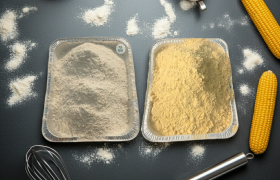
    Throughout, we’ll be talking about Green Unison Silky White/Yellow Corn Flour – our unsieved, additive-free, wholegrain corn flour that’s finely milled for smooth batters and lump-free tuwo.

    If you prefer to watch a video, take a look at our 47-second YouTube short:


    1. Meet Green Unison Corn Flour (Unrefined & Wholegrain)

    There are many “corn flours” out there. Here’s what makes ours different:

    • Unrefined, wholegrain: the flour is milled from the whole corn kernel, so you’re getting the bran, germ and endosperm, not just starch.
    • Unsieved & additive-free: nothing is taken out, nothing is added. No bleaching, no mysterious “improvers”.
    • Finely milled: engineered to mix quickly into smooth batters and silky tuwo – no gritty bits.
    • Naturally gluten-free: pure maize with no wheat blended in.
    • Two colours, same quality:
    • White corn flour – lighter colour, delicate flavour.
    • Yellow corn flour – warmer golden colour, slightly deeper corn taste.

    You can order it directly here:


    2. Quick Science: Corn Flour vs Cornstarch vs Cornmeal

    A lot of people online use these words interchangeably. They’re not the same:

    • Corn flour (what we sell):
      Finely ground whole dried corn. It behaves like other flours – you can use it in batters, doughs, and as a thickener.
    • Cornstarch:
      Pure starch extracted from the inside of the corn kernel. It’s mostly used to thicken sauces, custards and stir-fries. It doesn’t bring flavour or fibre and can’t replace flour one-for-one in baking recipes.
    • Cornmeal:
      Also made from dried corn, but more coarse. Great for rustic cornbread and crunchy coatings. If you used cornmeal in a soft cake, it would feel grainy.

    For bakery-style bakes with a tender crumb, we want fine, wholegrain corn flour – exactly what’s in every pouch of Green Unison corn flour.


    3. Three Simple Moves for Bakery-Style Bakes

    These are the same core tips we shared on social, just expanded so you can actually bake with them.

    Move 1: Swap 25% of Your Wheat Flour for Corn Flour

    This is the hero tip from the reel:

    Pro tip: replace around 25% of your wheat flour with corn flour for a softer, bakery-style crumb.

    Why it works:

    • Wheat flour brings gluten, which gives structure but can make bakes tough if overworked.
    • Wholegrain corn flour has no gluten, so when you blend it in, you gently soften the overall structure.
    • The result is a tender, slightly more moist crumb with a subtle corn flavour.

    How to do it

    • If your recipe calls for 2 cups of flour, try:
    • 1½ cups all-purpose flour
    • ½ cup Green Unison corn flour
    • For most cakes, muffins, cupcakes and quick breads, you can go up to 30% corn flour without changing anything else in the recipe.

    Start with a favourite recipe (banana bread, vanilla cake, pancakes) and do the 25% swap. You’ll notice the difference in the very first slice.


    Move 2: Go Higher on Corn Flour (or Gluten-Free) – Add a Binder

    Want to use more corn flour or skip wheat flour completely?

    Because corn flour is gluten-free, it needs a binder to help your bake hold together. Good binders include:

    • Eggs – simple and reliable for most home bakes.
    • Flax “egg” – for vegan or egg-free baking:
    • Mix 1 tablespoon ground flaxseed with about 3 tablespoons of water.
    • Let it sit 5–10 minutes until it turns gel-like.
    • Use this in place of 1 egg in softer bakes like pancakes, muffins and quick breads.

    When you go above 30–40% corn flour in a recipe, make sure you:

    1. Use enough binder (egg or flax egg).
    2. Avoid over-mixing, so the batter stays soft.
    3. Grease and line your pan well, because gluten-free bakes can be more delicate when hot.

    This move is perfect if you’re experimenting with lighter, gluten-free-leaning recipes but still want simple, everyday ingredients.


    Move 3: Pair Corn Flour with Plantain Flour for Moist, Fluffy Crumb

    In the reel we also talked about pairing our corn flour with other flours. One combo we love in the test kitchen:

    10% plantain flour + 15% corn flour + 75% wheat flour

    Why it’s powerful:

    • Corn flour adds tenderness and gentle corn flavour.
    • Plantain flour brings natural sweetness and extra body.
    • Wheat flour keeps structure and lift.

    In real life, that could look like this for a cake or pancake recipe using 2 cups flour:

    • 1½ cups all-purpose flour
    • ¼ cup Green Unison corn flour
    • ¼ cup Green Unison plantain flour

    You get a moist, slightly sweet, bakery-style crumb – great for:

    • Pancakes and waffles
    • Muffins and snack loaves
    • Cornbread-style bakes with a softer bite

    You can grab the flours here:


    4. Try It Today: Two Easy Recipes

    These are simple, everyday recipes built around our unrefined, wholegrain corn flour – perfect for testing the tips above.

    Recipe 1: Corn Flour & Plantain Pancakes (Soft & Satisfying)

    Serves: 3–4 (about 8 medium pancakes)

    Dry ingredients

    • ½ cup Green Unison corn flour (white or yellow)
    • ½ cup Green Unison plantain flour
    • ½ cup all-purpose flour (optional – or use more plantain flour for gluten-free)
    • 2 tablespoons sugar (or to taste)
    • 2 teaspoons baking powder
    • ½ teaspoon salt

    Wet ingredients

    • 2 eggs (or 2 flax eggs)
    • 1¼ cups milk or plant-based milk
    • 2 tablespoons melted butter or neutral oil
    • 1 teaspoon vanilla (optional)

    Method

    1. In a bowl, whisk together all the dry ingredients.
    2. In a separate bowl, whisk the eggs, milk, oil and vanilla.
    3. Pour wet into dry and stir gently until just combined. If the batter looks too thick, loosen with a splash of milk.
    4. Heat a lightly oiled pan on medium. Scoop about ¼ cup batter per pancake.
    5. Cook until bubbles form on top and the edges look set, then flip and cook until golden.
    6. Serve warm with honey, fruit, or your favourite syrup.

    These pancakes are soft, slightly sweet and keep you full for longer thanks to the wholegrain blend.


    Recipe 2: 25% Corn Flour Banana Bread (Bakery-Style Crumb)

    Makes: 1 loaf

    Dry ingredients

    • 1½ cups all-purpose flour
    • ½ cup Green Unison corn flour
    • 1 teaspoon baking soda
    • 1 teaspoon baking powder
    • ½ teaspoon salt

    Wet ingredients

    • 3 medium very ripe bananas, mashed
    • ½ cup sugar (white, brown, or a mix)
    • 2 eggs (or 2 flax eggs)
    • ⅓ cup neutral oil or melted butter
    • 1 teaspoon vanilla

    Optional mix-ins

    • ½ cup chopped nuts or chocolate chips

    Method

    1. Preheat oven to 175°C (350°F). Grease and line a standard loaf tin.
    2. In a bowl, whisk together the all-purpose flour, corn flour, baking soda, baking powder and salt.
    3. In another bowl, combine mashed bananas, sugar, eggs, oil and vanilla until smooth.
    4. Gently fold the dry ingredients into the wet, mixing just until you no longer see streaks of flour. Fold in nuts or chocolate if using.
    5. Pour into the prepared tin and smooth the top.
    6. Bake for 50–60 minutes, or until a skewer inserted in the centre comes out clean.
    7. Allow to cool in the tin for 10 minutes, then move to a rack to cool completely.

    You’ll notice the loaf slices cleanly, with a slightly more tender and moist crumb than all-wheat banana bread – that’s the corn flour doing its quiet work.


    5. Common Questions About Baking with Corn Flour

    “Can I use your corn flour for tuwo and swallow too?”

    Yes. Our wholegrain corn flour is designed for silky tuwo / corn swallow as well as baking. Follow the simple ratio on the pack (about 1 cup flour to 2–2½ cups water), whisk into boiling water and stir until smooth and stretchy. Then enjoy with any soup of choice.

    “Is your corn flour the same as cornstarch?”

    No. Cornstarch is pure starch and mostly used a spoon at a time to thicken sauces. Our Green Unison corn flour is wholegrain flour – it goes into batters, doughs and tuwo, and also adds flavour, fibre and colour.

    “What’s the difference between white and yellow corn flour when I bake?”

    They behave the same in recipes. The difference is mostly:

    • White corn flour: lighter colour, very subtle flavour – great when you don’t want to change the colour of a cake.
    • Yellow corn flour: warmer golden crumb and a slightly more pronounced corn taste – beautiful in pancakes, muffins and cornbread-style bakes.

    You can keep one or both in your pantry and swap freely depending on the look you want.

    “Is this medical or nutrition advice?”

    No. This post is for general food and cooking information only. It’s not medical advice and doesn’t replace talking to a qualified health professional about your diet or any health condition.


    6. Ready to Bake Bakery-Style at Home?

    If you’ve been curious about that “Pro tip: replace 25% of wheat with corn flour” from our social content, this is your sign to actually try it.

    • Start with one recipe you already love.
    • Do the 25% swap with Green Unison corn flour.
    • Taste the difference in the crumb, colour and flavour.

    Then come back and experiment with:

    • The corn + plantain + wheat blend for fluffier pancakes and muffins.
    • Higher corn flour ratios + binders for more gluten-free-leaning baking.
    • Using the same corn flour bag for both tuwo and baking, so your pantry works harder for you.

    Shop the Flours


    Prefer to Order on WhatsApp?

    We’ll help you choose the right pack size (from small trial pouches to family and bulk sizes) and arrange fast delivery.

    Happy baking – and tag us when you try your first corn-flour upgrade!


  • From Itchy Scalp to Healthy Roots: How Herbal Hair Oils Transform Your Hair Care Routine

    From itchy scalp to stressed edges, Nigerian hair goes through a lot.

    Heat, tight styles, sweat, wigs, braids, Lagos dust, stress – your scalp is carrying plenty. That’s where herbal hair oils come in: not as another greasy product, but as a simple, intentional way to feed your scalp and protect your hair.

    In this guide, you’ll learn what makes a true herbal hair oil, why it feels different from ordinary oil, and how to create a routine that actually fits your life using our Infused Oils eShop.


    What Makes a Hair Oil “Herbal”?

    Not every “hair oil” is herbal.

    A herbal hair oil is made by infusing real dried herbs into a light base oil over time, so the oil carries the plant’s calming, strengthening and balancing properties.

    At Green Unison, we use our own naturally grown herbs to make oils like:

    Together, they form a Cool + Calm Squad for your scalp.

    When the herbs are properly dried and infused, their natural goodness slowly moves into the oil. The result is an oil that does more than shine – it comforts your scalp and supports healthy-looking hair over time.


    Why Herbal Hair Oils “Hit Different” From Regular Oils

    Most of us have used straight coconut oil, castor oil or heavy pomades at some point. They can coat the hair, but they also:

    • Feel heavy and sticky in hot weather
    • Sit on top of the scalp and attract dust
    • Leave buildup on braids and under wigs

    A well-made herbal hair oil feels lighter and more intentional because:

    1. The base oil is chosen for texture
      Lighter oils spread easily and don’t feel suffocating, even under protective styles.
    2. Herbal infusion = added benefits
      You’re not just sealing; you’re delivering calming and balancing plant compounds to the scalp.
    3. You use less
      A few drops per section is usually enough. You’re not soaking your hair in oil, you’re nourishing it.

    That’s the difference between “greasing your scalp” and caring for your scalp.


    Common Scalp & Hair Problems Herbal Oils Can Support

    Herbal hair oils are not medicine, but they can be powerful support for everyday issues like:

    1) Itchy, Irritated Scalp

    Sweat, synthetic hair, tight styles and product buildup can all leave your scalp feeling angry.

    For a calm, fresh feel, reach for:

    Used with gentle massage, they can help your scalp feel less tight and more comfortable.


    2) Dryness & Flakiness

    Sometimes “dandruff” is actually just dryness and buildup.

    Using a light herbal oil regularly – especially on freshly cleansed scalp – can help:

    • Lock in hydration
    • Reduce that tight, dry feeling
    • Make flakes less visible over time (when combined with proper cleansing)

    For a softer, milder feel, try Spearmint Infused Oil.


    3) Stressed Edges & Breakage

    Constant tension from styles, headscarves and stress can show up at the hairline first.

    Choose a lighter oil like Lemongrass Infused Oil or Spearmint Infused Oil and:

    • Gently massage along the hairline 3–4 times per week
    • Avoid flooding the area – a few drops are enough
    • Combine with looser styles or breaks between tight installs

    4) Dull, Lifeless Strands

    Herbal oils can add softness and shine without the heavy, greasy look. Used on slightly damp hair, they help your strands hold onto moisture for longer.

    For a light, fresh finish, Mint Infused Oil and Lemongrass Infused Oil are great options.


    How to Build a Simple Herbal Hair Oil Routine

    You don’t need 10 products and a whole Saturday. Start with one bottle and a few minutes at a time.

    Step 1: Weekly Pre-Shampoo Treatment

    Once a week (or every wash day):

    1. Section your hair.
    2. Apply a small amount of herbal hair oil (for example Mint Infused Oil or Spearmint Infused Oil) to your scalp and massage gently.
    3. Smooth a little down the length of your hair, focusing on the ends.
    4. Leave it on for 20–30 minutes (or even overnight if that works for you).
    5. Shampoo and condition as normal.

    This helps prepare your hair for cleansing so it doesn’t feel stripped and rough.


    Step 2: 5-Minute Scalp Massage Ritual

    Pick 2–3 evenings per week:

    1. Put a few drops of oil on your fingertips.
    2. Gently massage your scalp in circular motions – especially under wigs, between braids or around edges.
    3. Focus on relaxing your jaw, neck and shoulders too – tension there can show up as tension in your scalp.

    For extra freshness on hot nights, keep a bottle of Peppermint Hydrosol nearby and mist before or after massage.


    Step 3: Seal & Shine on Protective Styles

    After moisturising:

    1. Use a light herbal oil like Lemongrass Infused Oil to seal moisture into your hair.
    2. Smooth a tiny amount over your braids, twists or cornrows to reduce frizz and add shine.
    3. Avoid overdoing your hairline – edges need care, not weight.

    The key is small amounts, consistently, not soaking your hair in oil.


    Picking the Right Herbal Hair Oil for Your Hair Type

    Not every scalp and hair type has the same needs. Here’s a simple way to choose from the Green Unison range:

    If in doubt, start with one mint-based oil and give your scalp 4–6 weeks of consistent care before changing too much.


    Combining Herbal Hair Oils With Your Existing Routine

    You don’t have to throw everything away. Instead:

    • Keep your trusted shampoo and conditioner.
    • Add a herbal hair oil as:
    • Your pre-poo
    • Your scalp massage oil
    • Your sealant after moisturiser
    • Use a floral water from our Floral Waters eShop – like Peppermint Hydrosol – for quick refreshes between oil days.

    Pay attention to:

    • How your scalp feels 24–48 hours after use
    • Whether your hair stays softer for longer between wash days
    • If your styles feel more comfortable overall

    A Note on Patience & Consistency

    Herbal hair oils work best like most natural routines – slowly and consistently.

    • Don’t judge the results after one day.
    • Give your hair and scalp at least 4–6 weeks of regular care.
    • Take simple progress photos for yourself – front, sides, back – every few weeks.

    You might notice:

    • Less scratching without thinking about it
    • Softer new growth
    • Styles feeling more comfortable on your scalp

    Progress is still progress, even if it’s gentle.


    Ready to Start Your Herbal Hair Oil Journey?

    If your scalp has been complaining quietly (or loudly), this is your reminder that you deserve a routine that calms, nourishes and respects your hair and lifestyle.

    You don’t have to do everything at once. Start with one herbal hair oil, one weekly pre-poo, and a few peaceful scalp massages. Let your hair tell you the rest.


    Give Your Scalp a Fresh Start

    ✨ Start small: one herbal hair oil, one simple routine, and a few calm minutes for your scalp each week.

    🛍️ Browse herbal infused oils for scalp & hair on our website

    🛒 Order directly from our WhatsApp catalog

    💬 Want help choosing? Send us a WhatsApp message and tell us about your scalp and hair goals.

  • African Marigold (Tagetes erecta): One Plant for Your Cup, Routine & Garden

    In our October 29 Instagram carousel, we showed how African marigold quietly works in three areas of your life:

    • In your cup
    • In your routine
    • In your soil

    This blog post is the “extended version” of that story, focused on the exact marigold we grow at Green Unison:

    African marigold – Tagetes erecta

    Tall plants, bold yellow blooms, strong leaf scent. That’s the one.


    1. Meet African marigold (Tagetes erecta)

    African marigold is a tall, branching marigold from the daisy family (Asteraceae). It originally comes from Mexico and Central America, but it thrives beautifully in warm climates like Nigeria.

    The bright golden colour of the petals comes from natural pigments called carotenoids (especially lutein). These give marigolds their sunny colour and make the petals useful for:

    • natural colour in food and oils
    • herbal tea blends (caffeine-free)
    • natural dye for crafts and textiles

    Researchers also pay attention to African marigold because its roots release natural compounds that can help reduce certain root-knot nematodes in the soil when marigolds are used as part of an integrated planting plan.

    At Green Unison, the variety we grow and dry is African marigold (Tagetes erecta), and it is the same plant behind all our marigold-based products.


    2. In the garden: marigold as a working companion

    On the farm, African marigold isn’t just decoration. We treat it as a working plant that supports the rest of the garden.

    Companion planting and soil support

    Farmers and gardeners have used marigold around vegetables for years because:

    • Marigold roots can help reduce pressure from certain soil nematodes over time when planted densely.
    • The natural scent of marigold foliage can make beds less attractive to some pests.
    • The bright flowers attract pollinators and beneficial insects, which support fruiting crops.

    Realistic expectations:

    • Marigolds won’t stop every pest.
    • They work best as one tool in a wider organic strategy (crop rotation, mulching, composting, healthy soil care).

    How you can use them:

    1. Ring your vegetable beds with marigold plants, especially near tomatoes, peppers, okra and pumpkins.
    2. Space plants 25–40 cm apart so they can fill out properly.
    3. Allow blooms to mature, then chop and incorporate dried plant residue at the end of the season.

    If you’d like to try this:

    🌼 Nature Powered Marigold Seeds – High-Germination

    You can also find marigold seedlings and other seedlings we have available.


    3. For your routine: dried petals, infused oil & hydrosol

    In the October 29 IG post, we showed marigold transitioning from garden to routine. At Green Unison, we keep this side of marigold cosmetic, culinary and craft-based only—never medical.

    a) Dried African marigold petals

    Our Nature Powered Dried Marigold Petals – Pure & Vibrant are carefully dried African marigold petals with preserved colour and aroma.

    You can use them as:

    • A gentle herbal tea ingredient
    • Natural colouring for oils, foods and drinks
    • An ingredient in DIY crafts (bath salts, wax melts, soap, potpourri)

    Basic marigold petal tea

    • 1–2 teaspoons dried petals
    • 1 cup hot water
    • Steep 5–10 minutes
    • Sweeten if desired

    This creates a warm, golden herbal drink with a soft flavour that pairs well with peppermint, spearmint, lemongrass or lavender.

    🌼Dried Marigold Petals – Pure & Vibrant

    If you have allergies—especially to daisy-family plants—or any health condition, check with a qualified professional before making marigold tea a regular habit.


    b) Marigold infused oil – soft, comforting body oil (external use)

    Infused oil is created by steeping dried marigold petals in a plant carrier oil so the colour and oil-soluble compounds gently release.

    Green Unison’s Nature Powered Marigold Infused Oil – Soft & Comforting is:

    • made from dried African marigold petals
    • filtered and bottled for external use only
    • a gentle herbal cosmetic oil for everyday body care and hair care

    How to use it:

    • As a body oil after bathing (on damp skin)
    • As a massage oil for tired muscles
    • Smoothed over dry elbows, knees and shins
    • Lightly applied to hair ends as part of a hair oil blend (external use only)

    You can also layer it with other infused oils like mint or lavender infused oil.

    Safety

    • Patch-test first
    • Avoid eyes, lips, broken skin
    • Discontinue if irritation occurs
    • Follow your dermatologist’s guidance for persistent skin concerns

    🌼Marigold Infused Oil – Soft & Comforting

    Explore more Infused Oils


    c) Marigold hydrosol – gentle floral water

    During steam distillation, plants release:

    • a concentrated essential oil
    • a gentler aromatic water called hydrosol or floral water

    Green Unison’s Nature Powered Marigold Hydrosol – Gentle & Soothing is:

    • pure floral water from African marigold
    • suitable for external use only
    • a soft way to enjoy marigold’s aromatic character

    Ways to use hydrosol:

    • As a face mist or toner
    • As a linen or pillow spray
    • As a gentle body mist (avoid eyes and mucous membranes)
    • As base water in simple DIY cosmetic blends

    🌼 Marigold Hydrosol – Gentle & Soothing

    Check out our Floral Waters


    d) Where essential oils fit into your routine

    Essential oils are concentrated aromatic extracts. Green Unison essential oils (lavender, mint, rosemary and more) are intended for:

    • diffusers,
    • very well-diluted blends,
    • and room aromatics.

    They are not for ingestion and should always be diluted before skin contact.

    Pairing ideas:

    • Use marigold hydrosol + marigold infused oil for a soft base
    • Add essential oils only in diffusers or diluted DIY blends
    • Keep essential oils far away from children, pets and vulnerable individuals

    Check out our Essential Oils


    4. Beyond routine: tea, colour & craft

    With dried African marigold petals in your pantry, you have multiple options:

    • Herbal teas – blend with mint, spearmint, lemongrass or lavender
    • Natural colouring – tint oils, syrups, broths or rice
    • Natural dye – colour cotton, wool or silk in warm golden tones
    • Decor & craft – sprinkle in candles (surface only), soaps, bath salts, and table décor

    Keep items clearly labelled for food, cosmetic, or craft use.

    Dried Marigold Petals – Pure & Vibrant


    5. Quick FAQs: African marigold, hydrosol & infused oil

    1) Is African marigold the same as calendula?

    No.

    • African marigold = Tagetes erecta
    • Calendula (pot marigold) = Calendula officinalis

    Green Unison’s marigold petals, hydrosol and infused oil all come from African marigold (Tagetes erecta).


    2) Can I drink marigold tea every day?

    African marigold petals are considered edible and are traditionally used in small amounts. We treat marigold tea as a culinary herbal drink, not medicine.

    Check with a qualified professional if you:

    • are pregnant or breastfeeding
    • have allergies (especially Asteraceae family)
    • have a health condition
    • or take medications

    3) Are marigold products medicine?

    No. Green Unison products are:

    • Dried petals – culinary & craft ingredient
    • Infused oil – cosmetic external-use oil
    • Hydrosol – external-use floral water
    • Seeds/seedlings – for gardening

    They are not drugs and not intended to diagnose, treat, cure or prevent disease.


    4) Can marigold replace chemical pesticides?

    Marigold helps, but it is not a complete replacement.

    Use it as:

    • a soil-supporting crop
    • a border flower for diversity
    • part of an integrated pest-management approach

    Combine with proper soil care, mulching, composting and crop rotation.


    6. Shop the African marigold range from Green Unison

  • Unlock Wellness with Mint Tea: A 30-Day Journey, Twice Daily

    Unlock Wellness with Mint Tea: A 30-Day Journey, Twice Daily

    Ready to embark on a journey of self-discovery and wellness? This 30-day mint tea challenge invites you to explore the remarkable benefits of this natural elixir. What better way to do that than with tea that’s as good for the planet as it is for you? We’ll delve into the amazing ways mint can boost your well-being, and how choosing organically and sustainably grown tea enhances those benefits even further.

    Benefit 1: Digestive Harmony

    Think of your digestive system as an intricate dance. When the rhythm is disrupted, discomfort and bloating can follow. Mint, with its soothing properties, steps in as a choreographer, restoring harmony to your gut. The menthol in mint relaxes the muscles of your digestive tract, easing spasms and promoting smooth, effortless digestion. Experience a newfound lightness and digestive comfort throughout your day.

    Benefit 2: A Sparkling Smile and Confident You

    Seeking a natural way to freshen your breath and boost your oral health? Look no further than mint! Its antibacterial properties act like tiny guardians, fighting off the germs that cause bad breath. With each sip of mint tea, you’re creating a cleaner, healthier environment in your mouth. Embrace the confidence that comes with a fresh, sparkling smile.

    Benefit 3: Your Inner Oasis of Calm

    Amid life’s hustle and bustle, finding moments of tranquility is essential. Mint tea offers a sanctuary of calm amidst the storm. The fragrant steam and refreshing flavor create a sense of serenity, helping to melt away stress and sharpen your focus. Rediscover your inner peace with this daily ritual of relaxation.

    Why Choose Organic and Renewable?

    When you choose organically grown mint tea, you’re not only prioritizing your health, but also the health of the planet. Organic farming practices avoid harmful pesticides and chemicals, ensuring a pure and potent cup of tea. Renewable practices protect our ecosystems and ensure a sustainable future for generations to come.

    Investing in Your Well-being and the Planet

    By choosing Green Unison, you’re making a conscious decision to invest in your well-being and the well-being of the planet. Our commitment to organic and renewable practices ensures that every cup of mint tea is a step towards a healthier, more sustainable lifestyle.

    Conclusion:

    Are you ready to transform your well-being, one cup at a time? Take the 30-day mint tea challenge and experience the revitalizing power of nature. Sip your way to better digestion, fresher breath, and a calmer mind. Join the 30-day mint tea challenge today and start your journey to a healthier you!

    Next Steps

    Share your 30-day mint tea experience! Let us know how you’re feeling and what changes you’ve noticed. Connect with others on this wellness journey and inspire a community of mindful living.

    Ready to experience the joy of crafting your own organic mint tea? Purchase your dried mint plants from us today and unlock a world of flavor and wellness!

    Want to learn how to brew the perfect cup of mint tea? Check out our step-by-step guide!