
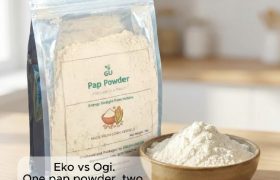
Pap is a versatile staple enjoyed in many homes – it can be smooth and creamy or cool and firm. In fact, the classic breakfast ogi (also called akamu or pap) and the sliceable eko (firm pap pudding) both come from the same pap base. With one quality pap powder, you can easily make either texture in minutes. This guide explains the difference between eko and ogi, the science behind their textures, and how you can nail both consistencies every time. (No more guesswork – even if you’re new to pap-making!)
What Exactly Are Ogi and Eko?
Ogi (Pap/Akamu) is a smooth, custard-like porridge made from fermented grains (usually corn). It’s a traditional cereal pudding that’s popular across Nigeria. Ogi is typically enjoyed warm for breakfast or as a light meal – often sweetened to taste or taken with a splash of milk. Many families pair ogi with side treats like akara (bean fritters) or moin moin (steamed bean pudding) for a hearty start. Because it’s fermented, ogi has a mild tangy aroma and taste. (Fun fact: the fermentation is done by friendly bacteria and yeast, which gives pap its unique slightly sour flavour and makes it easily digestible.)
Eko (Agidi), on the other hand, is basically pap in jelly form. It’s the firm, set version of pap – usually made by cooking pap extra thick and letting it cool until solid. The result is a white, pudding-like block that can be sliced and chewed. Eko (called agidi by the Igbo) has a neutral taste like ogi, but its firmer texture means it’s often eaten differently. Some people enjoy eko on its own as a light meal or snack, while others serve it with flavorful accompaniments (for example, eko can be paired with soups, stews, or a spicy sauce). Essentially, if ogi is like a thick drinkable porridge, eko is pap you can hold once it’s cooled and set.
In summary: ogi/akamu is the creamy pap you eat with a spoon, while eko/agidi is the solid pap you can cut with a knife. The amazing part is both come from the same pap powder or paste – the difference is how you prepare it. Below, we’ll show you how one instant pap powder can yield two textures with ease.
One Pap Powder, Two Textures – How Is It Possible?
The secret comes down to proportion and technique. With traditional wet pap (the kind sold fresh in markets), cooks have long known that a slightly thinner mix gives a pourable ogi, while a thicker mix can set into firm eko. It’s all about how much water you use and how long you cook it.
From a food science perspective, it’s about starch gelatinisation and gelation. When you heat a starch like corn in water, its granules swell and burst – the mixture thickens (that’s gelatinisation). As it cools, the starch molecules (especially amylose) start bonding into a mesh-like network, trapping water. With more starch (higher concentration), this network becomes denser and sets into a firm gel. That’s why eko, which is made with more pap powder and less water, solidifies into a sliceable gel, whereas ogi, made with more water, stays semi-liquid and spoonable. In short, the higher the starch-to-water ratio, the firmer the pap will be once cooled.
(If you were to reheat a solid eko with enough water, it would loosen back into a pap consistency – it’s the same ingredients, just a different structure!)
Another key factor is fermentation. Traditional pap is made by fermenting corn for days; this process develops that classic slightly sour taste and improves the pap’s texture and digestibility. Green Unison’s Instant Pap Powder retains this authentic process – our maize is soaked and fermented under controlled conditions, then dried and milled into a fine powder. The result: you get all the rich flavour and nutrition of real ogi/akamu without the laborious prep. No additives or preservatives – just pap powder that cooks fast into creamy ogi or sets into firm eko.
With that in mind, let’s dive into the practical steps for making both ogi and eko using one pap powder. Grab your favourite pap powder (we’ll of course be using our Green Unison brand) and let’s get cooking!
How to Prepare Ogi (Akamu) – The Creamy Pap
Making ogi with our instant pap powder is quick and foolproof. Here’s how to get that smooth, creamy porridge consistency every time:
- Measure the Pap Powder: Start with about 3–4 tablespoons of pap powder per serving (this yields roughly one medium bowl of ogi).
- Make a Slurry: In a pot or bowl, mix the powder with a little cool water – just enough to form a smooth, runny paste (slurry). This step is crucial: using cold water first helps the powder dissolve without forming lumps. Stir until there are no dry clumps.
- Add to Boiling Water: Bring about 2 cups of water to a rolling boil in a pot. Once boiling, slowly pour the pap slurry into the water while stirring continuously. Stirring as you pour is the key to avoid lumps – you’ll see the mixture turn translucent and begin to thicken as it combines.
- Cook to Thicken: Reduce the heat to low and keep stirring for a few minutes. The pap will thicken into a custard-like consistency. Cook for about 5 minutes until it’s smooth and creamy, with no raw starchy taste.
- Serve Warm & Enjoy: Your ogi is ready when it’s a lush, smooth porridge. Serve it hot or warm. You can enjoy it plain, or add a splash of milk (or plant-based milk) and a bit of sugar or honey to sweeten. For extra yum, pair it with akara or moi-moi on the side – a classic combo for a filling breakfast!
Ogi Tip: If your pap turns out too thick for your liking, simply stir in a little hot water to loosen it. If it’s too thin, you can mix a bit more pap powder in cold water and carefully stir it in while heating until it thickens. Once you get your preferred thickness, make a mental note of the powder-to-water ratio for next time. With our finely milled pap powder, you should get a smooth result with no lumps – just be sure to stir well and use boiling water.
How to Prepare Eko (Firm Pap) – The Set Pap Pudding
Now for eko, the firmer pap that sets into a mold. The preparation is similar at the start, but we’ll use less water and a thicker slurry, plus some patience to let it set:
- Measure a Larger Quantity: For eko, you’ll typically use more pap powder since it’s a solid serving. Let’s say about 1 cup of pap powder to make a small bowl or mold that serves two people.
- Mix a Thick Paste: In a bowl, combine the pap powder with some cool water, but this time add just enough water to form a thick paste. The mixture should be heavier – think the consistency of pancake batter or even thicker. Make sure it’s smooth (no dry lumps).
- Add to Boiling Water: Boil about 2½ cups of water in a pot (for 1 cup powder). Once boiling, stir in the pap paste gradually. Go slowly and stir vigorously as you add it, so the thick pap disperses without clumping. The mixture will begin to thicken very quickly.
- Cook Until Very Thick: Keep the heat on medium and stir constantly. The pap will turn into a thick, doughy porridge. Continue cooking and stirring for a few minutes – it will become glossy and pull away slightly from the pot as it thickens. Make sure there’s no raw taste (about 5–6 minutes of cooking is usually enough).
- **Pour and *Set:* Immediately pour the thick pap into a clean container or mold. (You can use any bowl, a loaf pan, or ramekins – lightly rinsed with water beforehand to make unmolding easier, if you plan to invert it out.) Smooth the top with a spoon. Leave it to cool and set for at least 1–3 hours at room temperature. For faster results, you can refrigerate it once it’s cooled a bit – the cold will help it firm up quicker.
- Serve as Desired: Once solid, eko can be cut into slices or blocks. Serve chilled or at room temperature. It’s often eaten on its own as a light meal, or you can enjoy it with a savory dish. Some popular pairings include eko with hot pepper soup, with akara/moi-moi (like ogi), or with a drizzle of stew or sauce on top.
When made right, eko should hold its shape but still have a tender, gel-like bite. If your eko feels too soft or won’t hold form, it may have had a bit too much water – next time use slightly more powder (or a little less water). If it’s too hard or rubbery, use a bit more water next time for a gentler gel. After a try or two, you’ll find the perfect balance that suits your texture preference.
Storage tip: Eko is best enjoyed within a day or two. Keep any leftovers refrigerated, wrapped or in an airtight container so it doesn’t dry out. Chilled eko can be quite firm; you can warm it slightly to soften the texture if preferred (or just enjoy it cold).
Top Tips for Perfect Pap (Ogi or Eko)
No matter which style you’re making, these tips will help you get a smooth, delicious result every time:
- Always start with a cold-water mix: Whether for ogi or eko, don’t skip making that initial cold slurry/paste. Stirring pap powder directly into hot water will almost guarantee lumps. The cold pre-mix allows the powder to disperse evenly.
- Stir, stir, stir: Continuous stirring while cooking is your best friend. It prevents the pap from settling and forming clumps at the bottom. Use a wooden spoon or whisk and really get into the corners of the pot as you stir.
- Use the right ratio: For ogi, a ratio of roughly 1 part pap powder to 8–10 parts water (by volume) gives a good consistency (e.g. 3–4 tablespoons powder to 2 cups water). For eko, it’s more like 1 part powder to 2.5 parts water (e.g. 1 cup powder to ~2.5 cups water). These aren’t hard rules – you can adjust if you like it thinner or firmer – but they’re a reliable starting point.
- Cook thoroughly: Once the mixture thickens, reduce heat to avoid burning, but do let it cook a few minutes. Proper cooking eliminates any raw starchy taste and brings out the subtle fermented flavour of the pap. You’ll notice ogi gets a smoother, more velvety texture after a bit of gentle simmering. Eko needs to be well-heated so it sets evenly (undercooked eko might separate or weep water upon cooling).
- Let eko set undisturbed: Patience is key for eko. Resist the temptation to poke or stir it while it’s setting. Just pour it and let it rest in a cool spot. Moving it around or disturbing it can prevent the gel from forming nicely. You’ll know it’s ready when the container feels cool and the pap is firm to the touch.
- Serving suggestions: For ogi/akamu, common add-ins are evaporated milk, sugar or honey, and sometimes a pinch of spices like ginger. It can also be blended with groundnut paste for a protein boost (see our post on a groundnut pap energy breakfast for ideas). For eko, since it’s plain, feel free to spice up the experience – a dash of salt or a spoon of stew on the side can complement its mild taste.
- Storage and freshness: If you’re using our Pap Powder, store it in a cool, dry place in an airtight container. It has a shelf life of several months, but keeping it dry is crucial (so it doesn’t ferment further or attract pests). Check out our Flour & Pap Storage Guide for tips on keeping your pap powder fresh, weevil-free, and flavourful long-term.
Why Pap Powder Makes It Easier
Both newbies and seasoned pap-makers can appreciate the convenience of a good pap powder. Traditionally, preparing ogi from scratch meant soaking corn for 2-3 days, grinding and sieving it, and fermenting the extract – a labor of love that many of us simply don’t have time for. Green Unison’s Instant Pap Powder takes the hassle out while keeping the authentic taste. It’s made from 100% fermented corn – no preservatives – and finely milled for a lump-free mix. Essentially, we’ve done the heavy prep ahead so you can just mix, cook, and enjoy in minutes.
Plus, using a dry pap powder gives you flexibility. You can make just the amount you need, with no waste. It’s also hygienic and shelf-stable – no worries about the pap going sour or bad quickly (a common issue with wet akamu). Whether you’re a busy parent needing a quick breakfast for the kids, or a food enthusiast experimenting with Nigerian recipes, having pap powder in your kitchen means instant ogi or eko on demand.
And don’t forget, pap isn’t only for breakfast. Ogi can be a soothing evening meal (many people enjoy it as a light dinner or to wind down at night), and eko can be a fun alternative to swallow or other staples at lunch. With one product, you have options.
Ready to Make Yours?
Now that you know how to achieve both textures from one humble powder, it’s time to put it into practice! Whether you’re Team Ogi (loves it warm and creamy) or Team Eko (all about that chilled firmness), you can have it all. Grab a bag of quality pap powder and give these techniques a try.
👉 Get Green Unison Pap Powder: You can order our premium, nature-powered pap powder from our online shop – available in different sizes to suit your needs. It’s the same pap powder that’s featured in this guide, lovingly made from local maize and processed for maximum nutrition and convenience.
👉 Quick WhatsApp Order: Prefer to chat? No problem! Browse our Pap Powder on WhatsApp via our catalog, or chat with us directly on WhatsApp to place your order or ask any questions. Just send a message saying you’re interested in pap powder, and we’ll guide you from there.
Enjoy your pap, whichever way you like it! With the right powder and these tips, you’ll be making perfect ogi or eko whenever the craving strikes. Happy cooking and happy eating!
Leave a Reply